ISHN logo
search
cart
facebook twitter linkedin youtube
  • Sign In
  • Create Account
  • Sign Out
  • My Account
ISHN logo
  • NEWS
    • Today's News
    • Global Safety News
    • Government Regulations
  • PRODUCTS
    • Product Innovations
    • Featured Products
  • TOPICS
    • Environmental Health and Safety
    • Facility Safety
    • Workplace Health
    • Occupational Safety
    • PPE
    • More Topics
  • CONSTRUCTION
  • TECHNOLOGY
  • COLUMNS
    • Best Practices
    • Dave Johnson: What’s going on
    • Editorial Comments
    • Leading Safety
  • MULTIMEDIA
    • ISHN Podcast
    • Videos
    • Cold Stress Education Quiz
    • Webinars
    • White Papers
  • MORE
    • Buyer's Guide
    • Newsletters
    • Convention Companion
    • Polls
    • Events
    • ISHN Store
    • Sponsor Insights
  • EMAGAZINE
    • eMagazine
    • Archived Issues
    • Contact
    • Advertise
  • JOIN TODAY!
Today's Safety NewsOccupational SafetyEnvironmental Health and SafetyFacility SafetyColumnsSafety Industry White PapersWorkplace Safety CultureWorkplace Training Strategies Risk Management

Metal fabrication shop safety tips
By Megan R. Nichols
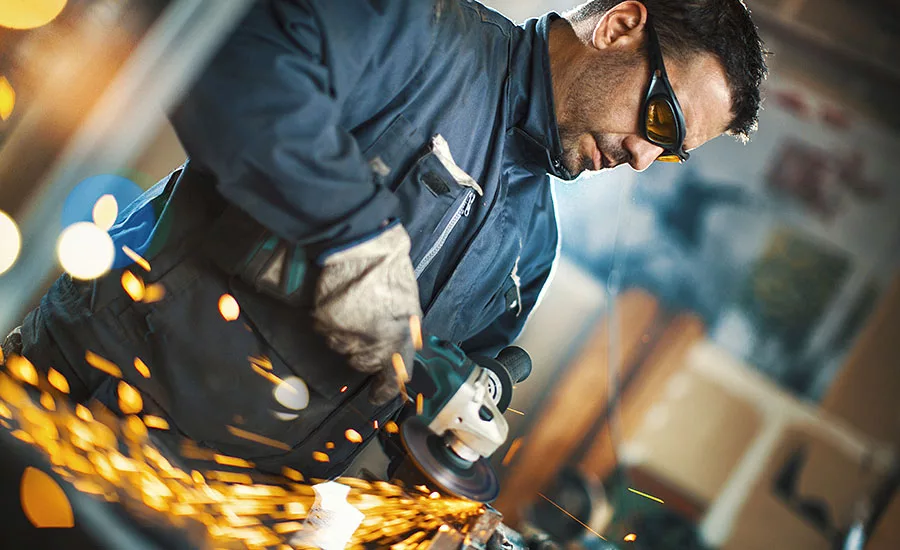
metal fabrication safety

Credit: Getty Images

May 15, 2019

Metal fabrication is an integral part of many different industries, and it can be one of the most dangerous due to the tools and techniques necessary to complete each task. Metal shop injuries are often extreme and can be even fatal in some situations. Why is metal fabrication safety so important? What can shop owners and supervisors do to ensure their factory floors are as safe as possible?

Common safety problems

A company that doesn't focus on creating a safety culture or providing the correct personal protective equipment and training is failing its workers. Accidents in the metal shop frequently cause loss of limb or even death. What are some of the most common fabrication safety concerns?1

  • No safety guards: Most fabrication equipment comes with safety guards installed to prevent injuries, as well as an emergency shutoff switch and sensors to keep employees safe. Removing these safety measures makes the equipment inherently more dangerous, even if it saves a little bit of time.
  • Lacking or ill-fitting personal protective equipment (PPE): Personal protective equipment will vary from job to job — someone working with caustic chemicals will need different PPE than someone who's sandblasting. Someone using sand to sandblast2 might need different PPE than someone using steel shot. Companies that don't provide and maintain PPE that fits properly are putting their employees at risk.
  • Insufficient training: Expecting employees to work on a piece of equipment they haven't been trained on is a recipe for disaster. Training should be ongoing. Don't expect a single training session to be sufficient, regardless of how often the employee uses that particular piece of equipment.
  • No safety culture: Safety might be the primary responsibility of management and supervisors, but everyone from the highest-paid CEO to the newest fabricator needs to be involved in keeping the workplace safe. Without a culture that revolves around safety, accidents and injuries can happen.
  • Rushed, harried or stressed workers: Employees need to be in the right state of mind when they're working on the fabrication floor. If they're stressed out about a deadline or rushing to complete an order on time, they're more likely to take shortcuts or make mistakes that could result in an injury.
  • Poor housekeeping: Heavy equipment isn't the only risk on the production floor. Poor housekeeping — dirty floors that get slippery, garbage on the ground that could create a tripping hazard or unattended spills, for example — can create safety hazards.

Safety should be on everyone's mind on a metal fabrication production floor, from the moment they clock in until they leave for the night. Newer equipment is starting to make that focus a little bit easier to maintain.

Built-in safety features

Many new pieces of equipment come from the factory with worker safety in mind. Take a power-press, for example — a high-powered machine used to shape sheets of metal. It presses downward with massive force, and the most common injury that occurs when using one of these machines is amputation.

New power presses are equipped with sensors3 that will not allow the machine to complete a press cycle if it detects a problem. If there's a hand or other body part in the way, the press will not move. These sensors use light. If the beam of light is broken, the equipment goes into safety mode and can't be used again until the problem is corrected.

This advancement doesn't just help keep workers safer — it also helps improve productivity by preventing the inevitable downtime that follows an on-the-job injury. If a production floor only has one power-press, an injury could take that integral machine offline for hours or days during a worker’s compensation investigation.

These same beams of light can be used to mark off the safe perimeter surrounding a piece of equipment to prevent an employee from accidentally wandering into a dangerous area while a machine is in use. The principle is the same — if someone breaks a beam, the device will stop working until the problem is corrected.

The right direction

Metal fabrication has been a part of the manufacturing industry for a long time. The tools and techniques have changed, but the need for shaped metal in everything from automotive manufacturing to construction has not.

Consistent training, establishing a culture of workplace safety and ensuring each machine is still equipped with its safety guards are all steps in the right direction. Supervisors may be buying the safety equipment, but keeping the production floor safe and productive is everyone's responsibility.

Sources

  1. https://safestart.com/news/4-major-safety-issues-metal-fabrication-industry/
  2. https://www.finishingsystems.com/blog/sandblasting-material-guide/
  3. https://www.automation.com/automation-news/article/building-safety-into-metal-forming-machines
KEYWORDS: metalworking worker safety and health workplace safety and health workplace safety training

Share This Story

Looking for a reprint of this article?
From high-res PDFs to custom plaques, order your copy today!

Megan R. Nichols is a technical writer and blogger. She regularly writes STEM articles on her blog, SchooledByScience.com. Megan writes to encourage others to take an interest in STEM fields. Keep up with Megan by following her on Twitter @nicholsrmegan.

Recommended Content

JOIN TODAY
to unlock your recommendations.

Already have an account? Sign In

  • forklift safety

    Exploring the latest technologies in forklift safety

    With more staff and more stock in warehousing now more...
    Facility Safety
    By: Josh Cramer
  • welding

    All about welder’s flash or arc eye

    A flash burn is a painful inflammation of the cornea,...
    Environmental Health and Safety
  • dangerous jobs

    The 10 most dangerous jobs in the U.S.

    On-the-job deaths have been rising — hitting the highest...
    Occupational Safety
    By: Benita Mehta
Manage My Account
  • eMagazine Subscriptions
  • ISHN Newsletter & Other Newsletter Alerts
  • Online Registration
  • Manage My Preferences
  • Subscription Customer Service

More Videos

Sponsored Content

Sponsored Content is a special paid section where industry companies provide high quality, objective, non-commercial content around topics of interest to the ISHN audience. All Sponsored Content is supplied by the advertising company and any opinions expressed in this article are those of the author and not necessarily reflect the views of ISHN or its parent company, BNP Media. Interested in participating in our Sponsored Content section? Contact your local rep!

close
  • man wearing the the Sundström SR200 Full Face Mask Respirator
    Sponsored byOHD

    5 Fit Testing Mistakes That Could Cost You

  • This image shows Magid AcuSpex polarized blue mirrored safety glasses.
    Sponsored byMagid Glove and Safety

    Construction PPE Guide: What Crews Need for Each Task

  • lone worker in confined space
    Sponsored byAlphasense Ltd.

    GET THE LEAD OUT of your Safety Oxygen Sensors!

Popular Stories

SpaceX 7 launch

OSHA Investigating Fatal Fall at SpaceX Starbase

Automated loading dock equipment

After March 2026 Rivian Death, Safety Managers Reassess Loading Dock Systems Under OSHA's Warehouse Emphasis Program

psychology in the workplace

Most Workplaces Measure Psychological Safety, Ignoring Psychosocial Risks

top 10 most dangerous jobs

Poll

Seasonal Readiness

With the federal heat stress prevention rule on the horizon, which area of your safety program needs the most attention?
View Results Poll Archive

Products

Surviving an OSHA Audit A Management Guide, 2nd Edition

Surviving an OSHA Audit A Management Guide, 2nd Edition

See More Products

ISHN Podcasts

Related Articles

  • Arc welding safety tips

    See More
  • trash compactor

    Safety tips for working with a commercial trash compactor

    See More
  • Automated loading dock equipment

    Safety tips for overhead doors in loading zones

    See More

Related Products

See More Products
  • 3E

    Safety Professional's Reference and Study Guide, Third Edition

See More Products
×

Become a Leader in Safety Culture

Build your knowledge with ISHN, covering key safety, health and industrial hygiene news, products, and trends.

JOIN TODAY
  • RESOURCES
    • Advertise
    • Contact Us
    • Directories
    • Manufacturing Division
    • Store
    • Want More
  • SIGN UP TODAY
    • Create Account
    • eMagazine
    • Newsletters
    • Customer Service
    • Manage Preferences
  • SERVICES
    • Marketing Services
    • Reprints
    • Market Research
    • List Rental
    • Survey/Respondent Access
  • STAY CONNECTED
    • LinkedIn
    • Facebook
    • YouTube
    • X (Twitter)
  • PRIVACY
    • PRIVACY POLICY
    • TERMS & CONDITIONS
    • DO NOT SELL MY PERSONAL INFORMATION
    • PRIVACY REQUEST
    • ACCESSIBILITY

Copyright ©2026. All Rights Reserved BNP Media, Inc. and BNP Media II, LLC.

Design, CMS, Hosting & Web Development :: ePublishing