ISHN logo
search
cart
facebook twitter linkedin youtube
  • Sign In
  • Create Account
  • Sign Out
  • My Account
ISHN logo
  • NEWS
    • Today's News
    • Global Safety News
    • Government Regulations
  • PRODUCTS
    • Product Innovations
    • Featured Products
  • TOPICS
    • Environmental Health and Safety
    • Facility Safety
    • Workplace Health
    • Occupational Safety
    • PPE
    • More Topics
  • CONSTRUCTION
  • TECHNOLOGY
  • COLUMNS
    • Best Practices
    • Dave Johnson: What’s going on
    • Editorial Comments
    • Leading Safety
  • MULTIMEDIA
    • ISHN Podcast
    • Videos
    • Cold Stress Education Quiz
    • Webinars
    • White Papers
  • MORE
    • Buyer's Guide
    • Newsletters
    • Convention Companion
    • Polls
    • Events
    • ISHN Store
    • Sponsor Insights
  • EMAGAZINE
    • eMagazine
    • Archived Issues
    • Contact
    • Advertise
  • JOIN TODAY!
Today's Safety NewsGovernment Safety RegulationsEnvironmental Health and SafetyPPEOSHA Workplace Training Strategies

Protecting workers at height from gravity’s pull is never-ending

Formal training is not enough
By Pat Furr
Protecting workers at height from gravity’s pull is never-ending
July 18, 2019

Gravity doesn’t need to go to school. She is a master at pulling all objects toward the center of our blue planet and has been doing so since the dawn of time. So, yep, she is the grand master. Whereas we mere mortals are still learning how to counter her effects. Part of our learning is how to protect our workers at height from falling into her grasp. And OSHA recognizes we are still learning and thus requires employers to provide appropriate training to protect their workers at height – as well as from the grand master’s constant grip.

There are several roles and responsibilities within any comprehensive fall protection program, and there are just as many courses of instruction that provide a baseline of knowledge and skills designed to get the individuals occupying these positions started, or to enhance their ability to perform in these roles. But no single course of instruction currently covers, nor will ever cover, every bit of knowledge needed for every work-at-height situation.

Training as a launchpad

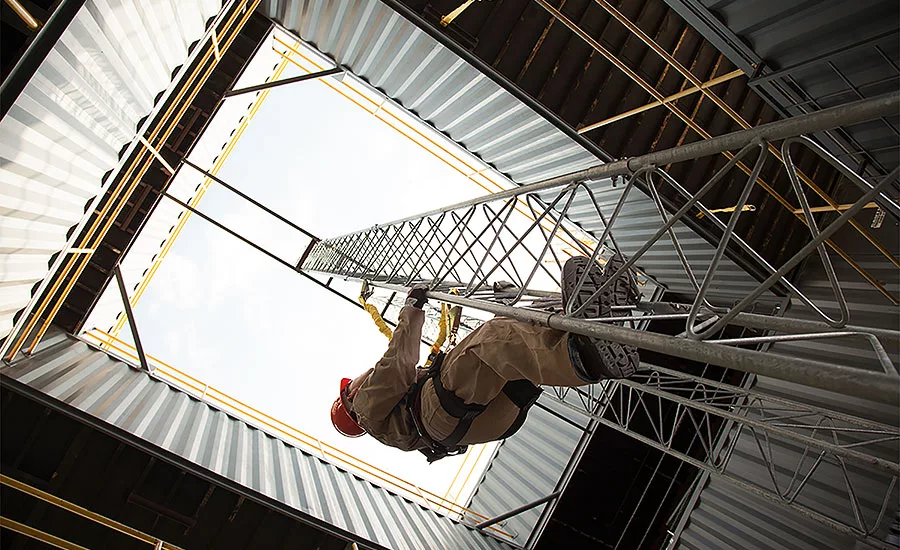
So this is where it will begin to make sense. Fall protection training is the beginning and should not and cannot be thought of as the “end all” for whatever role and responsibility for which you are training. Whatever training you attend and complete should be viewed as the launching point to get you started on learning everything you can about fall protection. This includes compliance requirements, fall protection system capabilities and limitations, the dynamics of a fall including clearance requirements and swing fall, post-fall rescue, and as importantly, what is the best fit for your Authorized Persons.

Gaining the knowledge and understanding of these and many other facets of fall protection requires continuous self-study and research. It also requires getting out and visiting your facility to find out what the structural geometry is and to learn about the processes as well as the Authorized Person’s needs and concerns.

During the past 35 years, I have attended training for all sorts of occupational duties, and the one common denominator has been that all of them provide a foundation to build from. For the most part, I felt I could function in the role I was being trained for, but I would equate it to functioning at the “apprentice” or “journeyman” level. I knew I still had much to learn before mastering the task.

This is especially true for fall protection training. To learn every single OSHA requirement regarding fall protection is a very tall order. I don’t know of any fall protection Competent Person course that covers it all or would attempt to cover it all. And to know the particular challenges of every location where work is performed at height can only be gained through experience. In order to move toward mastering the craft, it is important to take the initiative to learn beyond the formal training.

Digital age makes it easier

However, self-study is so much easier than it was 15 or 20 years ago. The ease of accessing OSHA standards, letters of interpretation, summaries, and explanations of final rules, and other OSHA resources pertaining to fall protection on the Internet opens up a wealth of information.

It is also my good fortune that I visit many different client sites where I encounter a smorgasbord of fall protection challenges which provide learning opportunities. Oftentimes, I am able to recite the information nearly verbatim that pertains to the issue, but as often as not, I need to do some research to locate the answer or to refresh my memory once again. This is expected, and in lieu of a photographic memory, there is just too much information to learn and retain with 100 percent accuracy.

With the emerging technologies in manufacturing and design of fall protection equipment and systems, it is often a great learning exercise to visit some of the leading equipment manufacturers’ and retailers’ online catalogs. It is actually pretty exciting to peruse these sites and see many of these modern solutions.

And the equipment isn’t limited to lanyards and body support either. Solutions include temporary or permanent retro-fitted guardrail systems, harness mount SRLs, non-penetrating anchor connectors, temporary user installed horizontal lifelines, and the list goes on. Inviting a fall protection dealer representative to your site may prove to be very educational and beneficial time spent.

Real-world assessments

Much of the continuing education we have talked about so far is in “black and white” -- in the form of regulations or interpretations, or a form of equipment that has accompanying printed user instructions. The intangibles are often the most difficult and dynamic pieces of the puzzle to learn. Getting out into the work environment is a very big part of your ongoing self-education.

Performing a fall hazard survey as outlined in ANSI Z359.2 is a great starting point for learning the various means of protecting workers from falls. Always keeping the hierarchy of fall protection in mind, performing a comprehensive assessment of the known and potential areas for work at height will definitely provide an education.

Now is the time to take your knowledge of compliance requirements, the BKM/BKPs, a broad knowledge of the equipment available and determine what will work best for the configuration of the structure, the environmental conditions, and also through interviewing the workers that will be employing the equipment, to learn what their needs are. Will they need equipment that provides a high degree of mobility? Are they exposed to hot working environments? This can only be determined by talking to and listening to the Authorized Persons and their foremen.

Considering a formal fall protection course the endpoint for your fall protection training -- no matter what capacity you are working in -- is doing a disservice to your co-workers and to yourself. Accept the onus of continuing your “training” through self-study, visiting the equipment offerings, assessing the working environment and the needs of the workers to do their jobs. It is all part of your continuing fall protection education.

KEYWORDS: Fall Protection work at height

Share This Story

Looking for a reprint of this article?
From high-res PDFs to custom plaques, order your copy today!

Patrick Furr, employed with Roco Rescue since 2000, has been actively involved with technical rescue since 1981. He is a Roco Chief Instructor as well as a Team Leader for on-site safety services in New Mexico. Pat teaches Confined Space Rescue, Rope Access, Tower Work/Rescue and Fall Protection programs across North America. He is a retired U.S. Air Force MSgt/Pararescueman. Visit www.rocorescue.com to view and download “Hierarchy of Fall Protection” and “Suspension Trauma” safety posters, as well as Fall Hazard Survey Report and Fallen Worker Rescue Pre-Plan templates.

Recommended Content

JOIN TODAY
to unlock your recommendations.

Already have an account? Sign In

  • forklift safety

    Exploring the latest technologies in forklift safety

    With more staff and more stock in warehousing now more...
    Facility Safety
    By: Josh Cramer
  • welding

    All about welder’s flash or arc eye

    A flash burn is a painful inflammation of the cornea,...
    Environmental Health and Safety
  • dangerous jobs

    The 10 most dangerous jobs in the U.S.

    On-the-job deaths have been rising — hitting the highest...
    Construction Industry Safety and Health
    By: Benita Mehta
Manage My Account
  • eMagazine Subscriptions
  • ISHN Newsletter & Other Newsletter Alerts
  • Online Registration
  • Manage My Preferences
  • Subscription Customer Service

More Videos

Sponsored Content

Sponsored Content is a special paid section where industry companies provide high quality, objective, non-commercial content around topics of interest to the ISHN audience. All Sponsored Content is supplied by the advertising company and any opinions expressed in this article are those of the author and not necessarily reflect the views of ISHN or its parent company, BNP Media. Interested in participating in our Sponsored Content section? Contact your local rep!

close
  • man wearing the the Sundström SR200 Full Face Mask Respirator
    Sponsored byOHD

    5 Fit Testing Mistakes That Could Cost You

  • This image shows Magid AcuSpex polarized blue mirrored safety glasses.
    Sponsored byMagid Glove and Safety

    Construction PPE Guide: What Crews Need for Each Task

  • lone worker in confined space
    Sponsored byAlphasense Ltd.

    GET THE LEAD OUT of your Safety Oxygen Sensors!

Popular Stories

SpaceX 7 launch

OSHA Investigating Fatal Fall at SpaceX Starbase

Worker Impairment

How to Tell When a Co-Worker is Impaired? A Safety Pro’s Challenge

Automated loading dock equipment

After March 2026 Rivian Death, Safety Managers Reassess Loading Dock Systems Under OSHA's Warehouse Emphasis Program

top 10 most dangerous jobs

Poll

Seasonal Readiness

With the federal heat stress prevention rule on the horizon, which area of your safety program needs the most attention?
View Results Poll Archive

Products

Surviving an OSHA Audit A Management Guide, 2nd Edition

Surviving an OSHA Audit A Management Guide, 2nd Edition

See More Products

ISHN Podcasts

Related Articles

  • Honeywell

    New fall protection product from Honeywell reduces risk of severed lifelines for workers at height

    See More
  • Honeywell

    New fall protection product from Honeywell reduces risk of severed lifelines for workers at height

    See More
  • Honeywell

    Honeywell’s new self-retracting lifeline system protects workers at height when involved in a fall over a sharp edge

    See More

Related Products

See More Products
  • 111885960X.jpg

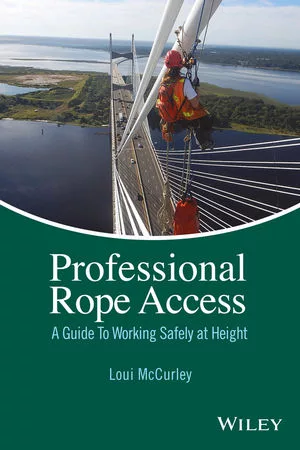
    Professional Rope Access: A Guide To Working Safely at Height

  • 1119772133.jpg

    Delivering Safety Excellence: Engagement Culture at Every Level

See More Products

Related Directories

  • Grace Industries

    How Do You Protect Your Lone Workers? Working at Heights? Check out our new WorkForce product line - Fall Detection with Immediate Notification – Prevent Suspension Trauma. Fixed Facility – No Monthly Fees. Working in the field? Check out Grace Connected Safety – Cellular and Satellite Cloud Connect
  • SafetyLine Lone Worker

    SafetyLine Lone Worker helps companies monitor the status of workers who are remote, alone, or working in hazardous situations. We are an automated check-in monitoring and emergency notification service. SafetyLine uses its communications infrastructure to ensure that workers have comprehensive monitoring, 24/7, without the need for costly monitoring centers.
×

Become a Leader in Safety Culture

Build your knowledge with ISHN, covering key safety, health and industrial hygiene news, products, and trends.

JOIN TODAY
  • RESOURCES
    • Advertise
    • Contact Us
    • Directories
    • Manufacturing Division
    • Store
    • Want More
  • SIGN UP TODAY
    • Create Account
    • eMagazine
    • Newsletters
    • Customer Service
    • Manage Preferences
  • SERVICES
    • Marketing Services
    • Reprints
    • Market Research
    • List Rental
    • Survey/Respondent Access
  • STAY CONNECTED
    • LinkedIn
    • Facebook
    • YouTube
    • X (Twitter)
  • PRIVACY
    • PRIVACY POLICY
    • TERMS & CONDITIONS
    • DO NOT SELL MY PERSONAL INFORMATION
    • PRIVACY REQUEST
    • ACCESSIBILITY

Copyright ©2026. All Rights Reserved BNP Media, Inc. and BNP Media II, LLC.

Design, CMS, Hosting & Web Development :: ePublishing