Fall hazards “walkabout”
A job hazard analysis for work at height
Now, it is rare to come across such an inadequate program. But truth be told, the comprehensiveness, diligence and effectiveness of the programs I have assessed run a fairly wide spectrum from so-so to top notch. Top-notch programs all had several common elements, but the one element that stands out the most as being consistently included in the best programs is the completion of fall hazard surveys.
A comprehensive survey
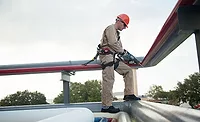
The fall hazard survey, or what I like to call the fall hazard “walk-about,” is a critical early step in the process of assembling a comprehensive managed fall protection program. And a survey should be conducted again when certain changes occur including, but not limited to, changes in the facility configuration, changes to work processes, changes to legislated requirements, and the emergence of modern fall protection equipment solutions.
Outlined in ANSI Z359.2, the fall hazard survey is an effective means to identify areas where work is performed at height, identify ways to eliminate or control fall hazards, and help determine which hazards require the highest priority when it comes to allocating sometimes limited resources. A comprehensive fall hazard survey is the best way to identify and understand the types of fall hazards that need to be addressed to provide the best protection to your workers at height.
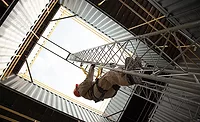
This requires that the Qualified or Competent Person do a top to bottom, left to right, tour of the facility to identify known areas where work at height is currently being performed, and any areas where future work at height may take place.
|
It may be helpful to have an area foreman or even an Authorized Person with thorough knowledge of the specific work areas available to ask questions regarding the work process and their needs and concerns.
The goal of this survey is to not only identify areas of work at height, but to determine the most protective means of abating fall hazards.
The Qualified/Competent Person must have the “Hierarchy of Fall Protection” in mind at all times. By having the goal of eliminating the fall hazard first and foremost, any opportunities to bring the work to the ground or to perform the work from the ground should present themselves during this survey. This may require a change in the configuration of certain structures, or the retrofitting of systems that allow the work to be performed from the ground. This may incur some significant costs, but in the long run the changes will be more than offset by avoiding a fall from height and the direct and indirect costs of such an accident.
Continuing the survey while still adhering to the Hierarchy of Fall Protection, the Qualified/Competent Person may have to consider the use of fall restraint measures, either passive measures in the form of guardrails or parapets, or active measures in the form of body belts or harnesses with lanyards anchored in a way that the system prevents the Authorized Worker from reaching the leading edge of a fall hazard. Once active measures are employed, it is critically important to work with the Authorized Persons to understand what their work activities entail to come to a solution that provides the needed protection but also considers their need for mobility.
A fall arrest solution
If the lower echelons of the Hierarchy of Fall Protection cannot be employed, a fall arrest system may be the only feasible solution. This is where the Qualified/Competent Person’s knowledge of current fall arrest systems and components really shows its value. Lightweight, breathable, multi-function fall protection equipment available today protects workers while also providing the ease of use and freedom of movement that has been missing for many years.
This is an important tool that the Competent Person can use to their advantage when faced with any resistance from certain Authorized Persons.
During the fall hazard survey, consider the presence of any environmental factors that may affect the performance of the fall protection equipment or systems as well as an alternate solution, specialized materials, or even a reconfiguration of the structure/process. Environmental factors can include hot objects, sharp edges, slowly engulfing materials, chemicals, weather factors, or any other environmental factor that may render the fall protection equipment ineffective.
Document findings
Once the entire facility has been surveyed, it’s time to document in writing the findings and the means to abate the identified fall hazards. The Fall Hazard Survey Report becomes a part of the written fall protection program. It should be reviewed periodically and whenever there is a change to legislated requirements or a change in the facility or fall protection equipment.
Plan for rescue
If any identified areas require the use of fall arrest systems, then that triggers the need to complete a written rescue pre-plan. It is my opinion that rescue pre-plans should also include anywhere workers are performing work at height, such as elevated platforms that have been accessed by means other than elevators or stairs, with the goal that the rescue plan provides a capability to get the injured or suddenly ill worker to the ground promptly.
Time to train
Once the Fall Hazard Survey is completed and documented, it is time for the Qualified/Competent Person to provide training to the Authorized Persons on the types of equipment, systems, selection of anchor points, clearance requirements, swing fall hazards, and pre-use inspections of their equipment. Training may vary depending on the areas that Authorized Persons are assigned duties, but in all cases the type of training, any required re-training, and the criteria that would trigger the need for re-training must be documented.
A valuable tool
The fall hazard survey is a valuable tool that provides a thorough assessment of the entire facility to honestly identify fall hazards and determine the most effective means to protect workers from falls. Look at it as an expanded JHA that focuses specifically on areas of work at height.
Looking for a reprint of this article?
From high-res PDFs to custom plaques, order your copy today!