5 tips for welding safety
Mistakes can have severe consequences
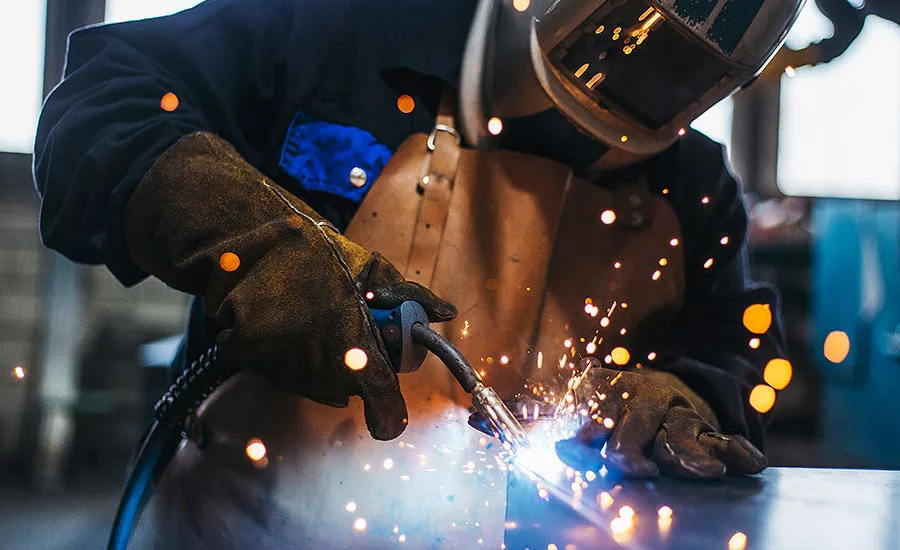
It only takes a cursory examination of a welding torch to understand there are some real safety concerns with this craft. Welding is a 100-plus-year-old practice that's still a fundamental component of machine work and industry today. Proficient welders are becoming harder and harder to find, which is another excellent reason to learn the craft. It's also a handy thing to know how to do.
If you're going to weld, though, you need to understand how to do it safely. When mistakes happen around welding equipment, they can have severe consequences. Read on for some tips on how to stay safe when your hood is down. It is down, right?
Dress for the occasion
Protective clothing is a crucial part of welding safety. The energy and material released when welding can cause serious burns, blind you and do real respiratory damage in some cases. That's why a welder's standard kit should include leather shoes —optimally with reinforced toes — sturdy pants such as jeans, a heavy overcoat made of leather or canvas, gloves, glasses and a welding-specific helmet.
A welding helmet is a must-have piece of equipment when you're welding. Even the cleanest, best weld will throw off bits of slag and produce enough light to flash-burn your eyes, a condition similar to a sunburn on the white of your eye.
Your welding helmet is a specialized piece of equipment designed to deflect debris and protect your eyes from the bright arc of a welder. While older models used darkened lenses that made it difficult to see when not actively laying a weld, modern helmet designs use auto-darkening lenses that adjust similarly to the way a pair of prescription glasses can darken in the sunlight. It is essential for anyone who welds regularly.
Keep your workspace safe
If you're working on a smaller project, you might bring what you're welding over to a clean workspace with guards for slag and good ventilation. Never weld in an area that lacks good airflow. If you're indoors, this means using a commercial-grade ventilation system or hood like the one over your oven, only larger. In some cases, it might be necessary to use an approved respirator to remove particulate matter from the air if you can't find an area with enough ventilation.
Before you begin your project, remove any clutter from the area. Also minimize the chance of arcing your welding on something you don't intend to weld, like extra tools that might be lying around, by moving them well out of the way.
Avoid electric shock
Welding involves the transfer of a great deal of energy around conductive materials — specifically, metals. If you're not careful, you can quickly create an electrical circuit with yourself in the middle. Part of the reason to use protective gear in welding is to prevent shock, and having intact protective equipment is critical, but clothing alone isn't enough.
Always insulate yourself between your work and dry ground during a welding project. Avoid standing water, metal floors or anything else that can serve as a conductor. Inspect your equipment when it's not running before beginning a weld, and only allow trained professionals to perform maintenance on welding equipment.
Avoid fire hazards
Similarly to electrical shock, avoiding burns is an excellent motivator to wear your protective clothing, but there is more you can do to avoid starting a flare-up when you perform a weld. The heat from welding alone can dehydrate you and be hazardous to your health. Make sure you stay hydrated and have a way to cool off on the job.
Spatter from your welder can reach up to 35 feet from your workspace, which means you need to remove any potentially flammable items or find a way to block the spatter from your project using a non-flammable material. Cover anything you can't move using a fire-resistant blanket or sheet metal.
Survey your workspace to see if there is a nearby fire alarm before you do any welding. You should have a fire extinguisher present if at all possible when welding. Make sure it has cleared inspection and isn't expired. If you have no access to a fire extinguisher, make sure you have a hose, sand buckets and other preventive equipment.
Use the hierarchy of hazard controls
NIOSH has a safety food pyramid of sorts that all welders should be familiar with. It lists the best way to reduce danger when welding or doing any manual work, breaking down the most effective countermeasures into five categories.
- Elimination: Exactly what it sounds like — remove the hazard from your workspace.
- Substitution: Change your equipment or project to eliminate a hazard. For example, weld using a less reactive metal.
- Engineering controls: Isolate people from the hazard.
- Administrative controls: Change the workflow and set ground rules to improve safety.
- PPE: Personal protective equipment that all workers should wear on the job site.
If you ever have questions about the safety of a welding project, take a step back and walk through it. You'll probably observe at least a few ways you can improve your safety.
Even a basic set of welding skills can help you get projects accomplished without paying for the service. Whether welding is your profession or your hobby, take pride in your work and remember to work safely using the tips we've covered here.
Looking for a reprint of this article?
From high-res PDFs to custom plaques, order your copy today!