OSHA releases COVID-19 guidance for oil and gas industry
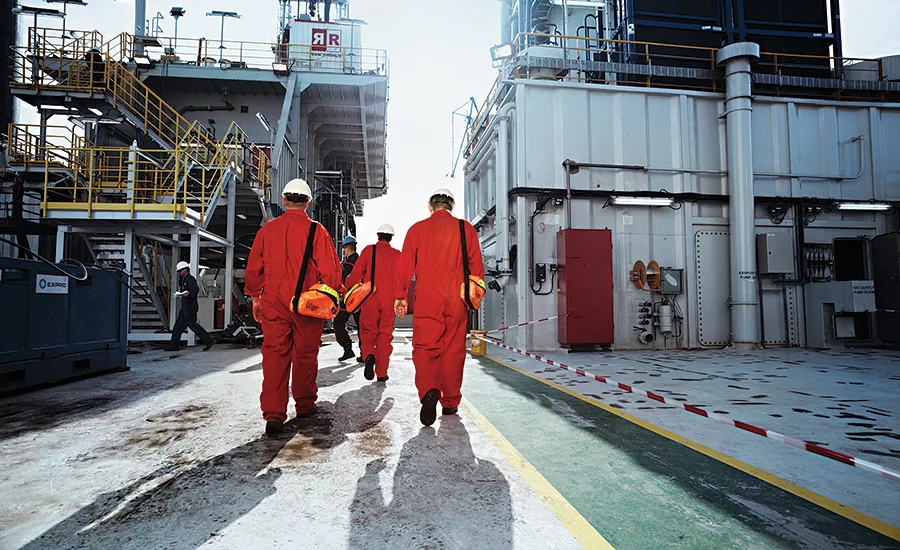
OSHA recently issued guidelines for oil and gas workers and employers during the Coronavirus (COVID-19) pandemic. While similar to guidelines issued previously by various governmental authorities, this guidance is specific to oil and gas industry workers and employers.
On the COVID-19 oil and gas page, OSHA states:
"Remain aware of changing outbreak conditions, including the spread of the virus and testing availability in your community, and implement infection prevention measures accordingly. As states or regions satisfy the gating criteria to progress through the phases of the Guidelines for Opening up America Again, you will be able to adapt this guidance, along with the general recommendations in OSHA's Guidance on Returning to Work, to better suit evolving risk levels and necessary control measures in your workplaces."
Assess the hazards to which your workers may be exposed; evaluate the risk of exposure; and select, implement, and ensure workers use the hierarchy of controls to prevent exposure."
OSHA has created a table that describes oil and gas work tasks associated with the exposure risk levels in OSHA's occupational exposure risk pyramid as a guide.
OSHA's guidance for oil and gas industry workers and employers includes the following:
- Stagger workers' arrival and departure times to avoid congregations of workers in parking areas, locker and shower rooms, smoking areas, control rooms and other common areas.
- Encourage single-file movement with six feet between each worker through the facility/site, where possible.
- Provide visual cues (e.g., floor markings, signs) as a reminder to workers to maintain social distancing (six feet).
- Designate workers to monitor and facilitate distancing.
- Limit the number of personnel allowed in doghouses, control rooms and other operating areas.
- Limit meeting sizes and/or hold meetings virtually or using social distancing outside, if possible.
- Stagger break times or provide temporary break areas, including for water breaks, and restrooms to avoid groups of workers gathering during breaks. Workers should maintain at least six feet of distance from others at all times, including on breaks.
- Remove or rearrange chairs and tables, or add partitions to tables, in break rooms, control rooms and other areas workers may frequent to increase worker separation. Identify alternative areas to accommodate overflow volume, such as training and conference rooms, or using outside tents for shaded break and lunch areas.
- Encourage workers to avoid carpooling to and from work and job sites
- Consider cohorting workers into shifts and shared shuttle vehicle assignments.
- Provide workers handwashing stations equipped with soap, running water and single-use paper towels in multiple locations. If possible, choose handwashing stations that are touch-free.
- Provide alcohol-based hand sanitizers containing at least 60 percent alcohol if soap and water are not immediately available.
- Place hand sanitizers in multiple locations. If possible, choose hand sanitizer stations that are touch-free.
- Consider other workplace policies and programs to promote personal hygiene, such as:
- Building additional short breaks into staff schedules to increase how often staff can wash their hands with soap and water or use hand sanitizers with at least 60 percent alcohol;
- Providing tissues and no-touch trash receptacles for workers to use;
- Providing information on cough and sneeze etiquette; and
- Educating workers that cigarettes and smokeless tobacco use can lead to increased contact between potentially contaminated hands and their mouth, and that avoiding these products may reduce their risk of infection.
- Clean and disinfect shared common equipment such as communications headsets, operating terminals and other routinely touched items between shifts.
- Provide disposable drinking water cups or individual bottles of water in hydration stations and disposable plates, bowls, etc. in break and dining areas along with discouraging the use of shared condiment bottles.
- Workers in this industry should wear cloth face coverings, which are not PPE or a substitute for PPE. However, while noting that the CDC recommends cloth face coverings, the guidance also notes that it may not be practical for workers in this industry to wear a single cloth face covering for the full duration of a work shift, such as when they become wet, soiled or visibly contaminated. Additional recommendations designed to address certain industry-specific concerns are included for employers who determine cloth face coverings should be worn in the workplace (consult full guidance for reference).
- Workers should avoid touching their faces, including their eyes, noses and mouths, until they have thoroughly washed their hands upon completing work and removing PPE.
- Workers should be careful not to touch their eyes, noses and mouths when removing a cloth face covering or other facial PPE.
- Regarding PPE, OSHA says this:
- Most oil and gas workers in normal work environments are unlikely to need PPE beyond what they use to protect themselves during routine job tasks. Conduct a hazard assessment (sometimes called a job hazard analysis) to determine the proper PPE for industrial hazards. Reminder: Face masks and cloth face coverings are not substitutes for respiratory protection from industrial hazards.
- Employers should consider whether their hazard and risk assessments warrant the use of items such as gloves or eye and face protection, if not already in use. For example, workers may need eye and face protection (e.g., goggles, face shields) when work requires being within six feet of other workers and when other engineering and administrative controls cannot prevent worker exposure to potentially infectious respiratory droplets.
- Consider possible additional hazards (e.g., PPE catching in machinery, limiting worker dexterity or vision) that can be created by new PPE in the work environment.
- The sharing of PPE, such as gloves, aprons and face shields, including equipment used for hazards other than SARS-CoV-2 (e.g., for mixing mud-drilling fluids that contain hazardous chemicals), should be avoided, if possible. If the PPE must be shared, it needs to be cleaned and disinfected according to manufacturer recommendations before being used by another person. Follow proper donning and doffing procedures for PPE.
- Note that workers who perform tasks involving hazardous chemicals may also require PPE and/or other controls to protect them from chemical hazards. Employers may need to adapt guidance from this section, and the Interim Guidance for Workers and Employers of Workers at Increased Risk of Occupational Exposure, in order to fully protect workers performing activities in oil and gas drilling, servicing, production and/or processing workplaces that involve work with hazardous chemicals.
Looking for a reprint of this article?
From high-res PDFs to custom plaques, order your copy today!