Mitigate concrete construction hazards with these steps
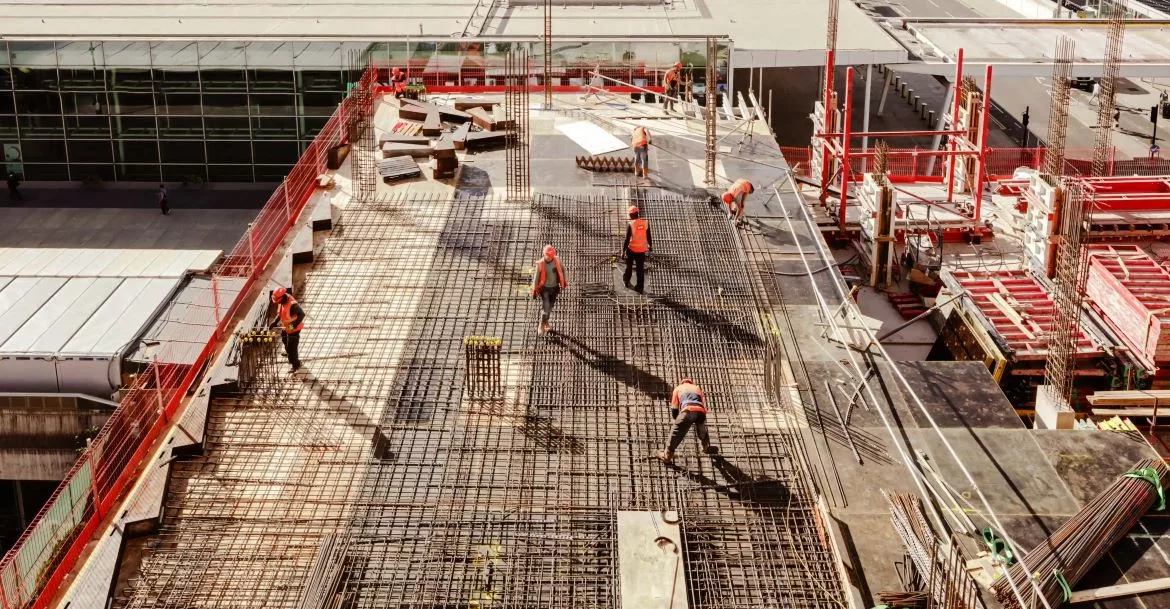
Credit: schwartstock / Getty Images
Safety hazards are so common in the construction industry that it can be easy to overlook some of their severity. As a standard part of virtually every project, foundation work may not stand out to crews as particularly risky — and that can be dangerous. Concrete construction hazards are both common and severe, so they deserve your attention.
Poured-concrete-related incidents caused more than 3,000 injuries with days away from work between 2017 and 2019. That’s the second-most of any contracting subsector. Thankfully, these injuries are avoidable. Here are seven ways to stay safe while working on foundations.
OSHA-required measures
Unsurprisingly, the Occupational Safety and Health Administration has specific standards for concrete construction hazards. These guidelines serve as a helpful starting point for making foundation work safer.
Provide appropriate PPE
Like in most other construction processes, OSHA requires concrete workers to use personal protective equipment. Appropriate PPE in this area falls under four general categories — head, respiratory, skin and eye protection.
Employers must provide head protection that meets American National Standards Institute standards for any worker with a high risk of head injury. Similarly, employees should have face protection like work goggles to protect their eyes from concrete particles. Those working with or near concrete should also have boots and other skin-covering equipment to prevent contact with wet cement.
Since concrete and other foundation work can kick up hazardous fumes and particles, workers also need respiratory protection. Face masks with ventilators are the safest option.
Communicate hazards
OSHA also requires thorough hazard communication. This begins before the workday starts. Every worker should understand the risks they may face while on the job before they start. Pre-work meetings and safety briefings can ensure teams meet this requirement.
Hazard communication also applies to the site during the workday. Teams should post appropriate signage about wet cement and similar hazards to steer people away from risky areas and avoid accidents. If new risks arise, workers should inform others — especially team leaders — as soon as possible.
While OSHA doesn’t require them, Internet of Things sensors can help in this area. These wireless devices can automatically alert nearby or relevant parties when they detect a hazard, providing real-time awareness.
Additional safety steps
Legally, construction teams only have to meet OSHA criteria. However, these guidelines can be vague and extra steps can often help improve safety to avoid injuries and related costs. Here are five of these additional ways foundation work can become safer.
Assign Specific Roles and Communication Protocols
Organization is an easily overlookable but critical safety measure. If people don’t know who to report to or how to communicate hazards, it will create delays and confusion when something arises. Having specific, pre-set roles and communication protocols can help streamline things.
Fast reaction times are critical to preventing further injury if an incident occurs. In some cases, they can avoid injuries altogether. Teams can shorten these reactions by having a dedicated person to report to for each type of accident. Similarly, everyone should have a specific role during regular work and emergencies to prevent confusion.
Assigning roles can ensure people are able to concentrate on one task at a time. This focus can help workers avoid accidents that could jeopardize their safety or that of their coworkers.
Rethink equipment maintenance schedules
Maintenance is another crucial step in reducing concrete construction hazards. If equipment like cement mixers and power tools aren’t in optimal condition, they could shut down or malfunction, endangering their operators or nearby workers.
Teams can prevent these scenarios by rethinking how they approach equipment maintenance. Regular preventive repairs are better than run-to-failure approaches, but you can go further with predictive maintenance. This method uses IoT sensors to alert workers when something will need repair, creating more reliable, low-cost maintenance schedules.
With predictive maintenance, teams can prevent unexpected breakdowns while minimizing downtime. Even then, inspecting all equipment for damage or other safety concerns before using it is a good idea.
Pour concrete with a pump
Selecting the right equipment for the job can also improve safety outcomes. One of the most significant of these choices in foundation work is using a pump to pour concrete instead of tailgating or using buggies.
The primary advantage of concrete pumps is that they allow concrete trucks to remain further away from the worksite. As a result, they keep large machinery away from potentially crowded areas, removing some hazards. Similarly, since pumps require fewer people to operate, they reduce on-site congestion and confusion.
Pumps can also use drier concrete than chutes, helping it solidify faster. This minimizes the window in which workers may face wet concrete hazards, further improving on-site safety.
Emphasize employee training
Training is another critical aspect of improving concrete construction safety. Human error introduces unnecessary risk, so better training can help minimize hazards by showing workers how to avoid them.
Roughly 60% of construction employees with repetitive on-the-job tasks have musculoskeletal disorders, so proper technique is a vital training area. Reinforcing safe lifting techniques, postures for concrete mixing and similar issues can help prevent these injuries. Periodic refreshers can assist workers in remembering these best practices.
Teaching workers to spot early warning signs of injuries or hazards could also help. This can allow employees to stop before they hurt themselves and recognize potential issues around them.
Review safety steps regularly
Regardless of what steps you take, be sure to review them regularly. Some measures are more effective than others depending on the situation, so teams must adapt to their unique safety concerns. Regular review provides the necessary information to guide these decisions.
After every project, go over reports and analyze any hazards that emerged or safety incidents that occurred. If trends appear between them, there’s likely an area needing improvement. Find these shortcomings, adjust safety procedures around them, then monitor future reports to see if they improve.
Concrete construction hazards are serious but don’t have to be threatening. If crews can recognize their risks and implement these steps, they can minimize and mitigate these hazards. They can then lay foundations efficiently without jeopardizing employee health and safety.
Looking for a reprint of this article?
From high-res PDFs to custom plaques, order your copy today!