ISHN logo
search
cart
facebook twitter linkedin youtube
  • Sign In
  • Create Account
  • Sign Out
  • My Account
ISHN logo
  • NEWS
    • Today's News
    • Global Safety News
    • Government Regulations
  • PRODUCTS
    • Product Innovations
    • Featured Products
  • TOPICS
    • Environmental Health and Safety
    • Facility Safety
    • Workplace Health
    • Occupational Safety
    • PPE
    • More Topics
  • CONSTRUCTION
  • TECHNOLOGY
  • COLUMNS
    • Best Practices
    • Dave Johnson: What’s going on
    • Editorial Comments
    • Leading Safety
  • MULTIMEDIA
    • ISHN Podcast
    • Videos
    • Cold Stress Education Quiz
    • Webinars
    • White Papers
  • MORE
    • Buyer's Guide
    • Newsletters
    • Convention Companion
    • Polls
    • Events
    • ISHN Store
    • Sponsor Insights
  • EMAGAZINE
    • eMagazine
    • Archived Issues
    • Contact
    • Advertise
  • JOIN TODAY!
Occupational SafetyPPEConstruction Industry Safety and Health

When is it necessary to wear double hearing protection?
By Rick Pedley
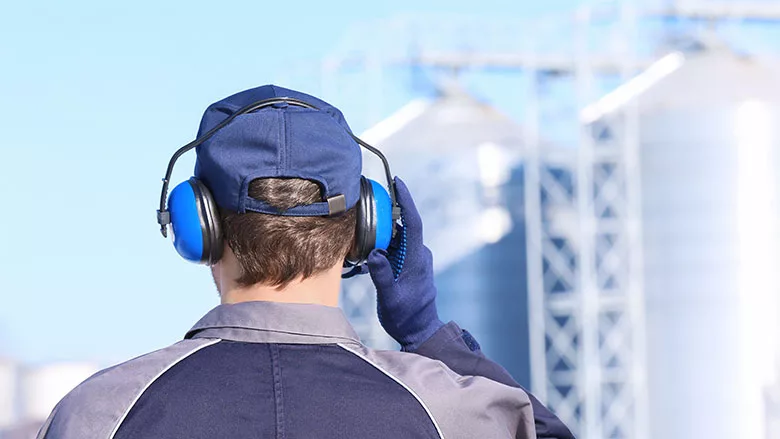
hearing protection

Photo credit: PK Safety

June 19, 2024

Even in today’s advanced industrial environments, occupational hearing loss remains one of the most common work-related issues in the US. Many machines and industrial processes emit loud noises that can compromise workers’ hearing, especially in industries such as construction, manufacturing, mining, and aviation. The Centers for Disease Control and Prevention (CDC) estimates that around 22 million US workers are exposed to hazardous noise levels each year.

In a review published in the International Journal of Environmental Research and Public Health, researchers said, “Occupational noise exposure accounts for approximately 16% of all disabling hearing losses, but the true value and societal costs may be grossly underestimated.” 


Understanding dangerous noise levels

According to the Occupational Safety and Health Administration (OSHA) standards, workers should not be exposed to an average sound level exceeding 85 decibels (dB) over an eight-hour workday. To put this in perspective, a police car siren, a passing train, and a vacuum cleaner produce sound equivalent to 85 dB. It’s important to note that this is just the permissible exposure limit (PEL). Ideally, employers should strive to keep noise levels below these thresholds whenever possible. 

Prolonged exposure to loud noises damages the delicate hair cells within the inner ear. These cells convert sound waves into electrical signals that the brain interprets as sound. Damaged hair cells can result in tinnitus (ringing in the ears), difficulty understanding speech, and even complete deafness. Moreover, prolonged exposure to high noise levels can also lead to other health issues, such as stress, hypertension, and increased heart rate, compounding the physical toll on workers. 

In the same review referenced earlier, researchers said, “Beyond the audiogram, there is growing awareness that hearing loss is a significant risk factor for other debilitating and potentially life-threatening disorders such as cardiovascular disease and dementia.”   


Double hearing protection: An essential safety measure

As the term suggests, double hearing protection refers to using two protective devices at the same time. The most common and easiest way to double up on hearing protection is to wear earplugs underneath earmuffs. This method is recommended in environments where noise levels exceed 100 dB. 

Every hearing protection device has a Noise Reduction Rating (NRR) indicating how much it reduces noise exposure levels against a standardized test method. For example, if a protective device has an NRR of 30 dB, workers in an environment with an average noise level of 100 dB would only be exposed to 70dB when wearing the hearing protection. In practice this can vary due to factors that include employee training and fit.


When is double hearing protection necessary?

The following scenarios may require double hearing protection:

High-noise environments: Work settings with noise levels consistently exceeding 100 dB, such as mining, forestry, construction, and heavy manufacturing. 

Uncertain noise levels: When noise levels fluctuate significantly throughout the workday, double protection ensures adequate protection even during peak noise periods. 

Ineffective single protection: If a single protection device doesn’t provide the NRR required by the work environment, doubling up is necessary to achieve the optimal protection level. Additionally, double protection can compensate for earplugs that don’t fit snugly in the ear canal or earmuffs that don’t seal properly around the ears.  

However, it’s important to note that double hearing protection isn’t a one-size-fits-all solution. Overprotection can also create communication difficulties and hinder situational awareness. It’s always best to consult a safety professional to determine your workplace’s specific needs to achieve the appropriate level of noise reduction without compromising other critical functions.  


Choosing the right double hearing protection 

To determine the appropriate hearing protection, start by measuring the average noise levels in the workplace using a sound meter. Workers need additional sound protection in environments where the average noise levels exceed 100 dB. If you don’t have access to a sound meter, a good rule of thumb is that if workers can’t hear each other from three feet away using a normal speaking voice, the sound levels are likely above 85 dB.  

Here are some popular hearing protection combinations:

Earplugs + earmuffs: This is the most common and effective method of double hearing protection. Earplugs provide a good seal within the ear canal, while earmuffs create an additional sound barrier around the ear. 

Canal caps + ear muffs: Canal caps have bands you can hang around your neck when not in use. So, while they don’t provide the same level of protection as earplugs, canal caps are a convenient solution, especially for environments where hearing protection is only needed for short periods. Please note that the band portion of the canal cap may interfere with the earmuff seal against the head.

Consider the following when selecting the appropriate double hearing protection:

Compatibility and fit: Ensure workers can wear the two chosen devices comfortably together without creating discomfort or pressure points. In addition, the two should not compromise proper fit as much as possible.

Protection level: The combined NRR of the two devices should be sufficient to reduce noise levels below the safe exposure limit.

Communication needs: In some workplaces, workers still need to communicate; consider options like electronic earmuffs that facilitate hearing speech while blocking harmful noise.

Under OSHA’s Noise Standard, employers are required to measure noise levels and provide free annual hearing exams, hearing protection, and training, among other administrative controls, to safeguard workers from occupational hearing loss. Consult a safety professional to ensure workers are equipped with the most appropriate hearing protection for specific tasks and work environments.

See more articles from our June 2024 issue!

KEYWORDS: hearing loss hearing protection noise

Share This Story

Looking for a reprint of this article?
From high-res PDFs to custom plaques, order your copy today!

Rick Pedley, PK Safety’s President and CEO, joined the family business in 1979. PK Safety, a supplier of occupational safety and personal protective equipment, has been operating since 1947 and takes OSHA, ANSI, PPE and CSA work safety equipment seriously. Visit pksafety.com.

Recommended Content

JOIN TODAY
to unlock your recommendations.

Already have an account? Sign In

  • forklift safety

    Exploring the latest technologies in forklift safety

    With more staff and more stock in warehousing now more...
    Workplace Training Strategies
    By: Josh Cramer
  • welding

    All about welder’s flash or arc eye

    A flash burn is a painful inflammation of the cornea,...
    Environmental Health and Safety
  • dangerous jobs

    The 10 most dangerous jobs in the U.S.

    On-the-job deaths have been rising — hitting the highest...
    Construction Industry Safety and Health
    By: Benita Mehta
Manage My Account
  • eMagazine Subscriptions
  • ISHN Newsletter & Other Newsletter Alerts
  • Online Registration
  • Manage My Preferences
  • Subscription Customer Service

More Videos

Sponsored Content

Sponsored Content is a special paid section where industry companies provide high quality, objective, non-commercial content around topics of interest to the ISHN audience. All Sponsored Content is supplied by the advertising company and any opinions expressed in this article are those of the author and not necessarily reflect the views of ISHN or its parent company, BNP Media. Interested in participating in our Sponsored Content section? Contact your local rep!

close
  • man wearing the the Sundström SR200 Full Face Mask Respirator
    Sponsored byOHD

    5 Fit Testing Mistakes That Could Cost You

  • This image shows Magid AcuSpex polarized blue mirrored safety glasses.
    Sponsored byMagid Glove and Safety

    Construction PPE Guide: What Crews Need for Each Task

  • lone worker in confined space
    Sponsored byAlphasense Ltd.

    GET THE LEAD OUT of your Safety Oxygen Sensors!

Popular Stories

SpaceX 7 launch

OSHA Investigating Fatal Fall at SpaceX Starbase

Automated loading dock equipment

After March 2026 Rivian Death, Safety Managers Reassess Loading Dock Systems Under OSHA's Warehouse Emphasis Program

psychology in the workplace

Most Workplaces Measure Psychological Safety, Ignoring Psychosocial Risks

top 10 most dangerous jobs

Poll

Seasonal Readiness

With the federal heat stress prevention rule on the horizon, which area of your safety program needs the most attention?
View Results Poll Archive

Products

Surviving an OSHA Audit A Management Guide, 2nd Edition

Surviving an OSHA Audit A Management Guide, 2nd Edition

See More Products

ISHN Podcasts

Related Articles

  • Can you prove safety & health's bottom line benefits? Is it necessary?

    See More
  • Driving post-injury: When is it safe? (12/9)

    See More
  • Hearing Protection From apps to earplugs: A+A 2017 and its A-Z of hearing protection

    See More

Related Products

See More Products
  • 0470387408.jpg

    Preparing for OSHA s Voluntary Protection Programs: A Guide to Success

See More Products

Events

View AllSubmit An Event
  • September 22, 2016

    Bang! Damage from impulse noise and the effectiveness of hearing protection

    Some of the most hazardous sounds we hear are brief sounds – noises from impacts and impulses. These arise from sources like household tools, construction, industrial noise, firecrackers, guns, and even automotive airbags.
View AllSubmit An Event

Related Directories

  • DragonWear®

    At DragonWear® we don't just create apparel products. We push the frontiers of safety and performance by inventing new technical hybrid fabrics, investing in state-of-the-art-design, and embracing technological innovation. Your work is demanding enough without worrying about your clothes working against you. That's why 'The Clothes You Live In' is more than just a tagline. It's our promise.
  • Mechanix Wear LLC

    Mechanix Wear offers a growing range of personal protective equipment, including gloves, sleeves, eyewear and protective apparel. We have over 100 premium work gloves boasting superior protection, innovative design and industry leading material technology for working hands. Mechanix Wear PPE products are available in more than 20,000 retail store locations and industrial distributors across more than 70 countries.
×

Become a Leader in Safety Culture

Build your knowledge with ISHN, covering key safety, health and industrial hygiene news, products, and trends.

JOIN TODAY
  • RESOURCES
    • Advertise
    • Contact Us
    • Directories
    • Manufacturing Division
    • Store
    • Want More
  • SIGN UP TODAY
    • Create Account
    • eMagazine
    • Newsletters
    • Customer Service
    • Manage Preferences
  • SERVICES
    • Marketing Services
    • Reprints
    • Market Research
    • List Rental
    • Survey/Respondent Access
  • STAY CONNECTED
    • LinkedIn
    • Facebook
    • YouTube
    • X (Twitter)
  • PRIVACY
    • PRIVACY POLICY
    • TERMS & CONDITIONS
    • DO NOT SELL MY PERSONAL INFORMATION
    • PRIVACY REQUEST
    • ACCESSIBILITY

Copyright ©2026. All Rights Reserved BNP Media, Inc. and BNP Media II, LLC.

Design, CMS, Hosting & Web Development :: ePublishing