Advancements in technology are increasing welding safety
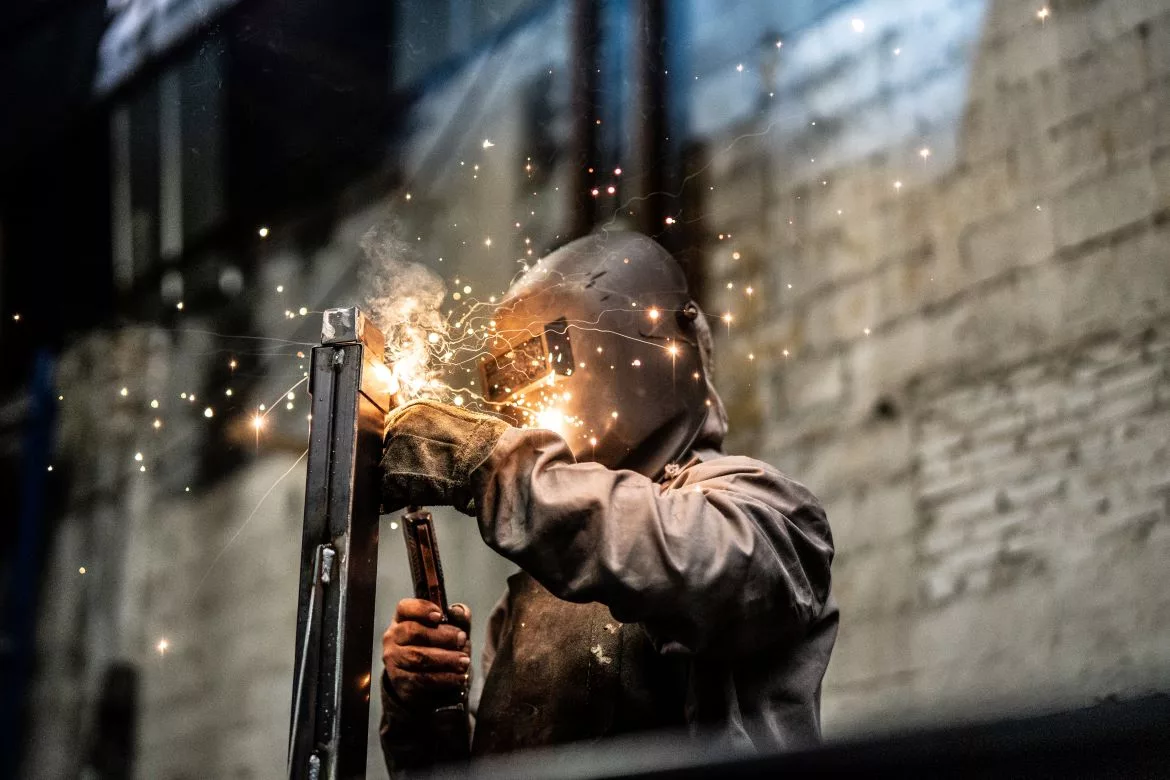
Credit: FG Trade / E+ / Getty Images
When it comes to modern welding technology, facility managers often focus on how integration would improve productivity and profitability — many overlook safety. Every advancement, from personal protective equipment to drones, has significant safety implications.
Implications for safety
Welding isn’t exactly a safe job. According to the Bureau of Labor Statistics, it saw 2.5 nonfatal on-the-job injuries per 100 full-time workers in 2022, many of which required days away from work. Being around heat, fumes and ultraviolet light for hours increases the chances of burns, shocks and exhaustion.
Compared to sectors like mining, agriculture and roofing, welding is relatively safe. However, each workplace accident affects current and potential workers. As more injuries happen, more welders will be out of commission — and fewer young adults will be interested in entering the field.
Advancements to existing welding technologies
For years, engineers have refined welding tools and personal protective equipment. Decades of steady advancement have culminated in several cutting-edge technologies that will make technicians more productive, comfortable and safe.
Positioning equipment — like gear tilt and benchtop positioners — has come a long way in recent years. It decreases the chances of injury by reducing repositioning-related strain and improving ergonomics, facilitating higher productivity. Facilities using it benefit from reduced material waste and increased profitability.
Helmets are another industry staple that have significantly advanced recently. Powered air-purifying respirators reduce the amount of cancer-causing fumes technicians inhale. They have an effective protection factor considerably greater than the required minimum. In fact, some models perform at least 52 times better than New Zealand and Australian standards.
Other minor advancements have led to substantial quality-of-life improvements. Designing new helmets with highly efficient power sources and modern materials has made them as lightweight as possible. For reference, one company increased its auto-darkening filter’s size by 40% while only adding 0.35 ounces.
Helmets aren’t the only thing getting lighter — the automotive and aerospace sectors are testing a transition to lightweight materials. Currently, anywhere from 30-50 different grades of advanced high-strength steels exist, and their number increases often. Using aluminum and composites instead of conventional steels may become the new norm.
Emerging technologies being used in welding
While many technological advancements have been built on previous inventions and improvements, some are entirely new to the industry. One example is collaborative robots — often called cobots — that work alongside people. Many make equipment more ergonomic and easier to use, lessening the physical demand on welders.
Drones are another type of robot finding a foothold in the industry. They can inspect welds in dangerous or hard-to-reach locations like bridges, pipelines and confined spaces, eliminating the need to set up scaffolding and conduct manual inspections.
Some facilities have begun using virtual reality (VR) headsets to train new hires. They provide an immersive, controlled environment where learners can train without risking accidents or injuries. They can also repeat courses or tests as often as needed to get it right — there’s no need to waste materials or management’s time.
Some facility managers are using augmented reality (AR) in similar ways. These headsets display digital elements and overlays, providing real-time guidance, instructions and reminders. Technicians can use it to help them figure out a complex weld or brush up on techniques.
Three-dimensional (3D) printing is another emerging technology that has found its way into welding. These printers can produce custom fixtures, jigs or gear in minutes to make equipment more ergonomic and easier to handle. Modern machines aren’t limited to plastic, either — they can print wood, silicone or even metal.
How technological advancement affects safety
These technological advancements have major safety implications — many of them positive. Lightweight helmets, automated cobots, 3D-printed ergonomic tools and positioning equipment can make technicians’ jobs more comfortable, substantially accelerating their time to completion and improving their weld quality.
While the emergence of new technologies and standards will eventually require welders to learn new welding techniques, they can adapt quickly with the help of VR training and AR guidance. This way, facility managers ensure their new hires and longtime workers remain knowledgeable and safe.
While some industry professionals are concerned workers could become too reliant on gadgets, their worries are largely unfounded. Welding is driven by focus and skill — no amount of headsets, cobots or drones will change that. Besides, overreliance on technology may not matter as much when it improves safety, weld accuracy and traceability.
Since the American Welding Society estimates there will be a 400,000-worker shortage in 2024, making the industry safer and more accessible is crucial. Instead of holding out against technological advancements, facility managers should embrace them — in all likelihood, future generations of welders will come to see them as part of the job.
Future technologies could impact safety further
As facility managers become more comfortable adopting modern technologies, even those not conventionally used in the industry, they will experience fewer workplace accidents and injuries. Over time, these minor improvements may give welding a better reputation, driving interest in the field.
For now, there’s no telling what future technologies will appear — and which will integrate well into welding. The next big breakthrough could be anything from artificial intelligence to quantum computing, depending on where technological advancements lead engineers in the next few decades. That said, using those inventions to improve safety could be key.
Looking for a reprint of this article?
From high-res PDFs to custom plaques, order your copy today!


.webp?t=1721257160 "download (1).jpg")
