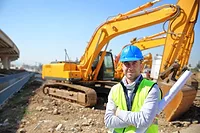
Essential Skills for Heavy Machinery Operators in a Technology-Driven Environment

Photo credit: Francisco Javier Ortiz Marzo / iStock / Getty Images Plus
Many sectors see the advantages of digital transformation and deem it essential to adopt. Heavy machinery is no exception, and operators must upskill to adapt to new workflows and expectations.
Digital Technology Operation Skills
Modern equipment will have embedded and remote-control systems, including excavators, cranes and other earthmoving technologies. Research demonstrates these aspects of heavy machinery operations could be the most advantageously impacted by the implementation of advanced technologies, including:
- Monitoring and control
- Data-driven performance optimization
- Tracking and navigation
Therefore, staff must learn how to navigate digital interfaces and how their functionalities impact machinery performance.
Frequently, these programs connect to other advanced devices, such as sensors, robotics, drones and cameras. Technicians must learn how to use controls smartly for the most productive results. Eventually, they will see how commands in digital systems immediately influence projects autonomously and semi-autonomously.
Data Analytics and Software Skills
Machine operators will need to be able to engage with more advanced features. These include monitoring key performance indicators (KPIs) and leveraging predictive maintenance. Workers need to know how to parse analytics and use software to visualize them in useful formats, such as spreadsheets or graphs.
Some heavy machinery programs could have other features, such as artificial intelligence (AI). It could learn the behaviors of specific operators and begin to recognize different environments and jobsites. Technicians must know how to connect these capabilities with their machines so oversight is as comprehensive and accurate as possible. Then, they can learn how to take the software’s maintenance suggestions and implement them into workflows naturally.
Cross-Functional Digital Skills
Employees may also need to work with advanced systems outside the programs connected to heavy equipment. Digital transformation often includes expanded integration of the tech stack throughout other aspects of the business. For example, clock-ins and clock-outs may also be digitized, adding another process to learn.
Workers need to deepen their ability to work with end-to-end applications. Project documents and timelines might move from physical file folders to a cloud provider. Blueprints may be accessible in an app. These realities demonstrate how diverse and versatile incorporation can be. As much as staff need to learn to effectively use every connected service and device, they must maintain an open mind to establish mental resilience to repeated workflow alterations.
Cybersecurity and Digital Safety
Workers may know the ins and outs of conventional heavy machinery. Now, there are more safety concerns with potential cybersecurity compromises. Learning digital hygiene is vital to preserving data security and privacy, especially for employees and contractors. Developing these skills will also protect clients, preserving relationships and contracts.
Equipment operators can begin by knowing what legal and regulatory requirements are required. Workers only need to know the best practices in their realm of influence, discovering how human error could jeopardize operations if they do not secure connected equipment.
Problem-Solving with Digital Tools
Workers are used to spotting problems in their machines. Now, they will need to identify issues in cyber environments, too. Situational and digital awareness will work hand in hand, making projects safer for everyone. This is essential, as 75% of safety infractions on construction sites involve heavy machinery. Introducing new tools could expand the room for error, but it could also make it simpler for the workforce to notice and prevent concerns.
Seeing potential problems in software and the field engages workers’ problem-solving skills because it forces them to troubleshoot digitally and manually. In practice, this could require them to use diagnostic tools, software and monitoring equipment remotely.
Continuous Learning and Adaptation
Digital transformation is an ongoing project. Enterprise resource planning, robotic process automation and cloud expansion are only a few ways companies may attempt to change heavy machinery operations. Previously, a workday could include getting on a lift to repair an elevator. Now, robots are building shafts with as many as 942 anchor bolts, saving workers from these dangerous environments. Working alongside technologies demands a culture and mindset shift.
The proven promise of functional savings, sometimes upward of 20%, implies organizations are willing to try many innovations under the digital transformation umbrella. Therefore, employees must increase their flexibility.
Stakeholders could try new strategies or programs with the intent of it being a trial run or a permanent fixture. Staff must expand related soft skills like adaptability and quickness to learn if novel changes appear frequently. These circumstances demand that workers educate themselves continuously. If they embrace curiosity, then it will be easier for employees to see how Industry 4.0 and 5.0 concepts make heavy equipment more efficient and safer.
Learning Opportunities in Heavy Machinery
Digitization is not exclusive to office environments. Fieldwork, construction and heavy evolution. Operators must eventually expand their skill sets, weaving conventional workplace practices with futuristic innovations. Investing in this education will make projects safer and more informed because of the insights technology provides.
Looking for a reprint of this article?
From high-res PDFs to custom plaques, order your copy today!