Safety and Health Under Siege: Let’s Separate Facts From ‘What Ifs’
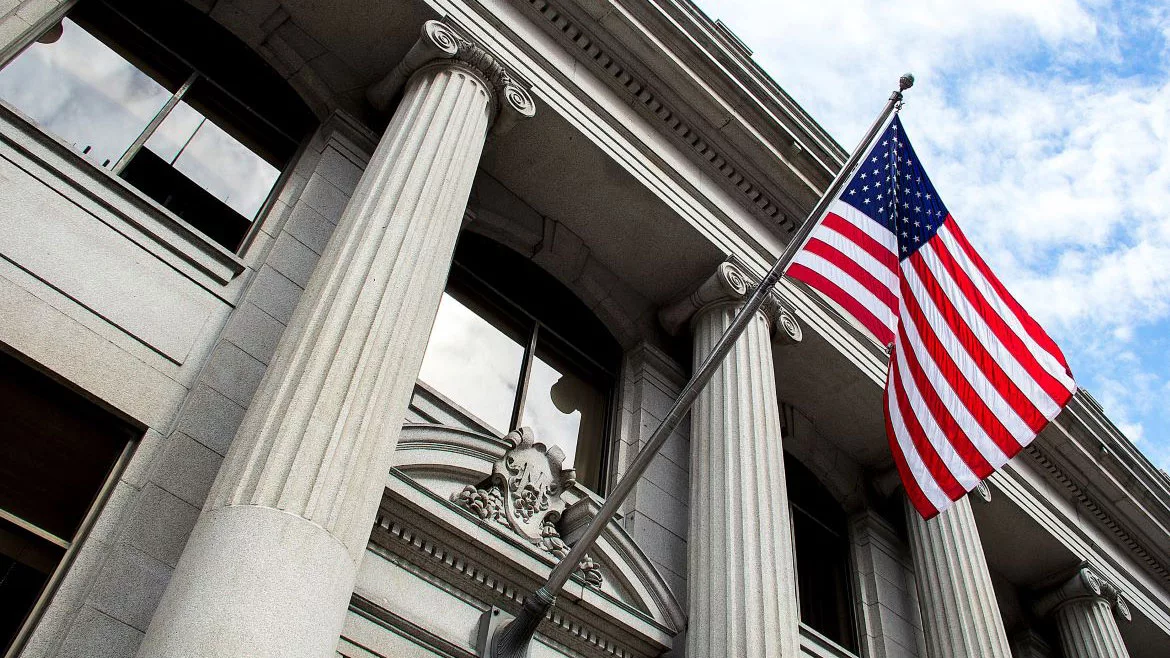
Credit: Getty Images
Devastating. Damaging. Disruptive. Horrific. Reporting on President Trump’s unprecedented downsizing and deregulation of OSHA, NIOSH, EPA and MSHA is a headline writer’s delight. This article separates facts from speculation beneath the headlines. And there are many more “what ifs” than facts less than 100 days into the second Trump administration.
These announcements are fact:
- Executive Order 14192: at least 10 existing regulations must be repealed for every new one proposed;
- 11 OSHA field area office planned for closure;
- layoffs at NIOSH of roughly 875 employees, two-thirds of the workforce, including the end of John Howard’s 22-year tenure as director;
- more than 30 EPA regulatory roll backs, including a halt on proposed PFAS “forever chemicals” pollution limits;
- 34 MSHA offices slated for closure.
Among possible consequences:
- “More injuries, illnesses and deaths. It’s that simple,” asserts former OSHA chief Dr. David Michaels.
- “Workers’ safety will be left solely in the hands of employers… doing so is a recipe for disaster, especially in the mining industry,” says United Mine Workers of America (UMWA) International President Cecil E. Roberts.
- “How will OSHA and MSHA employees provide timely services to areas at a distance (due to office shutdowns)?,” asks American Industrial Hygiene Association President Nicole Greeson.
Potential casualties
The losses to the EHS field could be staggering. The elimination of NIOSH and an untold number of its activities after being merged into the new Administration for a Healthy America within the Department of Health and Human Services could mean discontinuing: the testing and certifying of respiratory protection; science policy updates; the Pittsburgh Mining Research Division; 18 NIOSH-funded Education and Research Centers (ERCs) providing health and safety graduate and post-graduate training; NIOSH centers for robotics, work and fatigue research, motor vehicle safety, firefighter safety and health, direct reading and sensor technologies; nanotechnology research; more than 300 health hazard evaluations; and NIOSH grants and funding which totaled $107.5 million in 2023.
Regulatory relief at OSHA could entail a reduced workforce and fewer inspections; less enforcement; withdrawal of the heat stress prevention and fire brigade standards proposals; workplaces and neighboring communities put at increased risk due to area office closures (Louisiana’s Cancer Alley of numerous oil and chemical plants no longer serviced by the state’s sole area office is cited by Michaels); delayed response to employee complaints and employer questions in areas where area offices have been closed; reduced agency consulting; fewer National Emphasis Programs; trouble recruiting compliance officers and office personnel due to lost trust in job stability; the loss of institutional memory due to buy-outs, layoffs and future reductions in force (RIFs); and a rumored agency reorganization that one OSHA insider said would render the org chart unrecognizable.
Note the italicized word “could.” As Jim Frederick, OSHA’s No. 2 official in the Biden years told ISHN: “There are many unknowns in the dynamics currently.”
Frayed nerves
In numerous interviews conducted for this article, time and again sources used caveats such as “It’s not clear;” “It could mean;” “Who knows?” “Nothing is definitive at this point;” and “There is an information vacuum.”
There is the sense in the EHS world that, as one pro puts it, “We’re waiting for the other shoe to drop.” Or as another says, “There is the sense this not the end of the onslaught.”
More than a dozen interviews clearly conveyed that the “overwhelming feeling is sense of anxiety, nervousness,” and “everybody is really worried about staff cuts, budget cuts.”
With good reason. The paradigm-changing actions of the second Trump term — described as slash and burn, taking a chainsaw to agencies, scorching the earth, etc. — make clear “this is not a normal administration,” as one source said. Decisions and their execution are rapid-fire, unpredictable and often lack transparency.
The party line
Countering the anxiety and outrage of EHS advocates are the words coming from the Department of Health and Human Services (HHS) and the Department of Labor (DOL). In an HHS video, Secretary Robert Kennedy, Jr. said: “Silos, fiefdoms, redundancies, not talking to each other, so we’ll streamline HHS, give it a clear sense of mission, we will preserve core functions in Make America Healthy.”
What core functions of NIOSH will be preserved? A skeptic would add “if any.”
At the DOL, new labor secretary Lori Chavez-DeRemer in March sent a memo to executive staff and agency heads stating, "Under the leadership of President Trump, our focus remains on promoting job creation, enhancing workforce development, and ensuring safe working conditions, wages, and pensions so that every American has the opportunity to succeed."
How will safe working conditions be ensured?
Who’s running the show?
Who will wield ultimate authority at DOL, HHS and EPA? This concern was raised in several interviews. Will it be the cabinet secretaries, agency heads such as OSHA administrator nominee David Keeling, or the White House, the Office of Management and Budget, or the Department of Government Efficiency (DOGE) — or some combination of external decision-makers?
Former OSHA head Michaels told ISHN: “The decisions (regarding area office closures) must be left to Secretary of Labor Lori Chavez-DeRemer and incoming OSHA administrator David Keeling and should be made only after serious study of the impact of the changes on the workers, employers, and OSHA operations.”
“We have Donald Trump. We have Elon Musk. And we have I think serious doubt about who's going to be controlling things at the Department of Labor,” former OSHA No. 2 and acting director Jordan Barab from the Obama administration told ISHN.
Former OSHA deputy Frederick said senior career leaders at the agency “fear they won’t be listened to by political appointees; that they can’t be candid and voice disagreement; there is the fear of being steamrolled, overridden and threatened with dismissal.”
Pushback gains momentum
This is why EHS associations such as the American Society of Safety Professionals (ASSP) and AIHA are closely monitoring what happens in Washington and issuing calls to action. ASSP’s website urges: “Share Your Voice: Contact Your Lawmakers” and offers a search to find representatives and senators and a template that can be downloaded for customizing a message. “Join the Campaign to Restore NIOSH” tops AIHA’s homepage, with a “Learn More” link.
The drastic cuts to NIOSH have brought calls for House and Senate oversight hearings, which are scheduled for April. More than 130 organizations representing the “Friends of NIOSH” sent an open letter to Congress in March urging lawmakers “to do everything possible to reverse this misguided move immediately so that NIOSH’s vital mission continues. “Congress holds the sole authority to undertake such a vast reorganization of HHS,” a House Democrat said in a statement.
If this is the response by Congress and EHS groups to NIOSH cuts, any similar reorganization of OSHA would be met with even more outrage and aggressive actions.
Early encouraging signs
In addition to the mounting counter-offensive to save NIOSH and the possibility of Congress walking back some of the cuts, there are positive signs regarding EHS presently occurring in Washington. Sources particularly point to the DOL (“It all looks pretty normal right now,” says one):
- Acting OSHA administrator Amanda Laihow has previous experience on the Occupational Safety and Health Review Commission and “doesn’t seem to be a ‘magamaniac’,” said Barab.
- OSHA administrator nominee David Keeling is a “consummate EHS professional,” said Frederick, with decades of senior executive experience at UPS and Amazon. Keeling recognizes the symbiotic relationship between the agency and the profession with both sides needed to balance the equation, said Frederick.
- Labor Secretary Chavez-DeRemer was endorsed by Teamsters Union President Sean O’Brien, who has personal ties to President Trump. “Trump is being a little careful with DOL” due to that relationship, said Barab.
- “Dismantling the Department of Labor would be an audacious undertaking for a President who owes his second term, in no small part, to the support of working-class voters,” The New Yorker reported.
- “Incredibly dedicated, knowledgeable, experienced careerists out in the field or in Washington will continue to do the work to make sure that OSHA continues to do the best it can to meet the mission of the agency,” said Frederick.
- Enforcement is being publicized. Interestingly, not on OSHA’s website but the DOL’s. This news was posted April 7: “US Department of Labor cites Pennsylvania roofing contractor after workers again exposed to falls, safety hazards.” “A U.S. Department of Labor investigation found that improperly stored hazardous chemicals were the cause of a fire at a Bio-Lab Inc. facility in Conyers (GA).” “US Department of Labor, Missouri roofing contractor reach agreement after teen worker’s fatal fall in 2023.”
The bottom line
Of the “many unknowns in the dynamics currently,” the most significant is: How many employers will perceive the heat is off and slack off on safety and health?
Is former OSHA chief Michaels’ assessment correct when he says, “Closing offices will result in more injuries, illnesses, and deaths. It is that simple.”
There is no consensus among those interviewed for this article. For instance, ASSP President Pam Walaski, asked if she shared Michaels’ concern, told ISHN, “I’m not sure I’d draw that direct of a connection.”
Experts can offer mixed assessments. Most employers will not intentionally relax their safety measures, said Chris Nickels, a labor attorney with Quarles and Brady. OSHA can still show up unannounced, he said. But “it is certainly possible that employers will take a second look at safety and health investments if there is less enforcement under a Trump administration,” he added.
Here is a big picture view drawn from multiple interviews. Workplace safety and health in the U.S. has long been marked by employers traveling in three different orbits:
- A select group of employers — prominently Fortune 200 multinationals and companies running high-hazard operations — have an embedded commitment to safety and health values, maintain mature health and safety systems, take the lead with EHS technology, and regularly deliver low incidence rates. They are well beyond compliance, with OSHA in the rear-view window. Their attitudes and practices will be least affected by any changes in Washington.
- Employers — the bad actors fortunately in the minority — put profits over people, often deliberately cut corners, put a premium on production and blame workers for incidents and injuries. Some aim for minimum OSHA compliance; some play the odds of never being inspected and skimp on safety. A full-time safety and health position on the payroll is unlikely. More likely is a high number of serious injuries. Fatalities are not uncommon.
- Most employers operate in between these polar opposites. Owners and managers don’t want to cause harm but also don’t have resources to do more than try to make sure they are complying. Jim Frederick said most have “iffy” safety and health programs.
These employers are most likely to be fence sitters. Some might cut spending levels on safety and health if a nationwide retreat on EHS values is widely publicized. Investments also could be cut if competitors upend a level playing field by spending less on safety and health outcomes, potentially gaining a business advantage.
One national metric indicating a downward spiral in safety and health practices and outcomes would be the Bureau of Labor Statistics’ annual injury, illness and fatality statistics. These are lagging performance indicators — what happens in 2025 and 2026 won’t be published until 2027 and 2028. Even then, numbers may be suspect if injuries are not reported because enforcement has declined.
In a worst-case scenario, the gap between committed and apathetic employers becomes a gulf in coming years. The best-case scenario shows injuries, illnesses and fatalities decreasing. But if, at best, the number of serious injuries and fatalities continue to stagnate, holding the line without performance improvements will be of no solace to the EHS profession.
Looking for a reprint of this article?
From high-res PDFs to custom plaques, order your copy today!