ISHN logo
search
cart
facebook twitter linkedin youtube
  • Sign In
  • Create Account
  • Sign Out
  • My Account
ISHN logo
  • NEWS
    • Today's News
    • Global Safety News
    • Government Regulations
  • PRODUCTS
    • Product Innovations
    • Featured Products
  • TOPICS
    • Environmental Health and Safety
    • Facility Safety
    • Workplace Health
    • Occupational Safety
    • PPE
    • More Topics
  • CONSTRUCTION
  • TECHNOLOGY
  • COLUMNS
    • Best Practices
    • Dave Johnson: What’s going on
    • Editorial Comments
    • Leading Safety
  • MULTIMEDIA
    • ISHN Podcast
    • Videos
    • Cold Stress Education Quiz
    • Webinars
    • White Papers
  • MORE
    • Buyer's Guide
    • Newsletters
    • Convention Companion
    • Polls
    • Events
    • ISHN Store
    • Sponsor Insights
  • EMAGAZINE
    • eMagazine
    • Archived Issues
    • Contact
    • Advertise
  • JOIN TODAY!
Occupational SafetyFacility Safety

Fixing the Hidden Dangers in Warehouses

Learn how to optimize ergonomics to boost efficiency and safety
By Kevin Ledversis
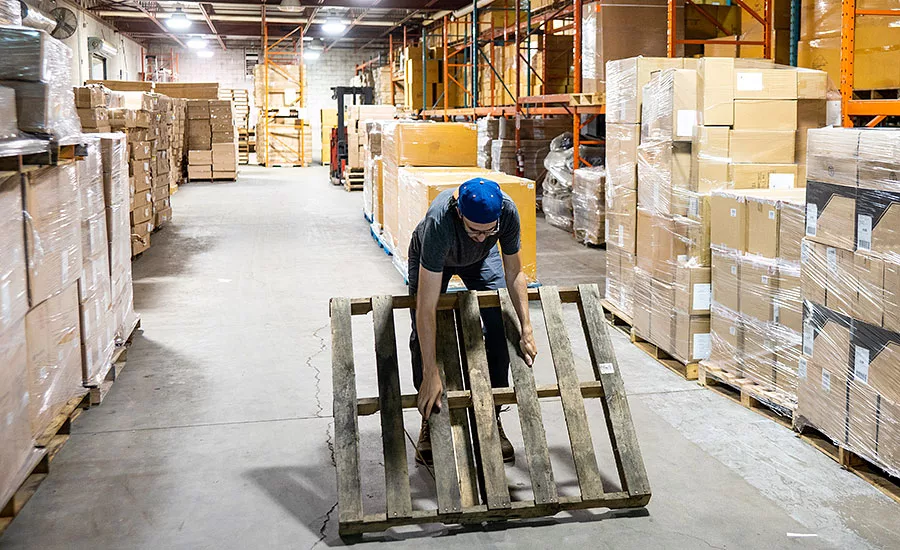
Ergonomics warehouse safety

Credit: Getty Images

June 5, 2025

Warehouses are fast-paced environments where efficiency is everything. But what happens when poor ergonomics leads to strained workers, injuries, and lost productivity? The reality is that workplace strain isn’t just an inconvenience — it’s a safety crisis. From chronic back pain to musculoskeletal disorders, poor warehouse design can put workers at risk, increase turnover, and cost businesses thousands in lost labor and medical expenses.

Yet, many facilities continue to disregard basic ergonomic principles. Take inventory placement, for example — 20 percent of products in a facility are picked 80 percent of the time. Keeping frequently picked items within easy reach is an obvious way to reduce unnecessary bending and strain. So, why do so many warehouses ignore these simple fixes?

If you want to protect your workforce while improving productivity and revenue, optimizing warehouse ergonomics is essential. Here are six critical areas to address to create a safer, more efficient facility:


1. Poorly Designed Workstations

A workstation should be adjustable, comfortable, and designed to minimize unnecessary movements. If employees must repeatedly stretch, bend, or reach for tools and materials, they will experience fatigue, discomfort, and potential injuries.

An ergonomic workstation keeps essential tools within arm’s reach, minimizes excessive bending, and improves efficiency by reducing wasted movement. Investing in adjustable-height workstations allows employees of different sizes to work comfortably and reduces strain.


2. Improper Lifting Techniques

One of the most common causes of warehouse injuries is poor lifting technique. When workers lift heavy items incorrectly — bending at the waist instead of the knees, or twisting their back while carrying loads—they put extreme stress on their spine and muscles.

To prevent injuries:

  • Train employees on proper lifting techniques (e.g., using leg muscles instead of the back).
  • Provide lifting aids such as braces, pallet jacks, and lift-assist devices.
  • Encourage team lifts for heavier loads to reduce individual strain.


3. Cluttered Floors and Aisles

When ergonomics are ignored, warehouse floors and aisles become cluttered with pallets, scanners, and stray equipment, creating a chaotic and unsafe work environment. Not only does this lead to slower workflows and bottlenecks, but it also increases the risk of trips and falls.

A simple solution? Equip workers with mobile workstation carts that keep essential tools organized and within reach. This small change reduces clutter, speeds up work, and minimizes hazards.


4. Frequent Bending, Twisting, and Reaching

If an employee is forced to constantly bend, twist, and turn to scan barcodes or move products, their body pays the price. Over time, repetitive motions lead to chronic pain, fatigue, and injury.

To reduce strain:

  • Store high-demand items at waist height to minimize bending.
  • Use height-adjustable barcode scanners and work surfaces.
  • Design work areas so employees can move in straight lines instead of excessive twisting.


5. Lack of Fall Hazard Protection

Falls are one of the most common warehouse injuries, and poor ergonomics often play a role. If workers are reaching too far, standing on unstable surfaces, or climbing to retrieve items, they are more likely to fall, leading to serious injuries and damaged inventory.

  • To prevent falls:
  • Keep commonly used products at accessible heights.
  • Provide stable platforms and step stools where needed.
  • Ensure clear visibility and non-slip surfaces in all work areas.


6. Ignoring Worker Feedback and Satisfaction

A well-designed warehouse prioritizes worker safety and comfort, and the best way to improve ergonomics is by listening to employees. According to the Newcastle Systems Worker Happiness Survey, workers with access to ergonomic equipment, adequate material handling tools, and organized workstations reported less physical fatigue, higher job satisfaction, and increased productivity.

Ignoring ergonomics doesn’t just put workers at risk—it hurts business performance, too. Investing in proper tools and equipment is a win-win for both employees and the company.


Make Warehouse Safety a Priority

From the moment a new hire steps into your facility, they should feel protected, supported, and set up for success. Investing in warehouse ergonomics isn’t just about reducing injuries—it’s about caring for your workers, boosting morale, increasing retention, and optimizing efficiency.

If your facility isn’t designed with worker health and safety in mind, it’s time to rethink your approach. Because when workers break down, so does your warehouse.

KEYWORDS: efficiency ergonomics fall hazards warehouse safety

Share This Story

Looking for a reprint of this article?
From high-res PDFs to custom plaques, order your copy today!

Kevin ledversis

Kevin Ledversis serves as VP of Sales at Newcastle Systems and helps customers identify where and how process improvements can be made in warehouse operations using bar code technology. Kevin has over 30 years of experience within the Automatic Identification and Data Capture (AIDC) industry. Prior to joining Newcastle Systems, he worked in sales for Weber Labeling Solutions, Intermec, and Printronix, where he developed solutions for complex labeling applications in a variety of verticals, such as distribution, manufacturing, healthcare, and retail. Ledversis earned his MBA degree from the University of Hartford and a bachelor’s degree from Bryant University. He received his Lean Bronze training from the Greater Boston Manufacturing Partnership and his Lean Six Sigma Green Belt from Leancor. He has been a regional board member of the Association for Manufacturing Excellence and The Warehouse Education Research Council.  

Recommended Content

JOIN TODAY
to unlock your recommendations.

Already have an account? Sign In

  • forklift safety

    Exploring the latest technologies in forklift safety

    With more staff and more stock in warehousing now more...
    Facility Safety
    By: Josh Cramer
  • welding

    All about welder’s flash or arc eye

    A flash burn is a painful inflammation of the cornea,...
    Environmental Health and Safety
  • dangerous jobs

    The 10 most dangerous jobs in the U.S.

    On-the-job deaths have been rising — hitting the highest...
    Transportation Safety
    By: Benita Mehta
Manage My Account
  • eMagazine Subscriptions
  • ISHN Newsletter & Other Newsletter Alerts
  • Online Registration
  • Manage My Preferences
  • Subscription Customer Service

More Videos

Sponsored Content

Sponsored Content is a special paid section where industry companies provide high quality, objective, non-commercial content around topics of interest to the ISHN audience. All Sponsored Content is supplied by the advertising company and any opinions expressed in this article are those of the author and not necessarily reflect the views of ISHN or its parent company, BNP Media. Interested in participating in our Sponsored Content section? Contact your local rep!

close
  • man wearing the the Sundström SR200 Full Face Mask Respirator
    Sponsored byOHD

    5 Fit Testing Mistakes That Could Cost You

  • This image shows Magid AcuSpex polarized blue mirrored safety glasses.
    Sponsored byMagid Glove and Safety

    Construction PPE Guide: What Crews Need for Each Task

  • lone worker in confined space
    Sponsored byAlphasense Ltd.

    GET THE LEAD OUT of your Safety Oxygen Sensors!

Popular Stories

chemical safety

It Was Just Sugar: Catastrophic Safety Failures in Louisville

Automated loading dock equipment

After March 2026 Rivian Death, Safety Managers Reassess Loading Dock Systems Under OSHA's Warehouse Emphasis Program

psychology in the workplace

Most Workplaces Measure Psychological Safety, Ignoring Psychosocial Risks

top 10 most dangerous jobs

Events

July 21, 2026

When Dust Becomes a Disaster

In this webinar, attendees will gain a foundational understanding of combustible dust hazards, including the conditions that lead to fires and explosions, common ignition sources, and high-risk processes found throughout industry.

View All Submit An Event

Poll

Seasonal Readiness

With the federal heat stress prevention rule on the horizon, which area of your safety program needs the most attention?
View Results Poll Archive

Products

Surviving an OSHA Audit A Management Guide, 2nd Edition

Surviving an OSHA Audit A Management Guide, 2nd Edition

See More Products

ISHN Podcasts

Related Articles

  • forklift

    How to ensure forklift safety in warehouses

    See More
  • warehouse worker

    Safety and security in warehouses: What to know

    See More
  • warehouse worker

    5 technologies to support social distancing in warehouses

    See More

Related Products

See More Products
  • 1119906652.webp

    Alive and Well at the End of the Day: The Supervisor's Guide to Managing Safety in Operations, 2E

  • fearless world.jpg

    The Fearless World of Professional Safety in the 21st Century

See More Products

Related Directories

  • ACGIH

    ACGIH is a 501(c)(3) charitable scientific organization that advances occupational and environmental health. Examples of this include our annual editions of the TLVs and BEIs book and work practice guides in ACGIH’s Signature Publications. ACGIH’s key mission is – To Protect Workers Around the World. ACGIH is fighting for you! We are here to protect you! ACGIH is growing stronger and passionately fighting for your health and safety as you face those hidden dangers in your workplace environments. ACGIH works continuously to enhance the occupational, environmental, health, and safety fields. Our research provides you with the science and data you need to ensure the safety of your employees and community. Subscription support is crucial to the continued research and development of occupational science.
×

Become a Leader in Safety Culture

Build your knowledge with ISHN, covering key safety, health and industrial hygiene news, products, and trends.

JOIN TODAY
  • RESOURCES
    • Advertise
    • Contact Us
    • Directories
    • Manufacturing Division
    • Store
    • Want More
  • SIGN UP TODAY
    • Create Account
    • eMagazine
    • Newsletters
    • Customer Service
    • Manage Preferences
  • SERVICES
    • Marketing Services
    • Reprints
    • Market Research
    • List Rental
    • Survey/Respondent Access
  • STAY CONNECTED
    • LinkedIn
    • Facebook
    • YouTube
    • X (Twitter)
  • PRIVACY
    • PRIVACY POLICY
    • TERMS & CONDITIONS
    • DO NOT SELL MY PERSONAL INFORMATION
    • PRIVACY REQUEST
    • ACCESSIBILITY

Copyright ©2026. All Rights Reserved BNP Media, Inc. and BNP Media II, LLC.

Design, CMS, Hosting & Web Development :: ePublishing