The Future of EHS: How One Executive Built His AI Digital Twin
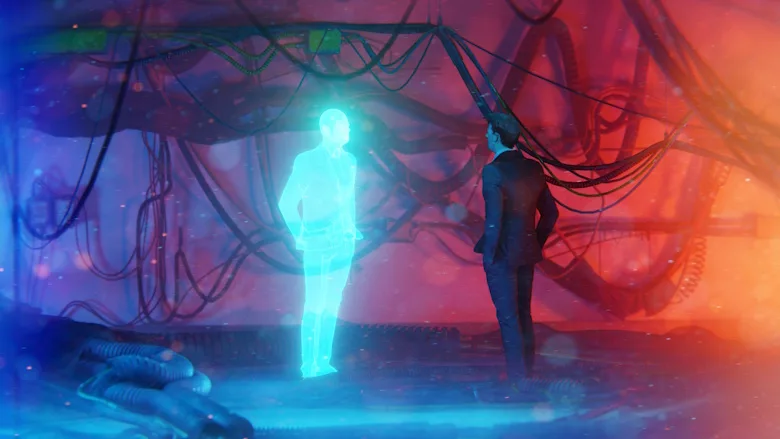
Meet Chetwin, the executive digital twin of Chet Brandon, CSP, CHMM, senior director of global EHS, operations for Hexion, Inc., a chemical manufacturer of adhesives, coatings and resins.
Brandon is an EHS thought leader with more than 8,000 LinkedIn followers. With his job covering 24 global chemical manufacturing sites, 2,000 employees and overseeing 50 subordinates and contractors, he needed to scale his leadership, ensure consistent communication and give both Hexion executives and his subordinates access to his 30+ years of EHS knowledge plus OSHA and ANSI compliance documentation. So, he in effect digitally cloned himself. “I have to be present as a leader, but the twin spreads out my influence,” he told ISHN in an exclusive interview.
Brandon built his digital twin over a weekend this past August using OpenAI's ChatGPT technology. He describes how he did it, why he did it, and the results in a blog post https://leadingehs.com/2025/08/03/ai-as-a-strategic-partner-building-a-digital-twin-to-advance-safety-and-sustainability/.
“It took two days to get the digital twin functional, to mirror my operational knowledge, safety philosophy, ethics, my decision-making logic and communication tone – my strategic voice,” says Brandon.
'Most pros' can do it too
He says EHS pros with a career’s worth of documented experience like him can create their own digital twins, though right now artificial intelligence adaptation by pros is “all over the map,” he perceives.
“Most pros do have some degree of curated knowledge. In the computer age we hang on to those files. Most pros have some data base on their work; whatever they have is a great start on a digital twin.”
Brandon’s digital twin is constructed from a carefully curated body of knowledge from the many articles he has published on his website LeadingEHS.com; his LinkedIn profile with insights into his roles, achievements and thought leadership over time; conversations he recorded; and historical records of his work in past positions. Records of his involvement with the American Society of Safety Professional’s (ASSP) task force on artificial intelligence, at the ASSP board level, in ASSP volunteer and national committees and his ASSP ®conference presentations were also part of the deep data transfer to the digital twin. He also added OSHA and ANSI documents. “I knew I would get compliance questions,” he says.
His published works and extensive documentation — totaling hundreds of pages — enables his twin to reflect not only what he has done, but how he thinks and his unique communication style. He says his digital twin isn't just technically accurate, but it is authentically him in both tone and intent.
“Most pros can get started on building a digital twin; reading my blog will help,” he says. “If a pro is active in publishing, the digital twin will eat it up. It’s a good idea to save your work, your best work.”
Brandon is quick to assert he did not build his digital twin to replace himself. “Twins do not replace reality. Safety is all about person-to-person relationships, that’s the reality of safety.”
Thought partner deliverables:
He uses his twin to:
- Produce drafts for safety directives, board communications and performance alignment documents;
- Articulate proactive risk management plans or frame a cultural transformation initiative;
- Act as a coaching companion for site level and functional leaders using embedded frameworks like Hazard Recognition Plus ®, the hierarchy of controls, and stop work authority protocols. Frontline leaders can get immediate, tailored guidance by asking queries.
- Deliver rapid first-draft communications, talking points and action frameworks for quick decision-making during high-pressure scenarios such as critical incidents;
- Analyze EHS performance data to translate complex trends into actionable narratives, using his professional voice and tailored for operational teams needing clarity;
- Develop executive communication and reports and respond quickly to executive level queries with accurate answers that are in synch with his tone and priorities;
- Critique his own written communications for quality, brevity and readability;
- Generate ideas offering fresh perspectives, solutions and emerging technologies Brandon might not otherwise have thought of. He calls his digital twin a thought partner.
Setting boundaries
Brandon has clear, firm boundaries on what his twin can and can’t do. “You can’t make compliance decisions solely in a question-and-answer with the twin. You’ve got to talk to me. You can query the twin to have a pre-discussion with my intellect, and then we can have a good real-time discussion.”
I can query what is the most effective communication style with my executives. The twin will crank out three or four paragraphs that I use to guide my comments. I can tell the twin, here are the top three topics I want to discuss, give me insight on these. I don’t want to go too deep with the CEO, so I use the twin to format the 30-minute discussion. I want to maximize the impact of my time with the CEO. I use the twin as an executive coach.”
He empathically says, “We have to learn as pros that a digital twin is not just an answer generator. It can critique and expand its own work. We really must understand working with a twin is a conversation, a collaboration. It is not simply a question-and-answer. And it cannot replace a human.
“Part of my central theme is that humans have to stay in the loop, just as a pilot will have to stay in the cockpit. Humans will have to stay involved. Human intuition is unique; intuition is somewhat a matter of educated guesses; a computer can’t do that. The technology doesn’t have the thought process to do that. A human can improvise, and the relationship with other humans, those human-to-human relations, are too complex for AI to fully mimic. Humans will always value human relationship the most.”
Seeing risks
As artificial intelligence sweeps across the EHS field, Brandon voices several concerns about risks he says must be addressed:
- “I worry that young pros don’t have that depth of experience to challenge the digital twin. Did it answer correctly your question — especially when lives are at risk. There is a lot of judgment and learning in EHS that takes years and years to learn. If you are just relying on ChatGPT that’s a problem.”
- “In today’s world we have instant experts. Here’s the answer from ChatGPT. There is the risk that society will be over-reliant and over-confident in the technology. Safety is a very complex field; there is so much going on in an industrial environment – you have processes, weather, contractors, it’s a complex environment to control. Our professional judgment will be devalued I worry.”
- “Situational awareness comes only if you’ve been in the situation before. This applies to daily EHS work. If automation fails, we still have to be situationally aware. When ChatGPT doesn’t know what to do, we need to know.”
Still, Brandon is bullish on AI’s potential in the EHS field. “It’s important to view AI and digital twins as an opportunity to improve the profession and ourselves. Let’s use the technology to its greatest potential in a collaborative way to take safety to the next level. This is a powerful tool and we are ethically responsible to make the most of this technology. Not to fear it but learn from it and use it. Over time it will differentiate performance.”
Looking for a reprint of this article?
From high-res PDFs to custom plaques, order your copy today!