Sustainable, Durable Alternatives to Paper Gaylords Eliminate Handling and Storage Safety Hazards
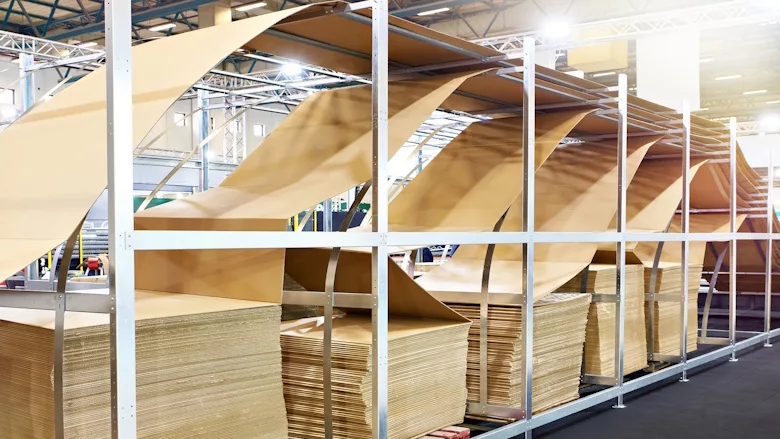
Bulk packaging in North America typically includes reusable packaging or expendable/single-use options such as paper gaylords. Paper gaylords are often considered unsafe for reuse due to their limited structural integrity, which can lead to collapsing or tipping hazards during handling and storage.
Safety limitations of paper gaylords
Paper gaylords are porous and will absorb moisture from direct water contact or atmospheric humidity. As the paper softens, the gaylord’s load strength is reduced, which can become a major cause for concern, especially as workers may be injured by both the gaylord falling apart and product falling out. In an application where filled, weighted gaylords are being stacked for use in a trailer or in a warehouse, this loss of strength can create a catastrophic failure that can cause worker injury.
Furthermore, paper gaylords with high moisture permeation can also lead to infestation. Pests are attracted to moisture and like to inhabit the nooks and crannies within open paper flutes — the internal core of the paper. This could bring various health and safety concerns to anyone who comes in contact with a paper gaylord.
Reusable packaging as an alternative to paper gaylords
The most sustainable alternative that keeps both product and workers safe are reusable plastic sleeve packs.
Due to their durable construction, sleeve packs offer application versatility, optimized space and reduced logistical costs and are heavily used in both the industrial automotive and retail supply chain segments.
For example, a popular plastic sleeve pack application in the retail supply chain segment is
transportation of inbound packaging used for food, beverage and consumer packaged goods products.
Let’s explore using reusable plastic sleeve packs as an alternative to paper gaylords.
Non-porous material
Plastic sleeve packs, unlike paper gaylords, are made of non-porous material that can be easily cleaned and won’t absorb moisture. This allows the ability to effectively transport products of all shapes and sizes, safely protecting contents from dust and dirt.
Application durability
Sleeve packs work well to transport and store lightweight components like caps and closures, blown bottles and plastic containers. Another popular application in the retail supply chain segment is the storage and distribution of raw materials, assemblies and finished goods.
Any major retailer who distributes goods directly from a distribution center to a brick-and-mortar store can utilize sleeve packs to ship mixed loads of full or split-case totes to meet demand. A bulky good that might not fit into a tote can be placed in a sleeve pack container, protecting the product from transport damage. Sleeve packs are a returnable packaging asset that provides good trailer utilization, helping to meet operational savings and sustainability goals.
Sleeve packs also work well for the automotive and industrial space, given the ease of customizing container heights and the distribution and storage of multiple lightweight components that go into an automobile.
Safety features that protect workers
A key safety feature that sleeve packs offer is a locking mechanism that secures the sleeve to the pallet or top cap. Additional options include an access door with Velcro latching to secure product within the container.
When removing contents out of the container, dumping equipment typically is used that rotates the sleeve pack 180 degrees; a locking mechanism keeps the container contents together.
Sleeve packs are designed for ergonomic use, allowing operation from a standing position to help prevent worker injuries. Unlike paper gaylords, where leaning stacks could be a safety risk, sleeve packs
interlock to provide secure stacking – six (6) high when full and 12 high when collapsed.
Demonstrate ROI over time
When asked why expendable packaging like paper gaylords is still in use, many businesses explain that although they’ve considered switching to returnable packaging, they haven’t identified a clear return on investment (ROI) to justify the transition.
But those businesses that reuse paper gaylords (which are not designed to be reused), will likely be getting limited returns and incur hidden costs associated with their porous surfaces, potential load strength reduction, risk for contamination and the potential for worker injuries and accidents.
Plastic sleeve packs, like all reusable packaging, are an upfront capital investment that will reduce packaging costs per trip through reuse, demonstrating its ROI over time. Sleeve packs, which can be collapsed down for storage and handled easily, are space-efficient and specifically designed for reverse logistics. For example, a major sleeve pack attribute is offering a higher cubic volume in a trailer than alternative rigid plastic knockdown or steel containers.
When using plastic sleeve packs, customers can get up to 266% more collapsed containers per trailer for return logistics. This reduces the transportation costs that are vital to any ROI, making sleeve packs particularly useful for high volume applications with quick return loops.
Looking for a reprint of this article?
From high-res PDFs to custom plaques, order your copy today!


