How Human-Led AI is Rewriting the Ergonomics Playbook

Musculoskeletal disorders (MSDs) affect 1.5 million workers and cost employers a staggering $18 billion annually. While traditional ergonomics programs successfully target major posture and lifting risks, repetitive hand and wrist strains have historically flown under the radar due to data collection barriers. Dr. Julia Penfield, Chief AI Officer at VelocityEHS, talks about a groundbreaking, first-of-its-kind AI assessment tool designed specifically to target hand and wrist injuries.
Hand and wrist injuries plague up to 40% of workers in high-risk industrial roles, often resulting in prolonged lost workdays and a lack of modified duty options. Historically, assessing these micro-motions required an ergonomist to physically travel to a site — a method that is fundamentally unscalable given the massive shortage of certified specialists.
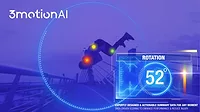
To bridge this gap, VelocityEHS has launched a technology capable of capturing 42 distinct key points in the hand and fingers purely from video. Overcoming the failures of general academic AI models, VelocityEHS spent four years partnering with the University of Michigan, University of Toronto, and Rutgers University to build a precise proprietary engine. This tool not only identifies complex grip types but also accurately estimates the force being exerted without requiring external sensors. The software closes the loop by shifting safety teams from a reactive "injury-tracking" mindset to a proactive framework focused on three key areas: risk assessment, root cause identification, and control implementation.
Penfield shared some insights into this technology in a recent podcast with ISHN.

Breaking the Grip of Workplace Ergonomics Injuries with Human-Led AI
Musculoskeletal disorders (MSDs) affect 1.5 million workers and cost employers a staggering $18 billion annually. While traditional ergonomics programs successfully target major posture and lifting risks, repetitive hand and wrist strains have historically flown under the radar due to data collection barriers. Dr. Julia Penfield, Chief AI Officer at VelocityEHS, talks about a groundbreaking, first-of-its-kind AI assessment tool designed specifically to target hand and wrist injuries.
Relying solely on manual, in-person assessments by certified ergonomists leaves millions of workers unprotected. The sheer volume of repetitive manual labor tasks vastly outnumbers the population of qualified specialists, Penfield said.
"Even if you have all the money in the world, there's not enough certified ergonomists to scalably assess the musculoskeletal risk of every single repetitive task that is being done by manual labor in the US... We have a customer that has a car manufacturing facility in Kentucky. And they do 5,000 ergonomics assessments a year. 5,000. How many certified ergonomists can they even fly to their site? Is it even an option? It's just out of question."
The complexities of assessing hand injuries
While a full-body AI ergonomics assessment requires tracking 17 to 27 major skeletal joints, analyzing a hand requires mapping 42 distinct key points to accurately decipher dexterity, finger placement, and wrist angles.
Penfield said: "There is no model out there today—literally no AI model—that you can give a picture of a worker holding a hammer and ask it, 'what type of grip does the worker have?' The closest you can come to is feed it to ChatGPT, Anthropic's Claude, or Google's Gemini... We ran a benchmark on 9,000 images and we realized the accuracy is a lot lower than what is required to commercialize a product."
Creating a new AI model
Standard generative AI models (like Gemini or ChatGPT) fail to achieve commercial safety accuracy, Penfield said. VelocityEHS spent four years in a specialized University of Michigan data chamber to train models that can determine both the type of grip (e.g., cylindrical vs. tripod) and the force exerted purely via video, removing the need for workers to wear expensive, disruptive physical measuring devices.
The technology explicitly rejects a "gotcha" approach to safety, Penfield said. It assumes workers are performing tasks as efficiently as their environment allows, shifting the responsibility to employers to re-engineer flawed workstations.
Penfield also emphasized that the technology is not taking away human ergonomists: "We are not taking anybody's jobs because that's a common concern and it's a legitimate, valid concern. It's just that there is so much work out there that doesn't get any assessments... We think we could get the bulk of simpler risk assessments done with software and leave the complicated ones to ergonomists to do manually and in person... That would take us a long way."
Looking for a reprint of this article?
From high-res PDFs to custom plaques, order your copy today!