OSHA Compliance in Commercial Pest Management: The Safety Professional’s Implementation Guide
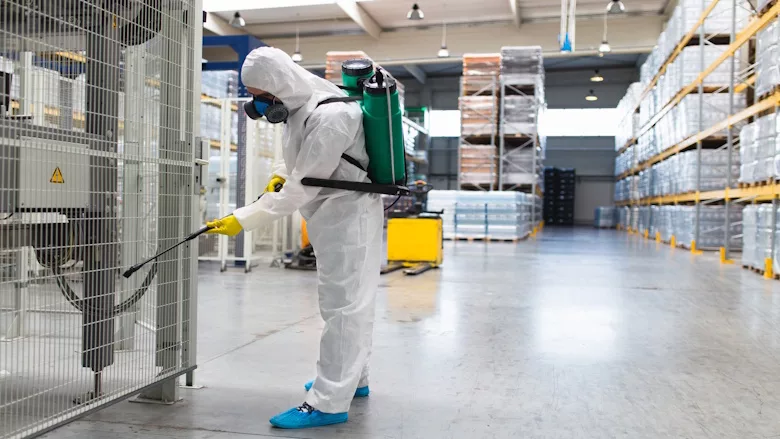
Pest management is more than just a duty for industrial safety professionals. It’s a sworn responsibility critical to unfailing OSHA compliance. Unscheduled downtime, workplace injuries and deaths and reputational damage also weigh heavily on the minds of EHS officers when developing strategies to keep vermin off-site.
Although occupational safety specialists and technicians are familiar with OSHA’s sanitation guidelines, pest control hazard communication standards and PPE requirements, program creation and execution are often causes for confusion and uncertainty. To implement measures successfully and efficiently, it is essential to adopt an integrated pest management approach.
Understanding Integrated Pest Management Principles for OSHA Compliance
Integrated pest management leverages all relevant pest control methods with an emphasis on sustainability. It aims to prevent infestation and manage pest damage in the most economical means while causing the least harm to people, property and the environment.
Apply these integrated pest management principles in your decision-making to ensure OSHA compliance.
Action Threshold
This approach isn’t about eliminating every single critter upon sight. Instead, you establish the point at which a pest population or the environmental conditions that allow vermin to proliferate merit action.
Identification
Some living organisms are harmless or even beneficial. Employees who undergo proper pest control training for OSHA compliance can accurately identify which plants or animals pose a concern. This way, your team leaves natural pest controllers, like predatory insects, alone to neutralize unwanted bugs without lifting a finger.
Monitoring
Integrated pest management programs involve routinely monitoring pest populations that pose serious health and safety hazards. It helps ensure your team acts only when necessary to avoid the downsides associated with pest control methods, such as acute intoxication and chronic diseases.
Prevention
Taking steps to make the conditions in your workplace unsuitable for pest survival and reproduction is crucial for ensuring identified unwelcome guests stay away from critical areas and don’t disrupt operations. Most critters gravitate toward commercial properties for food and shelter. Your preventive actions should focus on starving them and giving them no protection against predators and the elements.
Control
Pest control is necessary only when preventive measures prove futile or are no longer available, and when the number of nuisances passes the established thresholds.
Evaluation
Quantifying the effectiveness of each pest control method is crucial in determining whether it’s worth using again in the same situation in the future.
Documentation
Commercial pest control safety documentation guidelines require detailed recordkeeping, especially when the pest control method used involves pesticide application. Essential information OSHA auditors look for includes the applicator’s name, the product’s EPA registration number, description of the treated area, and application date and time.
Implementing an Integrated Pest Management Program
Follow these tips to develop and execute an effective integrated pest management plan to comply with the OSHA standards that apply to your facility.
Differentiate Innocuous Pests from Harmful Ones
Correct identification is crucial for early detection of potential infestation. Trained employees should be able to recognize the most common pests in the area and their characteristics properly upon observation.
Educated rank-and-file members should be able to notice subtle signs of specific pests’ presence, such as shed skin and droppings, to estimate their numbers and where they gather.
Determine the Level of Infestation You Can Tolerate
Health and safety should take precedence over finances and aesthetics when making decisions about pest management. Assign the lowest thresholds to the types of vermin and biohazards that pose immediate threats to workers and the products’ end users.
For example, scorpling stings cause localized pain to humans. Scorpions, common in Arizona, give birth to a batch of 25 to 35 live offspring, so seeing even one of these ⅕-inch to 1-inch-long nymphs means that there may be dozens more wandering around the building. Rats are also prevalent in New York City, with approximately 3 million rats that spread numerous diseases through waste and direct contact, making them a significant health hazard in commercial buildings. Another example is the German cockroach, which thrives in Florida's humid climate, where it infests buildings and spreads diseases such as Salmonella, posing a threat to workers.
Embed Pest Sighting Reporting into the Culture
Everyone should feel that pest management is an integral part of their daily tasks. Otherwise, it can be challenging to encourage all workers to voluntarily bring up pesky plant and animal sightings to management or in-house safety professionals. Explain to them the adverse consequences of unreported infestation and its impact on the team to instill a sense of duty in everyone.
Develop a clear protocol that employees can easily follow to take the correct steps to document a sighting accordingly and aid identification. Satisfy all workplace pest management PPE requirements to ensure adequate tools are available to capture a sample safely. The more reporting methods there are, the more convenient and encouraging it is for employees to share their findings.
Put a Premium on Commercial Cleaning
Regular industrial housekeeping makes facilities less conducive to infestation. The world becomes smaller for rodents, wild birds, bats and insects when there’s no clutter, overgrown vegetation, accessible trash, standing water, or unclean dining and food storage space.
Consider outsourcing housekeeping duties to a third party when your company is ill-equipped to handle these physically demanding and time-consuming tasks in-house. According to market research by Market.US, companies outsourced janitorial duties 60.3% of the time in 2024, demonstrating that more business leaders have realized that professional commercial cleaners can perform these duties more efficiently.
Prioritize the Least Detrimental Pest Control Methods
Severe infestation calls for urgent action, but overreacting can create more problems than it solves. What’s deadly to plants and critters can be hazardous to humans, so balance effectiveness and risk when deciding which pest control method to employ.
Err on the side of caution to cause the least harm to fellow employees, and consider the safety of products when attempts to neutralize pests backfire. Select the most effective and least risky method — like the use of pheromones, which is an eco-friendly, safe alternative to chemical pesticides.
Assess the Efficacy of Every Method
Post-application evaluation is essential to confirm the suitability of the chosen method. The amount of vermin neutralized, the quantity of resources used and the application duration are good indicators of the efficacy of a pest control method.
Evaluate what went wrong if you’re unsatisfied with the results. Learn from mistakes and adjust tactics in the future to streamline pest control, thereby boosting effectiveness and reducing risk to acceptable levels.
Embrace Integrated Pest Management to Comply with OSHA Standards
OSHA compliance is a never-ending pursuit, but introducing common sense to pest prevention plans is the key to meeting the agency’s stringent standards. Remember integrated pest management’s principles and these tips to keep your industrial building compliant.
Looking for a reprint of this article?
From high-res PDFs to custom plaques, order your copy today!