Lessons From OSHA’s Top 10 Most Common Workplace Safety Violations
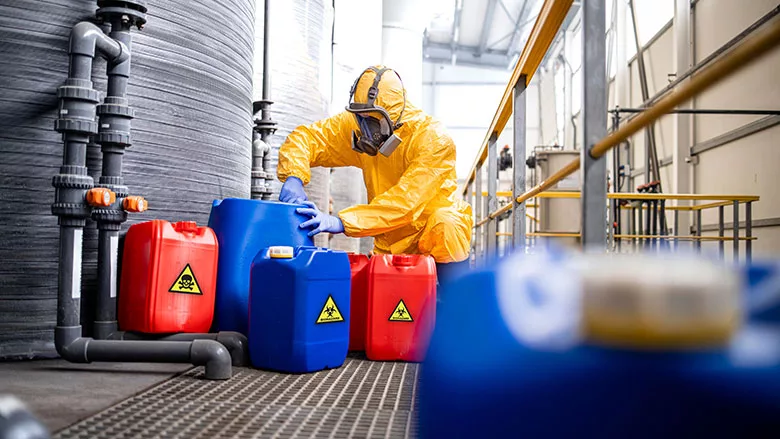
Photo credit: Getty Images
For safety professionals across manufacturing, construction and general industry, systematically addressing recurring hazards remains a central challenge.
Each year, the Occupational Safety and Health Administration (OSHA) — the federal agency charged with enforcing workplace safety and health standards under the Occupational Safety and Health Act of 1970 — publishes data on the most frequently cited safety violations identified during inspections of private sector worksites. These lists serve as a fundamental benchmark for compliance priorities, hazard controls and training focus areas.
The fiscal year 2024 list reflects inspections conducted from October 1, 2023, through September 30, 2024. It highlights persistent gaps in hazard recognition and control across sectors, especially in construction and industrial environments.
OSHA’s top 10 violations are compiled from enforcement actions in which employers were cited for failing to meet specific regulatory standards. These citations represent observed hazards that can directly contribute to serious injury or fatality, emphasizing areas where proactive safety systems can most improve outcomes.
Fall Protection (29 CFR 1926.501)
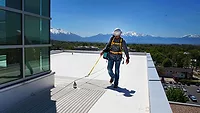
Fall protection failures continue to dominate OSHA enforcement as the most violated standard. This standard outlines core requirements for safeguarding construction workers from falls, including guardrails, safety nets and personal fall arrest systems.
Falls remain a leading cause of fatalities in construction and maintenance, particularly on roofs, ladders, scaffolds and elevated platforms. Effective fall protection systems, supported by supervision and routine hazard assessments, remain essential.
Hazard Communication (29 CFR 1910.1200)
Hazard communication requires employers to evaluate chemical hazards and communicate them through labels, safety data sheets (SDS) and training. Improper chemical handling can release hazardous substances into the air, soil and water, causing respiratory issues, congenital disabilities and cancer. This underscores the need for effective chemical management.
Common deficiencies include incomplete inventories, outdated SDSs, unlabeled containers and insufficient employee training. Strong hazard communication programs protect workers, support regulatory compliance, and reduce the risk of serious health and environmental impacts.
Ladders (29 CFR 1926.1053)
Employees using portable and fixed ladders are at risk when equipment is defective, improperly used or absent entirely. OSHA’s standard sets criteria for ladder design, maintenance, setup and use.
Common inspection findings include unsecured ladder bases, placement at unsafe angles, and the use of damaged or unsuitable ladders — especially in maintenance and construction scenarios. Training on product selection and safe use is foundational.
Respiratory Protection (29 CFR 1910.134)
Respiratory protection citations focus on failures to establish and maintain programs that protect workers from airborne hazards — including particulate matter, chemical vapors and other respiratory threats.
Violations often include missing fit testing, inadequate medical evaluations and poor program documentation. With silica, welding fume and other respiratory exposures prevalent across industries, structured respiratory protection programs remain indispensable.
Control of Hazardous Energy (Lockout/Tagout) (29 CFR 1910.147)
Lockout/tagout (LOTO) standards govern procedures to control hazardous energy during machinery servicing and maintenance. Violations occur when written procedures, authorized employee training or effective power isolation are absent.
Electrical energy is present across most workplace environments and introduces high-consequence hazards alongside mechanical risks. Addressing shock and arc-flash risks during installation, operation and maintenance underscores the need for comprehensive energy control strategies.
Powered Industrial Trucks (29 CFR 1910.178)
Powered industrial trucks — commonly forklifts and similar vehicles — cause significant workplace risk when operated without proper training, inspection and maintenance. Citations in this category typically reflect inadequate operator certification, poor documentation or unsafe operating practices.
Given the frequency of personnel strikes and tip-overs, rigorous training and regular equipment evaluations are essential.
Fall Protection Training (29 CFR 1926.503)
Closely tied to general fall protection, this standard requires employers to provide training for employees exposed to fall hazards.
Training must equip workers to recognize hazards, use fall arrest systems correctly and understand criteria for equipment selection. Weaknesses in training programs often coincide with improper use of protective systems.
Scaffolding (29 CFR 1926.451)
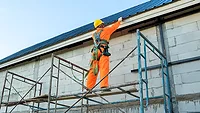
Scaffolding violations highlight unsafe practices associated with scaffold erection, use and dismantling. This standard requires stable platforms, secure footing, appropriate load capacities and guardrails where needed.
Failing to fully comply places workers at risk of falls and structural collapses, especially in construction.
Eye and Face Protection (29 CFR 1926.102)
This category focuses on the appropriate use of personal protective equipment (PPE) to shield workers from eye and face hazards — including flying debris, hazardous substances and radiant energy. OSHA issued 1,814 citations for eye and face protection violations in fiscal year 2024, reflecting ongoing gaps in hazard assessment and enforceable PPE use policies.
Violations often stem from missing or improper PPE and inconsistent policy enforcement. PPE should be part of a comprehensive hazard control strategy, not a reactive measure.
Machine Guarding (29 CFR 1910.212)
Machine guarding ensures workers are protected from moving machine parts that can crush, shear or entangle. OSHA’s general requirement mandates that point-of-operation guards, barriers, and safety devices be installed and maintained.
Violations include missing guards, ineffective barrier systems or nonfunctional interlocks — all of which increase risk of serious injury. Engineering controls remain the most effective means to mitigate these hazards.
Implications for Safety and Health Professionals
Across these top 10 categories, several themes emerge that inform strategic safety planning:
- Prevention through design and engineering controls: Engineering out hazards, such as installing fixed guardrails or automated machine interlocks, consistently reduces the potential for employee exposure. Falling back on administrative and PPE controls without integrated design strategies often leaves persistent gaps.
- Training and competency: Many violations reflect weaknesses in training programs. Rigorous, documented instruction ensures that workers understand both hazards and the controls designed to protect them. Programs should be repeated regularly and adjusted in response to observed behavior and incident data.
- Program integration: Isolated compliance activities can satisfy regulatory checklists but may fail to change behavior. Integrating hazard recognition into daily work planning, pretask briefings and leadership accountability reinforces compliance as a core operational value.
- Data-driven prioritization: OSHA’s annual data highlights where safety professionals should focus resources — particularly fall protection, hazard communication and energy control. These risks consistently lead to enforcement activity and demand sustained prevention efforts.
Lessons From OSHA’s Most Cited Standards
The list highlights recurring risk areas where targeted training, engineering controls, and safety management improvements can strengthen worker protection in industrial and construction settings. Prioritizing these hazards supports regulatory alignment and long-term safety performance.
Looking for a reprint of this article?
From high-res PDFs to custom plaques, order your copy today!