Digital Twins for Worker Protection
Using advanced BIM resources to navigate 2026's stricter fall protection standards

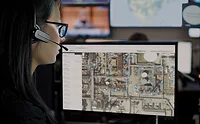
Photo credit: Diversified Fall Protection
Safety managers are responsible for balancing on-site vigilance and reactive problem-solving. Balancing these responsibilities can be challenging for those managing multiple projects at once. New technology is making these processes more feasible, shifting the focus from hazard response to proactive hazard elimination. With the upcoming OSHA fall protection standards requiring stricter proactive safety planning, leaders must leverage the power of converging digital twins and Building Information Modeling (BIM).
The Shifting Landscape of Fall Protection
Falls, whether from slips or heights, account for over 38% of fatalities on construction sites. Many factors cause this, such as insufficient training, unclear safety policies, weather-related hazards and failure to comply with OSHA regulations. In the ever-changing landscape of occupational health and safety, employers should learn what’s ahead.
According to industry commentary, OSHA’s focus in 2026 includes heat illness prevention standards, expanded recordkeeping and respirable crystalline silica enforcement. OSHA is also expected to inspect its National Emphasis Programs, whistleblower investigations and high-risk industries where incident rates continuously rise.
In general, fall protection remains the top priority. This is evidenced by it being the most frequently cited OSHA violation in 2023 through to 2025. Inspections will not slow down, and requirements will become more stringent. For instance, Cal/OSHA standards now align with federal standards, lowering the trigger height for residential roofing and framing from 15 feet to 6 feet.
Additionally, OSHA performed 34,625 programmed and unprogrammed inspections in 2024. Early 2026 estimates point to a similar level, with additional activity from state OSHA programs.
How Digital Twins Enhance Worker Protection
A digital twin in construction is a dynamic, virtual replica of a site or building. It is created by merging BIM, Internet of Things sensors, AI and real-time data. It can improve worker safety and protection in various ways.
Minimizes Time Spent in Hazardous Conditions
Digital twin safety implementation helps reduce the time employees spend in perilous sites. Proper inspection planning and maintenance activities can accomplish this. Safety managers can “fast-forward” the project in the digital twin to see how the site will evolve, thereby anticipating future hazards.
For instance, they can see that on the third day, the erection of a steel beam will create a new leading edge that requires immediate fall protection. The team can schedule the installation of safety systems before that hazard even exists.
Serves as a Dynamic Risk Model
The digital twin moves beyond a simple 3D rendering to become the engine for predictive fall hazard modeling. It operates as a data-rich environment that fuses the “as-designed” model with the reality of the jobsite.
For instance, while the BIM plan shows a clear walkway, a daily site scan might detect that a subcontractor’s materials are now blocking it. The digital twin automatically compares real-time insights with the “as-designed” plan and immediately alerts the safety manager to the unplanned risk.
Enhances Site-Specific Safety Training
Generic safety training does not meet OSHA’s more stringent standards in 2026. Safety managers can use the digital twin as the foundation for virtual reality (VR) training, enabling workers to “walk” the virtual site and practice identifying hazards specific to that project.
An employee who has simulated a fall in VR because they didn’t wear proper safety equipment is far more likely to remember that lesson than someone who was told about it in a seminar.
The Benefits of BIM for Fall Protection Design Standards in 2026
While the digital twin represents the live, evolving site, it relies heavily on BIM data. Before sensors go online, BIM provides the essential “as-designed” model for incorporating safety directly into the project’s DNA. Companies can ensure compliance with the 2026 OSHA fall protection by leveraging BIM across project phases.
Proactive Hazard Elimination Through Design
BIM helps avoid occupational risks and hazards at construction sites. It is the ultimate tool for prevention through design, allowing teams to eliminate hazards before they materialize on-site. It also allows for virtual safety system validation, allowing safety managers to plan the placement of anchor points, safety nets and guardrails, ensuring they are compliant with the 2026 standards before the project begins.
Safety Compliance Verification
The BIM model can be programmed with 2026 standards in mind, making it a single source of truth that architects, engineers and subcontractors can refer to. BIM libraries can be created with preapproved safety objects. For instance, a designer can insert a 2026-compliant guardrail object with the correct specifications, thereby reducing the risk of human error in the design process.
Accurate System Quantification and Procurement
A BIM model is a powerful tool for budget management and logistics. Once the safety plan is modeled, the software can generate a list of requirements instantly. This data enables accurate budgeting for safety-critical equipment, making it easier to defend costs and ensure procurement is not overlooked.
How to Transition to a Digitally-Driven Safety Program
Safety leaders can follow this practical, phased approach to ensure successful compliance with fall protection requirements in 2026.
Build the Business Case
Organization leaders must build a business case that highlights the return on investment. Metrics like lower insurance premiums and reduced project rework costs are essential. A cross-functional team that includes professionals from virtual design and construction (VDC), project management, and IT helps ensure technical feasibility.
Establish BIM for Safety Standards
The VDC team must create a standardized protocol for modeling safety components. This includes mandatory data fields for objects, such as anchor points and guardrails. Commission the creation of a preapproved library of BIM objects for fall protection systems that meet the 2026 standards by default.
Layer Real-Time Data
Once a team has successfully implemented a static BIM model, they can begin layering on real-time data to bring the digital twin to life. Managers must use platforms to overlay the “as-is” data onto the “as-designed” model. The output can help spot critical safety deviations, such as a blocked emergency exit or an edge without guardrails.
Adopting a Proactive Fall Protection Approach
Integrating BIM’s design intelligence with the real-time awareness of a digital twin will help safety managers meet the stringent 2026 fall protection design standards. The benefits are clear — a future with hassle-free safety implementation and the power to mitigate hazards before they materialize. Organizations that embrace this digital transformation can expect enhanced worker protection and stronger industry leadership.
Looking for a reprint of this article?
From high-res PDFs to custom plaques, order your copy today!