The Next Safety Incident May Start Between Your Systems
Why disconnected data is preventing EHS teams from seeing risk early enough
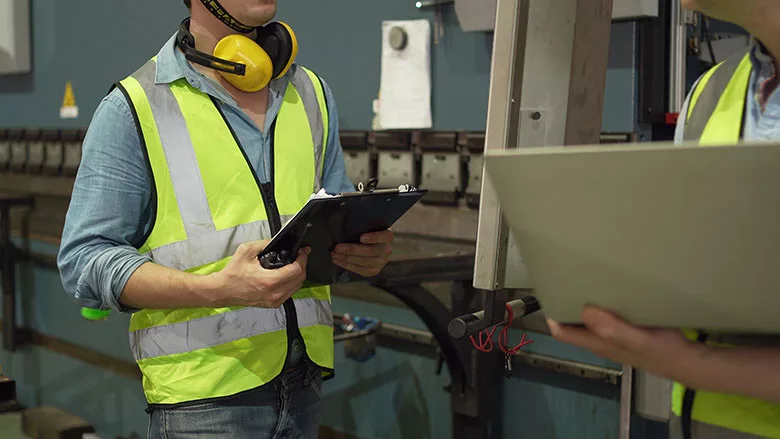
Most safety conversations today focus on people, procedures, and training. And they should. But there’s a growing risk in modern operations that doesn’t get enough attention: The gaps between our systems.
Safety Isn’t Just Physical Anymore
In many manufacturing and distribution environments, critical safety-related information lives in multiple places:
- Incident logs
- Maintenance systems
- ERP and MRP platforms
- Quality systems
- Spreadsheets and email threads
Each of these may work well on its own. But they don’t always work well together. And that’s where problems begin.
This Isn’t Just Operational—It’s Personal
What often gets lost in these discussions is this: Safety isn’t abstract. It’s personal.
When something goes wrong, you’re not just reviewing data; you’re stepping into a situation where someone has been hurt, something failed, or a team is dealing with the consequences of a bad moment.
And in those moments, the question isn’t whether the data existed. It’s whether you saw it in time.
The Hidden Risk: Delayed or Disconnected Signals
Safety issues rarely appear all at once. They show up as small signals:
- Repeated minor incidents
- Maintenance delays
- Quality deviations
- Operator workarounds
Individually, these may not trigger alarms. But when connected, they can point to something much more serious. The challenge is that in many organizations, those signals are:
- Stored in different systems
- Reviewed at different times
- Owned by different teams
Early warning signs are often present, but scattered and missed. Safety isn’t just about having the right information. It’s about having it at the right time.
Underreporting and Overload Make It Worse
Many safety professionals are already aware of underreporting challenges. Not everything makes it into formal systems, and even when it does, it may not tell the full story.
At the same time, EHS teams are often managing:
- Multiple reporting tools
- Manual data entry
- Follow-ups across departments
This creates a difficult balance:
- Too little information in some areas.
- Too much fragmented information in others.
- Neither supports fast, confident decision-making.
When Systems Don’t Talk, Risk Increases
Most organizations have invested heavily in systems over the years.
- ERP and MRP platforms manage operations.
- Maintenance systems track equipment.
- Quality systems monitor output.
But these systems were not designed to work together in real time. As a result:
- Updates may be delayed
- Data may need to be re-entered
- Critical context may be missing
In practice, this often leads to:
- Decisions based on incomplete information
- Delayed responses to emerging risks
- Reliance on spreadsheets, emails, and tribal knowledge to fill the gaps
That’s not a technology failure. It’s an integration problem.
Lessons We Already Know
Anyone who has worked in high-risk environments understands this instinctively. On the fireground, you don’t run. Not because speed isn’t important—but because control, awareness, and coordination matter more.
Running creates chaos. Chaos creates mistakes. And mistakes have consequences. You move with purpose. You stay aware of your surroundings. You rely on communication, coordination, training—AND your Team. Because you’re not just doing a job—you’re stepping into someone else’s problem, often on their worst day.
The same principle applies in modern operations. When systems aren’t aligned, people are forced to react manually—often quickly, and without full visibility. And when that happens, even strong teams can make the wrong call. Not from lack of effort, but from lack of awareness at the moment it mattered.
Connecting the Dots Before It’s Too Late
Improving safety in modern environments isn’t about collecting more data. It’s about connecting what you already have.
When systems are better connected:
- Maintenance issues can immediately inform safety decisions
- Quality deviations can trigger proactive checks
- Operational changes can be reflected across teams in real time
The goal isn’t complexity.
It’s clarity and timing when it matters most.
Where AI Fits in All of This
There’s a lot of discussion right now around AI, machine learning, and predictive safety. And there’s real potential there.
AI can help identify patterns, highlight risk conditions, and surface insights that would be difficult to see manually. But in most real-world environments, there’s a limitation that doesn’t get talked about enough: AI can only work with the data it can see.
If safety-related signals are still fragmented—spread across ERP systems, maintenance platforms, EHS tools, and day-to-day operational communication—then even the most advanced tools are working with an incomplete picture.
In practice, that means:
- Patterns go undetected because data isn’t connected
- Risk signals remain isolated within individual systems
- “Predictive” models are limited by missing context
Before AI can reliably help predict or prevent incidents, organizations need to ensure that the underlying data is connected, timely, and aligned across systems.
That’s what turns data into something AI—and people—can actually act on.
A Hard Truth
In many cases, incidents don’t happen because information was missing. They happen because the right information didn’t reach the right people in time. And in today’s environments, that’s often not a people problem. It’s a systems problem.
Closing the Gap
Safety has always depended on awareness and timely action. As operations become more digital, that awareness increasingly depends on how well our systems communicate. Because sometimes, the most important signal isn’t missing—it’s just sitting in the wrong place at the wrong time.
Final Thought
There’s an old saying many of us grew up with: “If it can’t be done safely, we don’t do it.” It’s a great principle. But in today’s environment, the real question becomes: Do we actually have the visibility to know what “safe” looks like in real time? Because sometimes the difference between a near miss and an incident isn’t the data; it’s whether the right signal reached the right person in time to act.
Looking for a reprint of this article?
From high-res PDFs to custom plaques, order your copy today!