Extended Reality for Utilities: Closing the Readiness Gap Before the Next Incident Hits
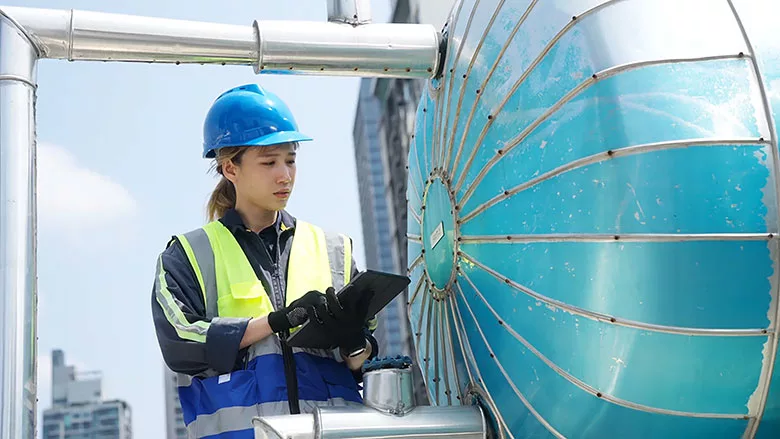
Photo credit: damircudic / E+ / Getty Images Plus
Whether it’s water, gas, or electricity, infrastructure failures have consequences that ripple across entire communities. Crews face high-pressure, high-risk scenarios every day: confined spaces, extreme heights, aging systems, and emergencies that demand fast, confident action.
The question confronting utility leaders now isn’t just about equipment. It’s about people, and whether today’s training methods are preparing crews for tomorrow’s risks. Increasingly, the answer is no.
Training That Checks the Box Isn’t Enough
Many utilities still rely on traditional training approaches: classroom sessions, printed manuals, job shadowing, and occasional hands-on exercises. These methods may cover compliance requirements, but they fall short where it matters most, readiness under pressure.
Confidence isn’t built with PowerPoints, it is forged through repetition. That’s the gap too many teams face. New hires enter hazardous environments with limited experience. Veterans are retiring, and with them goes decades of tacit knowledge. The result? Crews that are certified on paper, but not necessarily prepared for real-world complexity.
According to PwC, employees trained in virtual reality are up to 275% more confident in applying what they’ve learned compared to traditional methods, a confidence gap that can make all the difference in high-risk situations.
Enter XR: Training That Mirrors the Job
Extended reality (XR), an umbrella term that includes virtual reality (VR), augmented reality (AR), and mixed reality (MR), is closing the readiness gap. Unlike traditional training, XR enables utility workers to rehearse procedures in realistic, high-fidelity simulations before stepping into the field.
Think of it as a flight simulator that has been personally and precisely generated for utility crews: fully immersive environments where mistakes are safe, repetitions are unlimited, and every scenario is built to replicate actual job conditions.
The key benefits are measurable:
- Improved Worker Safety: Crews practice dangerous procedures, like confined space entry or energized equipment inspections, in safe, simulated environments. That means more exposure to risk scenarios without actual risk.
- Faster Response and Recovery: Simulations build muscle memory for high-pressure incidents. Technicians can isolate a valve, shut down a system, or flag a gas leak not because they’ve read about it, but because they’ve already done it.
- Operational Continuity: Training doesn’t pull systems offline or require live equipment. Technicians can train anywhere, anytime, without interrupting service or tying up limited resources.
High Risk, High ROI.
XR isn’t about shiny tech. It’s about results and upskilling today’s workforce.
Crews trained with XR retain up to 75% more, get job-ready four times faster, and report nearly three times the confidence applying what they’ve learned. That confidence shows up where it matters: fewer mistakes, faster response times, and smoother execution when the pressure’s on.
This isn’t speculation, it’s a fact and an operational advantage. In high-risk environments, it means fewer close calls, less rework, and a team that knows the drill because they’ve run it, again and again. If the job is critical, so is the training. XR delivers both.
Precision Over Hype
XR is not essential to every task or training. Instead, utilities and organizations should start where the stakes are highest. Focus on tasks that:
- Pose the greatest safety risks
- Are infrequently performed but critical (e.g., lockout/tagout, emergency shutdowns)
- Drive the most rework, downtime, or incident reports
XR modules for these procedures can be designed, tested, and deployed quickly, without pulling a single truck off the road or taking a grid segment offline. The training is repeatable, consistent, and performance based.
Most importantly, XR is incredibly scalable. One module can train hundreds of workers across dozens of locations, with real-time feedback and progress tracking for supervisors.
Building a Culture of Readiness
Let’s be clear: XR isn’t a replacement for skilled trainers or safety protocols. It’s a force multiplier. XR allows experts to spend less time on basic instruction and more time coaching teams through advanced, context-specific challenges.
It also gives safety managers a new level of insight. Training data can highlight who’s ready, and who needs more time. That’s a game-changer for compliance, performance, and workforce planning.
No More Waiting
Utilities don’t have time for multi-year rollouts or tech experiments. The pressures are too real: infrastructure is aging, workforce shortages are accelerating, and the next incident is always around the corner.
Extended reality isn’t a futuristic solution. It’s a practical one—ready now to help utilities train better, faster, and safer.
For organizations that can’t afford to get it wrong, XR is the tool to getting it right.
Looking for a reprint of this article?
From high-res PDFs to custom plaques, order your copy today!