ISHN logo
search
cart
facebook twitter linkedin youtube
  • Sign In
  • Create Account
  • Sign Out
  • My Account
ISHN logo
  • NEWS
    • Today's News
    • Global Safety News
    • Government Regulations
  • PRODUCTS
    • Product Innovations
    • Featured Products
  • TOPICS
    • Environmental Health and Safety
    • Facility Safety
    • Workplace Health
    • Occupational Safety
    • PPE
    • More Topics
  • CONSTRUCTION
  • TECHNOLOGY
  • COLUMNS
    • Best Practices
    • Dave Johnson: What’s going on
    • Editorial Comments
    • Leading Safety
  • MULTIMEDIA
    • ISHN Podcast
    • Videos
    • Cold Stress Education Quiz
    • Webinars
    • White Papers
  • MORE
    • Buyer's Guide
    • Newsletters
    • Convention Companion
    • Polls
    • Events
    • ISHN Store
    • Sponsor Insights
  • EMAGAZINE
    • eMagazine
    • Archived Issues
    • Contact
    • Advertise
  • JOIN TODAY!
Today's Safety NewsGovernment Safety RegulationsFacility SafetyConstruction Industry Safety and Health

NFPA 800 Set to Redefine Lithium-Ion Battery Safety as Construction Industry Faces Rising Fire Risk
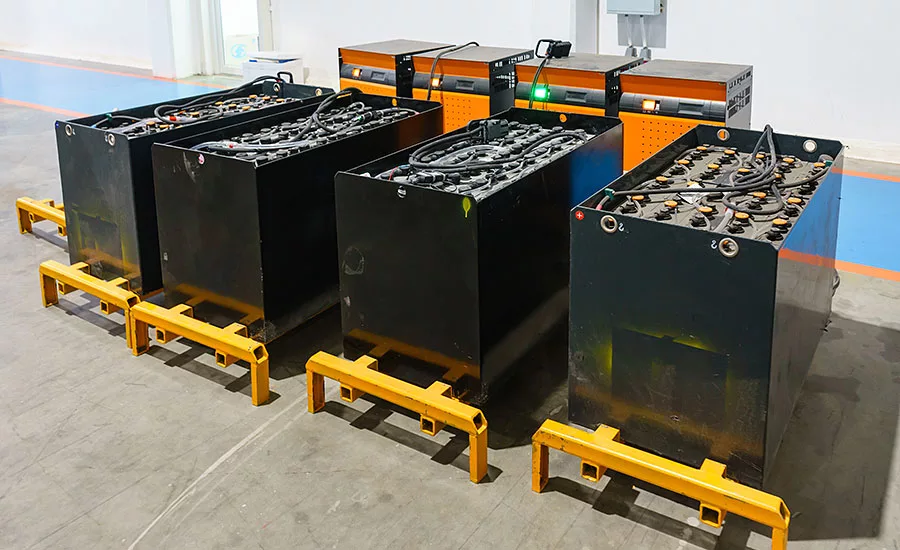
Avoid shortcuts to improve battery safety
May 27, 2026

RAMTECH has warned that the imminent release of the National Fire Protection Association’s (NFPA) new Battery Safety Code (NFPA 800) underscores the growing fire risk associated with lithium-ion batteries across construction and infrastructure sectors. 

NFPA 800 is the first full lifecycle standard for battery safety, covering manufacturing, transport, installation, operation, emergency response and end-of-life management. The code – which is expected to be published on a provisional basis shortly – follows an accelerated development process driven by the rapid expansion of lithium-ion technologies across construction, energy and industrial sectors. 

When compromised by damage or overcharging, tools and equipment can enter thermal runaway – a state of uncontrollable, self-heating that produces intense heat and flammable gases. On active sites, these risks are amplified by temporary charging setups and evolving storage conditions where supervision and early detection are often inconsistent. 

James Pecz, vice president of Ramtech North America and member of the NFPA 72 Temporary Fire Alarm Notification Task Group, said NFPA 800 reflects a turning point in how the industry must address battery risk: 

“Lithium-ion batteries are now embedded in almost every aspect of construction activity, from hand tools through to temporary power systems. What has changed is not their presence, but the scale and speed of adoption. That has created a gap between operational reality on site and the consistency of fire safety frameworks designed to manage these risks. 

“The challenge is not simply the presence of batteries, but how unpredictably they move through live construction environments. Batteries are not fixed assets – they are constantly being charged, relocated and used across multiple work fronts, often under changing site conditions and shifting supervision. That creates variability in risk control. Without consistent segregation, monitoring and early warning, the exposure can change hour by hour on active projects.” 

NFPA 800 introduces energy thresholds and maximum allowable quantities that determine when additional safeguards are required. It also aligns with existing standards including NFPA 241, NFPA 70, NFPA 72 and NFPA 855. 

For construction and facilities professionals, these thresholds will directly influence how batteries are stored, charged and managed on active sites.  

NFPA 800 is expected to remain valid for two years while it moves through the NFPA’s standard development process. While it is unlikely to immediately become enforceable in building codes, it is expected to influence best practice across construction and infrastructure projects. 

Expert contributors within the life safety sector suggest the standard will act as a vital unifying document for the industry. 

Kyle Jarvenpaa, VP of business development at Space Age Electronics, said: “I’m seeing NFPA 800 as a consolidation effort, rather than introducing entirely new standards around batteries. It's creating a single ‘road map’ that ties together other existing standards. The impact in the near term will likely be felt most in how Authorities Having Jurisdiction (AHJs) interpret and apply it in their jurisdictions. 

“Like any newly developed standard, there will be a large educational gap for awareness and alignment on how to enforce it, especially in an environment like a construction site where batteries are used on many levels, all the way down to hand tools. That’s where the industry needs to come together for more widespread understanding and enforcement of the standard.” 

James added that the industry now needs to move from awareness of the hazard to consistent execution of controls at site level: 

“The hazard is already embedded across virtually every construction site. We now need to ensure that the controls we know are required are actually applied consistently in practice, particularly during high-pressure phases of construction where multiple contractors and rapid programme changes are involved.” 

Ramtech is urging contractors, developers and facilities managers to review site-level battery safety procedures in light of NFPA 800, particularly around storage, charging, detection and emergency response planning. 

KEYWORDS: batteries NFPA

Share This Story

Looking for a reprint of this article?
From high-res PDFs to custom plaques, order your copy today!

Recommended Content

JOIN TODAY
to unlock your recommendations.

Already have an account? Sign In

  • forklift safety

    Exploring the latest technologies in forklift safety

    With more staff and more stock in warehousing now more...
    Facility Safety
    By: Josh Cramer
  • welding

    All about welder’s flash or arc eye

    A flash burn is a painful inflammation of the cornea,...
    Environmental Health and Safety
  • dangerous jobs

    The 10 most dangerous jobs in the U.S.

    On-the-job deaths have been rising — hitting the highest...
    Construction Industry Safety and Health
    By: Benita Mehta
Manage My Account
  • eMagazine Subscriptions
  • ISHN Newsletter & Other Newsletter Alerts
  • Online Registration
  • Manage My Preferences
  • Subscription Customer Service

More Videos

Sponsored Content

Sponsored Content is a special paid section where industry companies provide high quality, objective, non-commercial content around topics of interest to the ISHN audience. All Sponsored Content is supplied by the advertising company and any opinions expressed in this article are those of the author and not necessarily reflect the views of ISHN or its parent company, BNP Media. Interested in participating in our Sponsored Content section? Contact your local rep!

close
  • man wearing the the Sundström SR200 Full Face Mask Respirator
    Sponsored byOHD

    5 Fit Testing Mistakes That Could Cost You

  • This image shows Magid AcuSpex polarized blue mirrored safety glasses.
    Sponsored byMagid Glove and Safety

    Construction PPE Guide: What Crews Need for Each Task

  • lone worker in confined space
    Sponsored byAlphasense Ltd.

    GET THE LEAD OUT of your Safety Oxygen Sensors!

Popular Stories

Automated loading dock equipment

After March 2026 Rivian Death, Safety Managers Reassess Loading Dock Systems Under OSHA's Warehouse Emphasis Program

chemical safety

It Was Just Sugar: Catastrophic Safety Failures in Louisville

psychology in the workplace

Most Workplaces Measure Psychological Safety, Ignoring Psychosocial Risks

top 10 most dangerous jobs

Poll

Seasonal Readiness

With the federal heat stress prevention rule on the horizon, which area of your safety program needs the most attention?
View Results Poll Archive

Products

Surviving an OSHA Audit A Management Guide, 2nd Edition

Surviving an OSHA Audit A Management Guide, 2nd Edition

See More Products

ISHN Podcasts

Related Articles

  • Streamlight

    Streamlight® debuts 18650 USB lithium ion battery with integrated charging port

    See More
  • Streamlight® debuts 18650 Lithium Ion Battery and Charger

    See More
  • Pelican™ introduces the new 9440 remote area lighting system with Bluetooth remote and lithium ion battery technology

    See More

Related Products

See More Products
  • 1118911040.jpg

    Risk Assessment: A Practical Guide to Assessing Operational Risks

See More Products

Related Directories

  • National Fire Protection Assn. (NFPA)

    Known as the trusted source of safety knowledge, the National Fire Protection Association (NFPA) has been helping to solve some of the planet’s toughest safety problems for more than 125 years. To remain relevant for over a century as a knowledge and information organization, we’ve continually evolved our scope of expertise—from fire prevention, wildfire preparedness, and electrical safety to hazardous materials, community risk reduction, and public safety.
×

Become a Leader in Safety Culture

Build your knowledge with ISHN, covering key safety, health and industrial hygiene news, products, and trends.

JOIN TODAY
  • RESOURCES
    • Advertise
    • Contact Us
    • Directories
    • Manufacturing Division
    • Store
    • Want More
  • SIGN UP TODAY
    • Create Account
    • eMagazine
    • Newsletters
    • Customer Service
    • Manage Preferences
  • SERVICES
    • Marketing Services
    • Reprints
    • Market Research
    • List Rental
    • Survey/Respondent Access
  • STAY CONNECTED
    • LinkedIn
    • Facebook
    • YouTube
    • X (Twitter)
  • PRIVACY
    • PRIVACY POLICY
    • TERMS & CONDITIONS
    • DO NOT SELL MY PERSONAL INFORMATION
    • PRIVACY REQUEST
    • ACCESSIBILITY

Copyright ©2026. All Rights Reserved BNP Media, Inc. and BNP Media II, LLC.

Design, CMS, Hosting & Web Development :: ePublishing