Shifting from Compliance to Maturity: A Conversation with ASSP’s 2026 Safety Professional of the Year Wyatt Bradbury
The landscape of workplace safety is undergoing a profound evolution. While regulatory compliance has long been the baseline for organizational safety, the modern era demands a deeper approach to protecting workers.
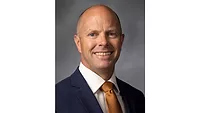
Wyatt Bradbury, M.S., CSP, CHST, CIT, Avetta’s Principal of Health and Safety, was recently named the 2026 Safety Professional of the Year by the American Society of Safety Professionals (ASSP). Recognized for his exceptional leadership and technical expertise, Bradbury is at the forefront of this shift, contributing to modern indicator-based safety strategies and advocating for inclusive safety standards. In a recent episode of the All Things Safety podcast, he talks about his work as well as innovations in the safety space.
For Bradbury, receiving the ASSP’s highest individual honor is less about personal achievement and more about a transition into a new phase of mentorship and legacy. Reflecting on his journey into the field, he noted that he relied heavily on the examples set by past recipients.
Sponsored by SiteMap

He said he views his platform as a pivot point to guide the next generation of safety leaders, particularly graduate and undergraduate students entering the field.
"I'm in a new phase of my ASSP journey, but also my safety leadership journey, where I really want to focus on and be invested in lifting others up around me and creating opportunities for the next generation of professionals” Bradbury said.
PPE for Women: Moving from Inclusivity to Awareness
One of Bradbury’s standout technical achievements includes his role on the ANSI/ASSP TR-Z590.6 technical committee, which culminated in a landmark technical report focused on PPE fit and design for women. Driven by advocacy from the ASSP’s Women in Safety Excellence (WISE) community, the report addresses the physical and psychological safety impacts of ill-fitting gear.
Bradbury also noted that manufacturers are actually leading the charge; for example, expanding lines into dedicated pregnancy wear. The real challenge, he said, lies in an awareness gap among small and medium-sized employers.
"I don't think it's malicious. I don't think it's a lack of desire. I just think there's so many organizations that we haven't gotten the information on this subject yet...,” he said. “It is pretty easy to be inclusive when it comes to workplace protection today. So I would say it's really an awareness problem in the employer space."
The Safety and Cultural Maturity Indexes
A core focus of Bradbury's recent work at Avetta is the development of the Safety Maturity Index (SMI) and the Cultural Maturity Index (CMI). These models challenge the traditional reliance on lagging indicators and "green" pre-qualification checkmarks, which Bradbury compares to predicting sports outcomes purely based on past seasons.
"Past performance, which is what a lot of our compliance is based on, is not an indicator of future performance in any way,” he said.
Data pulled from over 3,000 partnering organizations revealed that small and medium businesses frequently struggle with hazard identification and risk management, while organizations of all sizes struggle with continual improvement and closing the Plan-Do-Check-Act (PDCA) feedback loop.
Bradbury explains that these index models allow hiring clients to shift from flat, regulatory checklists to a dynamic, multi-dimensional understanding of supply chain risk:
"What we're trying to do is get from a black and white 2D model, which is what much of your compliance provides, into a more colorful 3D or 4D model with these tools that paint a more complete picture. You can't discard what we've done before, but it augments, it adds on, it expands the view."
Balancing Big Data with the Human Story
As data analytics and artificial intelligence become staple tools in EHS, Bradbury emphasizes that technical metrics are useless without human leadership. Citing Gallup research that shows a third of the workforce is actively disengaged at any given moment, he believes safety professionals must use data not to micromanage, but to empower people and influence executive decision-making.
"The beauty of technical data is we can explore it at scale... but the leadership side brings the story. And again, it's that balancing. We've got to be able to go find the right information and then package it in a way that tells a meaningful story that's representative of what we want to be as a profession."
The Future of Innovation: Grounded in Standards
With Federal OSHA regulations frequently bottlenecked by political and bureaucratic hurdles, Bradbury sees the true frontier of safety innovation moving toward consensus standards (such as ANSI and ASTM) backed by robust public-private research partnerships.
As the industry pivots away from a purely regulation-based framework, the skills required of a safety professional will inherently change. However, Bradbury counsels that innovation must always remain tethered to reality.
"We can't be a profession that just starts to make things up, especially new ideas, especially new terms... Standards have to kind of be the baseline. They have to be the foundation that we're working from. And we need research to help us justify the directions that we're taking."
Note: Wyatt Bradbury will be speaking at the upcoming ASSP Safety 2026 Conference in Anaheim, CA. Catch his sessions on Tuesday, June 16, covering Management of Change, and Wednesday, June 17, discussing the Ave
Looking for a reprint of this article?
From high-res PDFs to custom plaques, order your copy today!