Today's Safety News
New York City Legionnaires' Disease Outbreak Highlights Critical Role of Cooling Tower Maintenance and Prevention
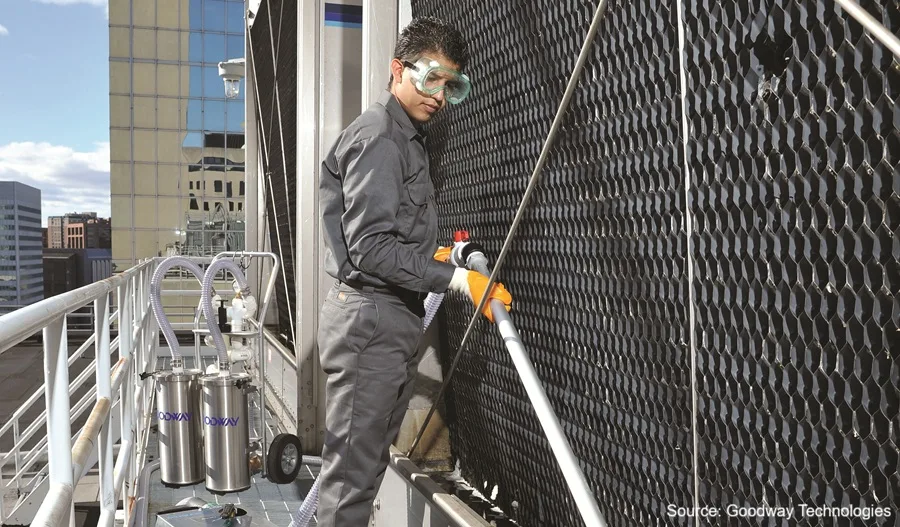
The recent Legionnaires' disease outbreak in New York City, which officials have linked to contaminated cooling towers, serves as a stark reminder that effective Legionella prevention requires more than water treatment alone. Goodway Technologies, a global leader in cooling tower maintenance solutions, is encouraging facility managers to adopt comprehensive inspection, cleaning, and disinfection programs to help reduce risk and protect public health.
According to reports, New York City health officials have linked the outbreak to 76 contaminated cooling towers, once again highlighting the risks associated with improperly maintained building water systems. As remediation efforts continue, the incident serves as a wake-up call for facility managers, building owners, and maintenance professionals nationwide.
Legionella bacteria can grow in building water systems and spread through tiny water droplets that people inhale. Cooling towers are particularly susceptible when sediment, scale, biofilm, and other contaminants are allowed to accumulate. Without proper inspection, cleaning, water treatment, and disinfection, these conditions can create an environment where bacteria thrive and potentially spread beyond the tower through airborne water droplets.
"The New York City outbreak demonstrates that even today, Legionnaires' disease remains a significant public health threat when cooling towers are not properly maintained," said Mark Rothenhausen, Senior Director of Sales Operations at Goodway Technologies. "Preventative maintenance is no longer a best practice. It's a necessity. Facilities need a comprehensive approach that combines water treatment with the right cleaning and disinfection equipment to effectively manage risk."
Goodway Technologies, a global leader in HVAC industrial maintenance solutions for over 60 years, recommends the following preventative maintenance steps to reduce the risk of Legionella developing in a facility:
• Inspect Cooling Towers Monthly: Examine all tower surfaces for sediment, scale, and slime, which can build up and help Legionella thrive. Put special focus on cooling tower fill, and basins.
• Clean Tower Basin Surfaces Regularly: If there is visible sediment, scale, or slime, then it is time to clean. Using a specialized cleaning system makes it fast and easy to conduct frequent cleanings without shutting down or draining the system.
• Clean the Fill: The tower fill is a prime environment for scale and bacterial growth. Ensure proper cleaning using a chemical engineered specifically for cooling towers.
• Treat Circulating Water: Work with a professional water treatment to automatically dose water supplies with appropriate biocides at recommended levels and consider monthly Legionella testing to detect early signs of contamination. Check with local ordinances. Some require monthly, quarterly, or annual inspections.
• Always Disinfect: Regularly disinfect the tower’s surfaces and before any maintenance is to be performed use an EPA registered disinfectant.
To help facility managers proactively reduce Legionella risks, Goodway Technologies offers specialized cooling tower maintenance solutions designed to address key sources of bacterial growth:
• CTV-1501 Cooling Tower Vacuum System: Removes sediment, sludge, and debris from cooling tower basins, helping eliminate conditions that support biological growth without requiring extensive system downtime.
• TFC-JR Fill Cleaning System: Provides comprehensive cleaning of cooling tower fill and internal tower surfaces, where scale, biofilm, and contaminants often accumulate.
• BioSpray® Tower: An EPA-registered disinfectant specifically formulated for cooling towers to help facilities disinfect critical surfaces and support Legionella prevention efforts.
"Many facilities mistakenly believe that chemical treatment alone is enough," Rothenhausen added. "The reality is that effective Legionella prevention requires routine inspections, cleaning, disinfection, and the right equipment to remove the debris, scale, and biofilm where bacteria can flourish. The consequences of getting it wrong can be devastating."
For more information, visit www.goodway.com.
Looking for a reprint of this article?
From high-res PDFs to custom plaques, order your copy today!


