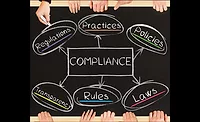
Keys to compliance training

When it comes to training, employees want to know, “What’s in it for me?” Making incentives available to students is the best way to get them excited about new training options. However, contrary to what you might think, studies show that monetary incentives are not the most effective way to motivate people to take training.
Employees who have the opportunity to make themselves more valuable to their company and their industry are most likely to complete training. Also, internal recognition programs can be highly effective. Unique to health, safety and compliance training, however, is usually the aspect of mandated training courses. If the training is required, how excited will students be to complete the courses? Moreover, how motivated will the instructors be to make the training compelling and interactive for the students? The answer should be, “very!”
Remember that education is something students will not only take, but retain, if they see value in it. If you make the training relevant to their jobs and their career aspirations students will not only ask for training opportunities, but they will retain a much higher percentage of what is being taught. This is vital when it comes to compliance topics.
Worthwhile materials
In today’s intensely competitive business climate, the difference between success and failure is the ability to communicate clearly and effectively. So why are technical training sessions so often dry and bland? Many engineers, when faced with giving a talk, do so with a simple straightforward recitation of the facts, perhaps because they feel the topic is so cut and dry. But it shouldn’t be. If your voice drones, or the content lacks excitement, you’ll bore your audience and lose them early in the training.Developing and implementing high-quality training materials is critical. There are some major considerations to keep in mind to help make this an effective and inexpensive process.
- Your technical people are not training professionals. Many companies make the mistake of having their most knowledgeable product specialists write their training materials. The problem is that while the materials may be technically accurate they will likely not be written from a training perspective.
- Provide detailed materials to your students. Simply providing a copy of the PowerPoint presentation makes students focus on note-taking during the course rather than comprehending the information. Students (and the instructor) will benefit from handing out a student guide.
- Develop a student guide by videotaping the instructor delivering the course. If this taped content is used to get the detail needed for the student workbook, you eliminate the time-consuming task of writing the detail off-the-cuff. It also allows a training person (rather than the technical instructor) to write the detailed content.
- Real-world application is the best way to get people to learn. When developing the training, always relate a concept or industry theory to a real-world example. When people can apply a concept to something they know and understand, they will retain that knowledge.
Setting the bar
Students should take as much training as is appropriate for their jobs. Some companies offer 40 hours of training per year (which is very commendable!) in addition to required safety training courses. Others only a one-day course. Keep in mind that many people in the safety industry have continuing education requirements as well.The investment in safety training is important and necessary. Employees often work with complex or new technologies, and they need training to be confident, safe and competent. If students are given training only for training’s sake, they will not only feel resentment, they will also lose valuable time on the job and you will see no real benefit. By letting employees take ownership of their learning plan, everyone benefits and it just might help set the achievement bar a little higher for others in the company.
Consistent indicators
Whether you are conducting compliance training or any other organizational education program, there are several consistent indicators you will be able to count on as you move into 2007 and beyond:- Continued increase in training budgets. Training-related spending increased by 7 percent in 2006, the highest increase in five years. Expect spending in 2007 to match or exceed this rate.
- Outsourcing becomes standard practice. Companies have embraced outsourcing as a way to help them reach more employees at far lower costs. It also allows staff to focus on core competency needs.
- E-learning matures and evolves. Now that e-learning is mainstream, companies look for more sophisticated uses of e-learning, such as collaborative learning and simulations.
- Any content appropriate for e-learning. The limits to what can be taught online are diminishing. Compliance, health and safety training markets will explode on the Internet.
- New approaches to blended models emerge. Among the most common approaches will be live instructor-led courses on the Internet combined with performance-based self-study programs. Companies will also be tying critical areas to their online systems such as maintenance agreements, warranties, etc.
Looking for a reprint of this article?
From high-res PDFs to custom plaques, order your copy today!