PPE compliance: Training begins with clear, thorough communication
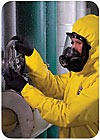
Wearing and using personal protective equipment (PPE) — properly — is more than just a good idea; it’s an OSHA requirement. Yet, 85 percent of safety professionals surveyed at the 2006 National Safety Council (NSC) Congress said they had observed people in their organization failing to wear PPE when they should have been. Moreover, 47 percent said this had happened on numerous occasions.
Sixty-six percent of the safety pros polled went on to say that PPE compliance was an issue within their organization — with 40 percent describing it as a “major concern.” The main reasons for noncompliance, according to these safety pros:
- A feeling of invulnerability among workers;
- Lack of awareness of workplace hazards;
- Lack of training on proper PPE use protocols; and
- Ill-fitting, uncomfortable garments.
Do they understand?
Safety professionals typically extensively review and analyze the hazards in their workplaces and the potential risks those hazards pose to their workers, because basic hazards analyses and risk assessments are key to the PPE selection process. But how often are those risks and hazards clearly communicated to workers who wear the PPE?A key part of promoting proper compliance with PPE protocols is making sure users are trained to understand the consequences of non-compliance. For example, there is a big difference in the PPE required — and the risks to a worker’s health and safety if not properly worn — between a worker exposed to a quart of acetone in a well-ventilated room and a worker exposed to a large vat of acetone in an enclosed space. Workers also need to understand that, even when they may not be in imminent danger of being hurt, some wearing protocols are designed to prevent problems linked to long-term exposure. Just because the danger isn’t obvious and imminent doesn’t mean the use of protocols is less important.
PPE training is part of OSHA’s requirements under 29 CFR 1910. It states that PPE training programs should address: when and what PPE is necessary; how to properly don, doff, adjust and wear PPE; the limitations of the PPE; and the proper care, maintenance, useful life and disposal of the PPE.
The standard goes on to state that “each affected employee shall demonstrate an understanding of the training specified…and the ability to use PPE properly, before being allowed to perform work requiring the use of PPE.” In addition, “when the employer has reason to believe that any affected employee who has already been trained does not have the understanding and skill required…the employer shall retrain each such employee.”
Moreover, OSHA requires employers to verify that each affected employee has received and understood the required training through a written certification.
Compliance red-flags
Besides the fact that PPE must properly fit the employee and be comfortable to wear, there are several common PPE compliance issues that employers may be able to improve through proper training.PPE decontamination practices, for example, are often overlooked due to the focus on compliance during use. A common mistake is to wear respirators with straps on the outside of a protective hood. This is primarily done to avoid the discomfort of the respirator straps against the head. This practice makes it virtually impossible to remove contaminated clothing before removing respiratory protection — a problem because respirators may be needed to protect the wearer from breathing in particles that may dislodge from the garment while the coverall is coming off. Equal care should be taken to both properly enter and fit a coverall and to remove and decontaminate it when the task is complete.
Improper re-use of PPE is another common compliance problem. Consider the example of protective gloves hanging just outside a chemical storage room. Multiple users may don the gloves for a short period of time while in the room and hang the gloves back up for the next person. This type of periodic use of the same pair of gloves may go on for days, weeks or even months. Users may think the gloves are providing adequate protection as long as there are no visible holes in them. However, they may be ignoring the manufacturer’s suggested useful life for the gloves, which takes into account performance degradations that can develop over time.
Noise pollution is another commonly overlooked protection issue that may be linked to improper training. The need to change the level of protection afforded by PPE when moving from one area of a worksite to another is not visually evident and can be easily missed. For example, installing and teaching workers to recognize clear visual signage delineating the exact locations in a plant where different levels of hearing protection are needed should be included in PPE training.
Careful around chemicals
While training employees in the proper use of all PPE is important, it is especially vital when chemical protective clothing is involved. The discomfort and inconvenience of wearing chemical protective clothing and equipment can create resistance to its conscientious use. One essential aspect of training is to make the user aware of the need for protective wear and to instill motivation for its proper use and maintenance. It is therefore important to educate users on the nature of workplace hazards and the consequences of not using PPE, as well as what to do in the event of protective clothing/equipment failure.OSHA suggests several benefits of proper training in the use of chemical protective clothing — benefits that can extend to other PPE training as well:
- Allows the user to become familiar with the equipment in a non-hazardous, non-emergency condition.
- Instills confidence of the user in his/her equipment.
- Makes the user aware of the limitations and capabilities of the equipment.
- Increases worker efficiency in performing various tasks.
- Reduces the likelihood of accidents.
The more, the better
The more people involved in safety training, the better. Take advantage of individual employees’ specialized knowledge and encourage them to take a leadership role in the training program by having them conduct safety training. And keep employees aware of safety when they leave the workplace. Training in off-the-job safety shows an employer’s commitment to a worker’s safety 24 hours a day.SIDEBAR: If it looks good, they’ll wear it
In both formal and informal research1 regarding the issue of PPE compliance, three key themes emerge (keeping in mind that barrier specifications should be the most important decision-making criteria when selecting PPE):- When PPE is “connected to” the wearer, compliance becomes more automatic. For example, integrating earplugs with safety glasses via a lanyard improves hearing protection compliance.
- PPE that allows workers to express their individuality (e.g., color and style options) leads to greater compliance.
- PPE that is perceived as “cool” is more likely to be worn. This is why many PPE manufacturers are looking to the consumer fashion and sports apparel industries for cues on latest styles, which can be adapted for the PPE market.
Looking for a reprint of this article?
From high-res PDFs to custom plaques, order your copy today!


