ISHN logo
search
cart
facebook twitter linkedin youtube
  • Sign In
  • Create Account
  • Sign Out
  • My Account
ISHN logo
  • NEWS
    • Today's News
    • Global Safety News
    • Government Regulations
  • PRODUCTS
    • Product Innovations
    • Featured Products
  • TOPICS
    • Environmental Health and Safety
    • Facility Safety
    • Workplace Health
    • Occupational Safety
    • PPE
    • More Topics
  • CONSTRUCTION
  • TECHNOLOGY
  • COLUMNS
    • Best Practices
    • Dave Johnson: What’s going on
    • Editorial Comments
    • Leading Safety
  • MULTIMEDIA
    • ISHN Podcast
    • Videos
    • Cold Stress Education Quiz
    • Webinars
    • White Papers
  • MORE
    • Buyer's Guide
    • Newsletters
    • Convention Companion
    • Polls
    • Events
    • ISHN Store
    • Sponsor Insights
  • EMAGAZINE
    • eMagazine
    • Archived Issues
    • Contact
    • Advertise
  • JOIN TODAY!
Today's Safety NewsEnvironmental Health and SafetyColumnsSafety Industry White PapersWorkplace Safety CultureWorkplace Training Strategies Psychology in the Workplace

POSITIVE SAFETY CULTURES: The benefits of positive emotions

By Dr. John Kello
August 5, 2010


Positive Psychology is a (welcome) departure from much of traditional psychology, which has focused to a greater extent on “problems,” on pathology. Traditional psychology could hardly be described as focusing on the positive. With the sudden appearance of the Positive movement, that picture is changing dramatically.

Part of the focus of Positive Psychology is on the positive emotions - joy, satisfaction, gratitude, enthusiasm, and the like. Psychologists have long argued that there is obvious adaptive value in the negative emotions. Fear and anger, for example, can motivate actions that have obvious value in promoting survival. We walk in the woods, see a bear, feel fear, and run, hide, or take other action in an attempt to escape harm. We were challenged as a student with a pop quiz, felt fear and anxiety, and we focused all our efforts on the task at hand.

In short, when we psychologists talk about emotion, we almost always automatically mean negative emotion. Even among non-psychologists, calling someone “emotional”, or having an “emotional” reaction, is usually code for fear, anger, upset, anxiety - one of the negatives.
 

The rest of the story

But of course there are the positive emotions, as the Positive Psychologists remind us. Given that they have been off radar, you might ask “What is the adaptive value of positive emotion?” What does “feeling really happy” really do for us?

This is not a trivial question. If we accept that Mr. Darwin was on to something with his theory of evolution by natural selection, these powerful positive emotions must have some adaptive value. They must have promoted survival in our ancestors. But how?

Within the realm of the new Positive Psychology movements, researchers have discovered some very interesting things about the positive emotions and their value.

First, some people are just wired to be more optimistic, upbeat, and generally positive, than others. And these people not only enjoy life more - they literally enjoy more life. People who score higher on various tests of positive emotion actually do, on average, significantly outlive those who score lower. The data are clear. Subjective happiness and longevity go together.

Second, cognitive neuroscientists, who are interested in understanding our thought processes, have performed highly controlled laboratory studies on the effects of activating positive and negative emotion on those thought processes. Recent studies show pretty conclusively that experiencing negative emotion results in a narrowing and focusing of the thought process. In some ways this clearly can be adaptive - filter out irrelevant distractions and home in on the immediate problem and the actions to solve it. In extreme form, however, this automatic sharpening and narrowing of focus can equate to tunnel vision, which is of course a problem in many accident scenarios.

The same studies have found that experiencing positive emotion is associated with a clearly opposite effect. When participants in these studies are put into situations that trigger a more positive emotional state, and then are given tasks to work on, they show a broadening and an expansion of their focus. The positive emotions help us think outside the box, and see new and more alternatives.
 

Positive experiences build teams

Another finding is of great interest to safety professionals. The positive effects of positive emotion build upon each other. Consider this in the context of safety teams. If teamwork sputters at the start, and the experience is initially negative, it is hard to get the team-development effort back on track. The attitude is “we just can’t get there from here,” which becomes a sort of self-fulfilling prophecy. But if the team gets off to a positive start, early success tends to help create an “upward spiral.” We are winning, so we put in extra effort, which helps us win, and so on. Nothing succeeds like success.

In the safety arena it is easy to lapse into a negative, problem-driven approach to our work. It is easy to get sucked into that downward spiral. Interestingly, research shows that the best way to create and sustain the positive emotions is not with some external stimulus unrelated to the tasks at hand. Get your people to think specifically and concretely about their current situation, and identify and think about the peak experiences, the best elements, the most positive things about their current reality. This is the “Appreciative Inquiry” approach.

Lest we think this is all psycho-fluff, one final research result bears mention. Generating and sustaining positive emotion can reverse the deleterious effects of negative emotion. There is a so-called “undoing effect,” in which activating positive emotions helps one more quickly recover from fear, anxiety, depression, and so on.

In their own way, the positive emotions turn out to be every bit as valuable to our survival and success as the negative ones!

KEYWORDS: culture emotions management Psychological recovery

Share This Story

Looking for a reprint of this article?
From high-res PDFs to custom plaques, order your copy today!

John is professor of industrial-organizational psychology at Davidson College, and president of the organization development consulting firm J.E. Kello & Associates, Inc. John can be reached at (704) 894-2024; jokello@davidson.edu.

Recommended Content

JOIN TODAY
to unlock your recommendations.

Already have an account? Sign In

  • forklift safety

    Exploring the latest technologies in forklift safety

    With more staff and more stock in warehousing now more...
    Workplace Training Strategies
    By: Josh Cramer
  • welding

    All about welder’s flash or arc eye

    A flash burn is a painful inflammation of the cornea,...
    Environmental Health and Safety
  • dangerous jobs

    The 10 most dangerous jobs in the U.S.

    On-the-job deaths have been rising — hitting the highest...
    Transportation Safety
    By: Benita Mehta
Manage My Account
  • eMagazine Subscriptions
  • ISHN Newsletter & Other Newsletter Alerts
  • Online Registration
  • Manage My Preferences
  • Subscription Customer Service

More Videos

Sponsored Content

Sponsored Content is a special paid section where industry companies provide high quality, objective, non-commercial content around topics of interest to the ISHN audience. All Sponsored Content is supplied by the advertising company and any opinions expressed in this article are those of the author and not necessarily reflect the views of ISHN or its parent company, BNP Media. Interested in participating in our Sponsored Content section? Contact your local rep!

close
  • man wearing the the Sundström SR200 Full Face Mask Respirator
    Sponsored byOHD

    5 Fit Testing Mistakes That Could Cost You

  • This image shows Magid AcuSpex polarized blue mirrored safety glasses.
    Sponsored byMagid Glove and Safety

    Construction PPE Guide: What Crews Need for Each Task

  • lone worker in confined space
    Sponsored byAlphasense Ltd.

    GET THE LEAD OUT of your Safety Oxygen Sensors!

Popular Stories

SpaceX 7 launch

OSHA Investigating Fatal Fall at SpaceX Starbase

dust explosion

Tennessee OSHA Issues Record $3.1M Fine After Deadly Explosion at Munitions Plant

Worker Impairment

How to Tell When a Co-Worker is Impaired? A Safety Pro’s Challenge

top 10 most dangerous jobs

Poll

Seasonal Readiness

With the federal heat stress prevention rule on the horizon, which area of your safety program needs the most attention?
View Results Poll Archive

Products

Surviving an OSHA Audit A Management Guide, 2nd Edition

Surviving an OSHA Audit A Management Guide, 2nd Edition

See More Products

ISHN Podcasts

Related Articles

  • POSITIVE SAFETY CULTURES: The craft of everyday leadership

    See More
  • POSITIVE SAFETY CULTURES: When the choice is to change or die

    See More
  • The benefits of a positive culture can’t be ignored

    See More

Related Products

See More Products
  • 1119906652.webp

    Alive and Well at the End of the Day: The Supervisor's Guide to Managing Safety in Operations, 2E

  • fearless world.jpg

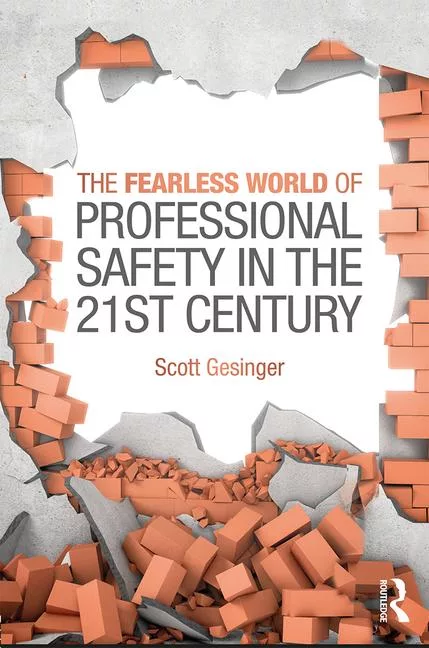
    The Fearless World of Professional Safety in the 21st Century

See More Products

Related Directories

  • Mezzanine Safeti-Gates Inc.

    OSHA , ANSI and IBC compliant mezzanine safety gates for fall protection on pallet drop zones, pick modules, rack systems, elevated platforms, lifts and loading docks. Power operation product containment netting and mesh, pallet position indicator lights and sensors available for any safety gate model including custom designs.
  • MSA - The Safety Co.

    WE KNOW WHAT'S AT STAKE. Unpredictable work environments are often part of the job. That's why it's critically important to have the right safety equipment at the moment it matters most. MSA's complete lines of safety solutions help protect those workers at the heart of your operation.
×

Become a Leader in Safety Culture

Build your knowledge with ISHN, covering key safety, health and industrial hygiene news, products, and trends.

JOIN TODAY
  • RESOURCES
    • Advertise
    • Contact Us
    • Directories
    • Manufacturing Division
    • Store
    • Want More
  • SIGN UP TODAY
    • Create Account
    • eMagazine
    • Newsletters
    • Customer Service
    • Manage Preferences
  • SERVICES
    • Marketing Services
    • Reprints
    • Market Research
    • List Rental
    • Survey/Respondent Access
  • STAY CONNECTED
    • LinkedIn
    • Facebook
    • YouTube
    • X (Twitter)
  • PRIVACY
    • PRIVACY POLICY
    • TERMS & CONDITIONS
    • DO NOT SELL MY PERSONAL INFORMATION
    • PRIVACY REQUEST
    • ACCESSIBILITY

Copyright ©2026. All Rights Reserved BNP Media, Inc. and BNP Media II, LLC.

Design, CMS, Hosting & Web Development :: ePublishing