ISHN logo
search
cart
facebook twitter linkedin youtube
  • Sign In
  • Create Account
  • Sign Out
  • My Account
ISHN logo
  • NEWS
    • Today's News
    • Global Safety News
    • Government Regulations
  • PRODUCTS
    • Product Innovations
    • Featured Products
  • TOPICS
    • Environmental Health and Safety
    • Facility Safety
    • Workplace Health
    • Occupational Safety
    • PPE
    • More Topics
  • CONSTRUCTION
  • TECHNOLOGY
  • COLUMNS
    • Best Practices
    • Dave Johnson: What’s going on
    • Editorial Comments
    • Leading Safety
  • MULTIMEDIA
    • ISHN Podcast
    • Videos
    • Cold Stress Education Quiz
    • Webinars
    • White Papers
  • MORE
    • Buyer's Guide
    • Newsletters
    • Convention Companion
    • Polls
    • Events
    • ISHN Store
    • Sponsor Insights
  • EMAGAZINE
    • eMagazine
    • Archived Issues
    • Contact
    • Advertise
  • JOIN TODAY!
Environmental Health and Safety

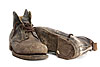
Kick worn out boots to the curb
By Maureen Paraventi
January 5, 2011


It may feel like you’re getting rid of trustworthy old friends, but footwear expert Petr Kovarik says that replacing worn out work boots is the smart thing to do.

“Footwear has a ‘useful life,’” says Kovarik, a member of the product development team at Wolverine, a leader in the safety footwear market and a manufacturer of both casual and workplace shoes, boots and apparel based in Rockford, Michigan. He’s seen boots with ragged outsoles, exposed toe caps, open uppers and protruding footbeds. “In that condition, a boot doesn’t really offer significant protection from chemicals, slippery surfaces or electrical shocks.”

Certain activities can cause specific parts of the boot to deteriorate faster than others. The outsoles of boots that manipulate foot pedals or walk up grated steel steps will wear thin even while the rest of the boot appears to be in good condition.

Excessive wear in steel-toed boots may actually increase the risk of electrical shock, says Kovarik. “When your job requires you to be on your knees a lot, or to kick things a lot, you can wear the leather off the toes so that the caps are exposed. In certain dangerous situations, the cap can arc.”
 

Put your best foot forward

When deciding on new footwear, workers should first check with their employer to see if there are any specific requirements for their footwear, like static dissipating properties. Next, they need to assess the risks and tasks of the work environment.

Shoes with flat, “wedge” bottoms are ideal for flat surfaces, Kovarik says, but workers who climb ladders or walk up stairs should look for heels with a 90 degree angle that will give them a firm footing on rungs and steps.

“People who deal with heavy loads sometimes prefer shoes that do not flex much. They need support and stability, not cushioning and flexibility in their footwear.”

“The best slip resistance design features are grooves that have a certain width and depth to them,” says Kovarik. “The grooves need to run across the outsole and channel out any contaminants that the wearer steps on.” The texture of the outsole bottom surface is also important. “A smooth surface works well on a concrete floor or dry surfaces, but performs rather poorly on contaminated surfaces.”

Uppers made of heat and chemically resistant materials are best for reducing the chance of heat and chemical exposure. “In a high-heat environment, the most important feature is that boots be closed, with no vents and as few seams as possible so that you’re not weakening the upper,” says Kovarik.

Rubber is still the most commonly used sole material and offers plenty of protection against oil, water, moisture, abrasion, punctures and some chemicals. Kovarik notes that polyurethane compounds have improved over time, but their increasing popularity over the past 20 years has more to do with comfort than safety. “Polyurethane offers cushioning properties and is lightweight, but is not as durable (as rubber) and does not protect against heat or sharp objects like glass, metal chips and wiring.” The best puncture protection includes rubber outsoles that have cleats and a thick base, with a steel plate or newly engineered aramid fabrics placed between the insole and the midsole.

Remember that, with safety boots, “broken in” eventually gives way to “broken down.” Wearing the correct footwear won’t do any good once its useful life is over.

KEYWORDS: Foot Protection

Share This Story

Looking for a reprint of this article?
From high-res PDFs to custom plaques, order your copy today!

Maureen Paraventi is Web Editor of ISHN.

Recommended Content

JOIN TODAY
to unlock your recommendations.

Already have an account? Sign In

  • forklift safety

    Exploring the latest technologies in forklift safety

    With more staff and more stock in warehousing now more...
    Facility Safety
    By: Josh Cramer
  • welding

    All about welder’s flash or arc eye

    A flash burn is a painful inflammation of the cornea,...
    Environmental Health and Safety
  • dangerous jobs

    The 10 most dangerous jobs in the U.S.

    On-the-job deaths have been rising — hitting the highest...
    Construction Industry Safety and Health
    By: Benita Mehta
Manage My Account
  • eMagazine Subscriptions
  • ISHN Newsletter & Other Newsletter Alerts
  • Online Registration
  • Manage My Preferences
  • Subscription Customer Service

More Videos

Sponsored Content

Sponsored Content is a special paid section where industry companies provide high quality, objective, non-commercial content around topics of interest to the ISHN audience. All Sponsored Content is supplied by the advertising company and any opinions expressed in this article are those of the author and not necessarily reflect the views of ISHN or its parent company, BNP Media. Interested in participating in our Sponsored Content section? Contact your local rep!

close
  • man wearing the the Sundström SR200 Full Face Mask Respirator
    Sponsored byOHD

    5 Fit Testing Mistakes That Could Cost You

  • This image shows Magid AcuSpex polarized blue mirrored safety glasses.
    Sponsored byMagid Glove and Safety

    Construction PPE Guide: What Crews Need for Each Task

  • lone worker in confined space
    Sponsored byAlphasense Ltd.

    GET THE LEAD OUT of your Safety Oxygen Sensors!

Popular Stories

SpaceX 7 launch

OSHA Investigating Fatal Fall at SpaceX Starbase

Worker Impairment

How to Tell When a Co-Worker is Impaired? A Safety Pro’s Challenge

Automated loading dock equipment

After March 2026 Rivian Death, Safety Managers Reassess Loading Dock Systems Under OSHA's Warehouse Emphasis Program

top 10 most dangerous jobs

Poll

Seasonal Readiness

With the federal heat stress prevention rule on the horizon, which area of your safety program needs the most attention?
View Results Poll Archive

Products

Surviving an OSHA Audit A Management Guide, 2nd Edition

Surviving an OSHA Audit A Management Guide, 2nd Edition

See More Products

ISHN Podcasts

Related Articles

  • winter safety hazards

    Kick winter hazards to the curb

    See More
  • TIngley White Boots.jpg

    Tingley adds white boots to the Pilot G2 Knee Boots

    See More
  • Don’t take your drone out to the ballpark

    See More

Related Products

See More Products
  • 1119906652.webp

    Alive and Well at the End of the Day: The Supervisor's Guide to Managing Safety in Operations, 2E

See More Products

Events

View AllSubmit An Event
  • October 18, 2017

    ACGIH® TLV® For Audible Sound – Understanding the Proposed Notice of Intended Change to The Acgih® Tlv® for Noise

    Occupational noise exposures represent an important but under-recognized cause of disease and disability in the United States. Now titled as Audible Sound, the ACGIH® Threshold Limit Values for Physical Agents (TLV®-PA) Committee has proposed a revision to the TLV® for Noise.
View AllSubmit An Event

Related Directories

  • Bekina Boots Inc.

    Manufacturer of Polyurethane PU waterproof safety boots. Safety options: plain toe - steel toe - full safety - composite toe - electrical hazard - slip resistant - ASTM certified - safety toe - wellington boots.
×

Become a Leader in Safety Culture

Build your knowledge with ISHN, covering key safety, health and industrial hygiene news, products, and trends.

JOIN TODAY
  • RESOURCES
    • Advertise
    • Contact Us
    • Directories
    • Manufacturing Division
    • Store
    • Want More
  • SIGN UP TODAY
    • Create Account
    • eMagazine
    • Newsletters
    • Customer Service
    • Manage Preferences
  • SERVICES
    • Marketing Services
    • Reprints
    • Market Research
    • List Rental
    • Survey/Respondent Access
  • STAY CONNECTED
    • LinkedIn
    • Facebook
    • YouTube
    • X (Twitter)
  • PRIVACY
    • PRIVACY POLICY
    • TERMS & CONDITIONS
    • DO NOT SELL MY PERSONAL INFORMATION
    • PRIVACY REQUEST
    • ACCESSIBILITY

Copyright ©2026. All Rights Reserved BNP Media, Inc. and BNP Media II, LLC.

Design, CMS, Hosting & Web Development :: ePublishing