CSB: Oil, gas production sites hazardous to the public -- especially children
Board issues recommendations for improving safety and security at sites
|
|
|
The U.S. Chemical Safety Board (CSB) today released a new study of explosions at oil and gas production sites across the U.S., identifying 26 incidents since 1983 that killed 44 members of the public and injured 25 others under the age of 25.
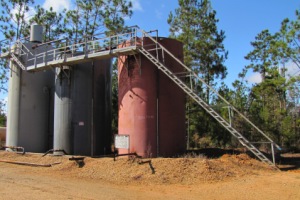
The CSB report found that children and young adults frequently socialize at oil sites in rural areas, unaware of the explosion hazards from storage tanks that contain flammable hydrocarbons like crude oil and natural gas condensate. The unintentional introduction of an ignition source (such as a match, lighter, cigarette, or static electricity) near tank hatches or vents can trigger an internal tank explosion, often launching the tank into the air and killing or injuring people nearby.
The report identified regulatory gaps at the federal and state levels and called on the U.S. Environmental Protection Agency (EPA) and state regulatory bodies to improve current safety and security measures at exploration and production sites such as warning signs, full fencing, locked gates, locks on tank hatches, and other physical barriers. The CSB is calling on state regulators in Mississippi, Oklahoma, and Texas to require safer, modern tank designs that reduce the likelihood of an internal tank explosion if an ignition source is inadvertently introduced nearby.
Three incidents were covered in detail in the report:
• On October 31, 2009, two teenagers, aged 16 and 18, were killed when a storage tank containing natural gas condensate exploded at a rural gas production site in Carnes, Mississippi.
• Six months later a group of youths were exploring a similar tank site in Weleetka, Oklahoma, when an explosion and fire fatally injured one individual.
• Two weeks later, a 25-year-old man and a 24-year-old woman were on top of an oil tank in rural New London, Texas, when the tank exploded, killing the woman and seriously injuring the man.
The CSB investigators deployed to the sites found that the three accidents occurred in isolated, rural wooded areas at production sites that were unfenced, did not have clear or legible warning signs and did not have hatch locks to prevent access to the flammable hydrocarbons inside the tanks.
CSB Chairman Rafael Moure-Eraso said, “After reviewing the work of our investigators I believe that these incidents were entirely preventable. Basic security measures and warning signs – as well as more safely designed storage tanks – will essentially prevent kids from being killed in tank explosions at these sites.”
The CSB’s investigation found a few major cities and some states, such as California and Ohio, already require varying levels of security for oil and gas production sites, such as fencing, locked or sealed tank hatches, and warning signs. As a result, California did not appear to have any fatal tank explosions between 1983 and 2011. However, many other large oil and gas producing states have no such requirements. The major oil producing states Texas and Oklahoma require fencing and warning signs for certain sites that have toxic gas hazards but not for all sites with flammable storage tanks.
“Oil and gas storage sites are part of the landscape in many rural American communities; hundreds of thousands of similar sites are located across the country,” said CSB Lead Investigator Vidisha Parasram. “It was a concern to discover that issues related to public safety are rarely considered prior to placement and design of these sites. In many cases sites can be as close as 150 to 300 feet from existing buildings such as residences, schools, and churches, and still lack any meaningful warnings or barriers to prevent public access.”
Among the six formal safety recommendations in the report, the Board urged that state regulators require the use of inherently safety tank design features such as flame arrestors, pressure-vacuum vents, floating roofs, and vapor recovery systems. The safety measures, which are similar to those already in use in refineries and other downstream storage tanks, reduce the emissions of flammable vapor from the tanks or otherwise prevent an external flame from igniting vapor inside tanks.
The Board recommended that EPA issue a safety bulletin warning of the explosion hazards of storage tanks, describe the importance of increased security measures such as fencing, gates and signs, and recommend the use of inherently safer storage tank design. Similarly, the CSB’s recommendations seek to address the current gaps in regulations and codes in Mississippi, Oklahoma and Texas.
The CSB’s investigation also examined industry codes and standards, such as those from the American Petroleum Institute (API) and the National Fire Protection Association (NFPA). The final report recommends that both organizations adequately address the hazards that these sites present to members of the public through amendments to their existing codes or creation of additional guidance.
As a result of the investigation’s findings the CSB recommended that API warn of the explosion hazards presented by exploration and production sites, including requirements for security measures such as fencing gates and signs, recommendations for inherently safer storage tank design and acknowledgment of the public safety issue presented by these sites. Similarly the CSB recommended that NFPA amend NFPA 30 “Storage of Liquids in Tanks – Requirements for all Storage Tanks” to adequately describe unmanned extraction and production sites and include information in a relevant security standard that offers specifications on fencing and locks.
To view the CSB’s final report click here.
To view the CSB’s safety video “No Place to Hang Out: The Danger of Oil Well Sites” click here.
Looking for a reprint of this article?
From high-res PDFs to custom plaques, order your copy today!


