ISHN logo
search
cart
facebook twitter linkedin youtube
  • Sign In
  • Create Account
  • Sign Out
  • My Account
ISHN logo
  • NEWS
    • Today's News
    • Global Safety News
    • Government Regulations
  • PRODUCTS
    • Product Innovations
    • Featured Products
  • TOPICS
    • Environmental Health and Safety
    • Facility Safety
    • Workplace Health
    • Occupational Safety
    • PPE
    • More Topics
  • CONSTRUCTION
  • TECHNOLOGY
  • COLUMNS
    • Best Practices
    • Dave Johnson: What’s going on
    • Editorial Comments
    • Leading Safety
  • MULTIMEDIA
    • ISHN Podcast
    • Videos
    • Cold Stress Education Quiz
    • Webinars
    • White Papers
  • MORE
    • Buyer's Guide
    • Newsletters
    • Convention Companion
    • Polls
    • Events
    • ISHN Store
    • Sponsor Insights
  • EMAGAZINE
    • eMagazine
    • Archived Issues
    • Contact
    • Advertise
  • JOIN TODAY!
Workplace Safety CulturePsychology in the Workplace

Ensure your safety culture evolves with the times
By DJ Borbidge
May 9, 2013
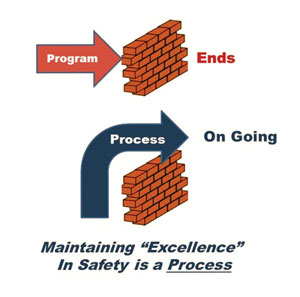
A safety culture is not a “static” entity. Cultures change and develop over time. Unless we understand this we will never continue to make progress in maintaining the type of culture we desire. safety diagram

When looking at your safety culture, you must first determine “where you want to be.” How do you want safety to be perceived, valued and prioritized within your organization is the first question that must be asked. Once this is identified, an in-depth look at your culture as it exists today is critical. 

These steps are best done by involving all management and primary employees to establish ownership. Everyone can help determine the best steps to affect any changes desired. Failing to engage employees in the safety process indicates a breakdown in leadership.

Leadership is more than directing the workforce and enforcing rules and regulations. Listening motivates and is far more important to good leadership than realized. If employees believe they are being genuinely listened to, respect and trust can be generated. By not listening to the ones who have to get the work done, managers and supervisors discourage ingenuity, motivation to take responsibility and active participation in solving problems.

Engage employees in decision-making

No one knows better than front-line employees what works best and what doesn’t work. Ask for input. Questions are possibly one of the most powerful tools of a good leader. Not all workers have the personality style to step forward with suggestions or potential problems. When asked, however, many will offer more than expected. This is especially true if they are convinced that their input is truly needed and wanted.

Limitations are too often placed on employee knowledge. Some managers and supervisors fall into the trap of thinking of employees as only a means of getting the work done and not contributors in determining how it gets done. Employees are often involved in outside-of-work activities that carry all the skills of problem-solving, leading groups and technical and organizational skills.

Measures must be developed 

Traditionally, companies have relied on measuring safety using lagging indicators – results based on lack of bad results; lack of accidents or low number of accidents – things that have already happened.

Leading indicators can be derived by measuring safe and unsafe practices, collecting near misses for resolution – all preventative actions as opposed to reactive actions. 

Reporting “Near Misses” is proactive and should not be punished. Potential accidents can be identified and corrections made before they become actual accidents and recordables. These activities attach value to success rather than failure. Always be prepared for the potential of increased reporting of accidents and unsafe conditions and behaviors. This is not a bad thing. It indicates a level of trust and commitment.

Change is never easy


" It has long been established that people will do more when a positive consequence is attached to their efforts. "

People are predisposed to resist change; it threatens their sense of stability. People are creatures of habit and develop a comfort level with things as they are. Soliciting and using their ideas can make the transition a lot smoother. In developing a plan to maintain excellence in Safety Culture, the factors of natural change, technology and ideology must be considered and addressed as they occur.

It has long been established that people will do more when a positive consequence is attached to their efforts. Negative reinforcement, punishment, can stop a particular behavior for a while; positive reinforcement will foster more of the desired behaviors identified. The least expensive incentive available to management is recognizing and rewarding desired practice, behaviors and involvement in the safety culture process. Recognition, involvement and appreciation are positive ways to motivate employees to work effectively and safely. A simple thank you is quite effective. While rules and regulations must be established and blatant disregard for these must be addressed through disciplinary actions, positive reinforcement must be applied also. 

Over time, we must go back to steps one through three. Establish where you want to be, verify where you are and involve all in identifying and implementing steps to get to where you want to be.


Footnote 1 “Developing Your Culture”, Donna Pearson Chadwick, April 1, 2009, http://ohonline.com/Articles/2009/04/01/DevelopingYour-Culture.aspx?p=1

KEYWORDS: accident prevention safety programs

Share This Story

Looking for a reprint of this article?
From high-res PDFs to custom plaques, order your copy today!

DJ is president/CEO of The Human Side Inc., a training, developmental and industrial consulting company focusing on cultural/behavioral-based safety and offering one-day seminars, speaking engagements and cultural studies. She can be reached at (941) 721-3605, humanside@msn.com, www.thehumansideinc.com.

Recommended Content

JOIN TODAY
to unlock your recommendations.

Already have an account? Sign In

  • forklift safety

    Exploring the latest technologies in forklift safety

    With more staff and more stock in warehousing now more...
    Facility Safety
    By: Josh Cramer
  • welding

    All about welder’s flash or arc eye

    A flash burn is a painful inflammation of the cornea,...
    Environmental Health and Safety
  • dangerous jobs

    The 10 most dangerous jobs in the U.S.

    On-the-job deaths have been rising — hitting the highest...
    Occupational Safety
    By: Benita Mehta
Manage My Account
  • eMagazine Subscriptions
  • ISHN Newsletter & Other Newsletter Alerts
  • Online Registration
  • Manage My Preferences
  • Subscription Customer Service

More Videos

Sponsored Content

Sponsored Content is a special paid section where industry companies provide high quality, objective, non-commercial content around topics of interest to the ISHN audience. All Sponsored Content is supplied by the advertising company and any opinions expressed in this article are those of the author and not necessarily reflect the views of ISHN or its parent company, BNP Media. Interested in participating in our Sponsored Content section? Contact your local rep!

close
  • man wearing the the Sundström SR200 Full Face Mask Respirator
    Sponsored byOHD

    5 Fit Testing Mistakes That Could Cost You

  • This image shows Magid AcuSpex polarized blue mirrored safety glasses.
    Sponsored byMagid Glove and Safety

    Construction PPE Guide: What Crews Need for Each Task

  • lone worker in confined space
    Sponsored byAlphasense Ltd.

    GET THE LEAD OUT of your Safety Oxygen Sensors!

Popular Stories

SpaceX 7 launch

OSHA Investigating Fatal Fall at SpaceX Starbase

Worker Impairment

How to Tell When a Co-Worker is Impaired? A Safety Pro’s Challenge

Automated loading dock equipment

After March 2026 Rivian Death, Safety Managers Reassess Loading Dock Systems Under OSHA's Warehouse Emphasis Program

top 10 most dangerous jobs

Poll

Seasonal Readiness

With the federal heat stress prevention rule on the horizon, which area of your safety program needs the most attention?
View Results Poll Archive

Products

Surviving an OSHA Audit A Management Guide, 2nd Edition

Surviving an OSHA Audit A Management Guide, 2nd Edition

See More Products

ISHN Podcasts

Related Articles

  • Business models

    Business models change with the times

    See More
  • 8 steps to shaping your safety culture

    See More
  • 06107_F3_pic.jpg

    Improve your safety culture with FR fabrics

    See More

Related Products

See More Products
  • 1119772133.jpg

    Delivering Safety Excellence: Engagement Culture at Every Level

  • 1119906652.webp

    Alive and Well at the End of the Day: The Supervisor's Guide to Managing Safety in Operations, 2E

See More Products

Related Directories

  • MSA - The Safety Co.

    WE KNOW WHAT'S AT STAKE. Unpredictable work environments are often part of the job. That's why it's critically important to have the right safety equipment at the moment it matters most. MSA's complete lines of safety solutions help protect those workers at the heart of your operation.
×

Become a Leader in Safety Culture

Build your knowledge with ISHN, covering key safety, health and industrial hygiene news, products, and trends.

JOIN TODAY
  • RESOURCES
    • Advertise
    • Contact Us
    • Directories
    • Manufacturing Division
    • Store
    • Want More
  • SIGN UP TODAY
    • Create Account
    • eMagazine
    • Newsletters
    • Customer Service
    • Manage Preferences
  • SERVICES
    • Marketing Services
    • Reprints
    • Market Research
    • List Rental
    • Survey/Respondent Access
  • STAY CONNECTED
    • LinkedIn
    • Facebook
    • YouTube
    • X (Twitter)
  • PRIVACY
    • PRIVACY POLICY
    • TERMS & CONDITIONS
    • DO NOT SELL MY PERSONAL INFORMATION
    • PRIVACY REQUEST
    • ACCESSIBILITY

Copyright ©2026. All Rights Reserved BNP Media, Inc. and BNP Media II, LLC.

Design, CMS, Hosting & Web Development :: ePublishing