ISHN logo
search
cart
facebook twitter linkedin youtube
  • Sign In
  • Create Account
  • Sign Out
  • My Account
ISHN logo
  • NEWS
    • Today's News
    • Global Safety News
    • Government Regulations
  • PRODUCTS
    • Product Innovations
    • Featured Products
  • TOPICS
    • Environmental Health and Safety
    • Facility Safety
    • Workplace Health
    • Occupational Safety
    • PPE
    • More Topics
  • CONSTRUCTION
  • TECHNOLOGY
  • COLUMNS
    • Best Practices
    • Dave Johnson: What’s going on
    • Editorial Comments
    • Leading Safety
  • MULTIMEDIA
    • ISHN Podcast
    • Videos
    • Cold Stress Education Quiz
    • Webinars
    • White Papers
  • MORE
    • Buyer's Guide
    • Newsletters
    • Convention Companion
    • Polls
    • Events
    • ISHN Store
    • Sponsor Insights
  • EMAGAZINE
    • eMagazine
    • Archived Issues
    • Contact
    • Advertise
  • JOIN TODAY!
Workplace Health

200,000 heart disease, stroke deaths a year are preventable

By Howard LeWine M.D.
September 13, 2013

Web ExclusiveIt’s easy to think of heart disease and stroke as an almost inevitable part of aging in a developed country like the United States. After all, they are our leading causes of death and disability. But the truth is that these are largely preventable conditions.

New estimates from the Centers for Disease Control and Prevention (CDC) indicate that one-quarter of all deaths from heart disease and stroke are preventable. And that is almost certainly an underestimate.

According to the report,  inMorbidity and Mortality Weekly Report, among American adults under age 75, approximately 200,000 of deaths caused each year by heart disease, stroke, and high blood pressure (hypertension) are preventable. Surprisingly, more than half of those preventable deaths occurred among individuals under age 65.

During a press conference to present the study results, CDC director Dr. Tom Frieden said, “As a doctor, I find it heartbreaking to know that the vast majority of people who are having a heart attack or stroke, under the age of 65 in particular, and dying from it didn’t have to have that happen.”

It’s possible that the rate of preventable deaths is lower among those over age 65 because they are covered by Medicare, and so may be more likely to see doctors and receive preventive treatment.

Other factors also influenced the rate of preventable death. Sex is one: men were twice as likely to die from a preventable heart attack or stroke as women. Race and ethnicity also matter: blacks were twice as likely to die from a preventable heart attack or stroke as whites.

Geography is another influence. “Longevity may be more likely to be influenced by your ZIP code than by your genetic code,” said Dr. Frieden. Preventable deaths were more common in southern states.

The good news is that the rate of preventable deaths declined 29% from 2001 to 2010, the last year for which there are complete statistics.

An underestimate

The CDC came up with its estimates using mathematical modeling. It essentially identified “avoidable deaths” as those occurring among men and women under age 75 who had been diagnosed with heart disease, stroke, or high blood pressure. Such people, so the thinking goes, can be treated to prevent the condition from killing them.

Preventing these conditions in the first place could lead to even greater reductions. Harvard School of Public Health researchers followed nearly 85,000 women in the Nurses’ Health Study, all free of cardiovascular disease, cancer, and diabetes at the study’s start in 1980. After 14 years of follow-up, 1,128 had experienced a heart attack or died of heart disease.

Women with a healthy lifestyle (nonsmoker, healthy body weight, moderate-to-vigorous physical activity an average of at least half an hour per day, and a healthy diet) were far less likely to have had a cardiovascular problem than women who didn’t. In fact, the researchers estimated that 82% of the coronary events in these women could be attributed to aspects of an unhealthy lifestyle. The study was reported in the New England Journal of Medicine.

Do-it-yourself approach

No matter what your age and how good things look today, your future risk of heart disease, stroke and other related diseases is high. It’s true for all of us.

That’s why it’s so important to do all you can to lower your risk:

  • Don’t smoke. If you smoke, it’s never too late to quit. Your risk of a heart attack starts to decrease within weeks of quitting.
  • Aim for or maintain a healthy weight.
  • Take steps to help keep your blood pressure in the healthy range. Eat a diet rich in fruits and vegetables and limit salt intake. If lifestyle changes aren’t enough to do the job, there are a number of medicines that work.
  • Reduce your consumption of saturated and trans fats. This will help improve your LDL (bad) cholesterol level. Instead use more olive oil and other unsaturated oils. Some people may also need a statin drug to lower LDL.

Over the next 10 years, we have the knowledge and means to greatly increase the number of preventable deaths from heart disease, stroke, and from many other diseases as well. As a nation we could take a huge step forward by becoming more physically active and adopting other healthy lifestyle changes.

KEYWORDS: Centers for Disease Control (CDC) healthy lifestyle

Share This Story

Looking for a reprint of this article?
From high-res PDFs to custom plaques, order your copy today!

Chief Medical Editor, Internet Publishing, Harvard Health Publications

Recommended Content

JOIN TODAY
to unlock your recommendations.

Already have an account? Sign In

  • forklift safety

    Exploring the latest technologies in forklift safety

    With more staff and more stock in warehousing now more...
    Facility Safety
    By: Josh Cramer
  • welding

    All about welder’s flash or arc eye

    A flash burn is a painful inflammation of the cornea,...
    Environmental Health and Safety
  • dangerous jobs

    The 10 most dangerous jobs in the U.S.

    On-the-job deaths have been rising — hitting the highest...
    Transportation Safety
    By: Benita Mehta
Manage My Account
  • eMagazine Subscriptions
  • ISHN Newsletter & Other Newsletter Alerts
  • Online Registration
  • Manage My Preferences
  • Subscription Customer Service

More Videos

Sponsored Content

Sponsored Content is a special paid section where industry companies provide high quality, objective, non-commercial content around topics of interest to the ISHN audience. All Sponsored Content is supplied by the advertising company and any opinions expressed in this article are those of the author and not necessarily reflect the views of ISHN or its parent company, BNP Media. Interested in participating in our Sponsored Content section? Contact your local rep!

close
  • man wearing the the Sundström SR200 Full Face Mask Respirator
    Sponsored byOHD

    5 Fit Testing Mistakes That Could Cost You

  • This image shows Magid AcuSpex polarized blue mirrored safety glasses.
    Sponsored byMagid Glove and Safety

    Construction PPE Guide: What Crews Need for Each Task

  • lone worker in confined space
    Sponsored byAlphasense Ltd.

    GET THE LEAD OUT of your Safety Oxygen Sensors!

Popular Stories

SpaceX 7 launch

OSHA Investigating Fatal Fall at SpaceX Starbase

dust explosion

Tennessee OSHA Issues Record $3.1M Fine After Deadly Explosion at Munitions Plant

roofing dangerous jobs Getty.jpg

OSHA Finds Florida Roofing Company Willfully Exposed Workers to Safety Hazards After Worker’s Fatal Fall

top 10 most dangerous jobs

Poll

Seasonal Readiness

With the federal heat stress prevention rule on the horizon, which area of your safety program needs the most attention?
View Results Poll Archive

Products

Surviving an OSHA Audit A Management Guide, 2nd Edition

Surviving an OSHA Audit A Management Guide, 2nd Edition

See More Products

ISHN Podcasts

Related Articles

  • CDC says 200,000 heart disease, stroke deaths could be prevented

    See More
  • Thousands of roadway deaths a year are due to this simple error

    See More
  • CDC: up to 40 percent of U.S. deaths each year are preventable

    See More

Related Products

See More Products
  • 9781138749573.jpg

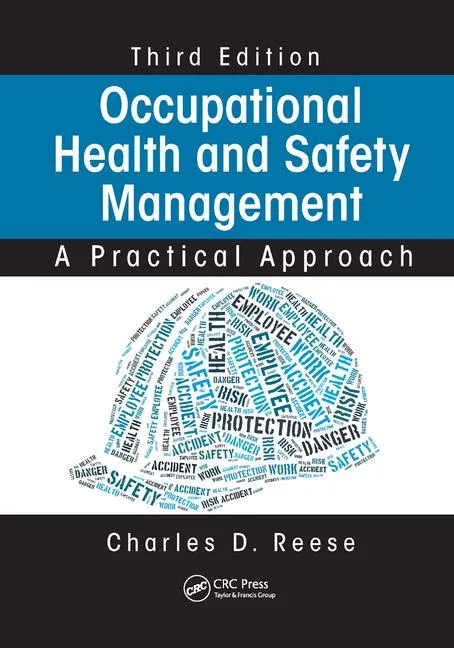
    Occupational Health and Safety Management: A Practical Approach, Third Edition

  • A Basic Guide to RCRA—Understanding Solid and Hazardous Waste Management, Second Edition

See More Products

Events

View AllSubmit An Event
  • May 23, 2017

    Zika Virus: An Emerging Infectious Disease, Epidemiology, Risks and Prevention in the Workplace

    Zika Virus: An Emerging Infectious Disease, Epidemiology, Risks and Prevention in the Workplace will present the history and evolution of the Zika Virus including understanding the geographic areas and populations at risk, the epidemiology of the disease, modes of transmission, case definitions, clinical presentation, health effects, surveillance and prevention in the workplace and in the community.
View AllSubmit An Event

Related Directories

  • American Heart Association

  • Crisis Prevention Institute

    CPI equips organizations with training and resources on preventing and de-escalating difficult behavior.
×

Become a Leader in Safety Culture

Build your knowledge with ISHN, covering key safety, health and industrial hygiene news, products, and trends.

JOIN TODAY
  • RESOURCES
    • Advertise
    • Contact Us
    • Directories
    • Manufacturing Division
    • Store
    • Want More
  • SIGN UP TODAY
    • Create Account
    • eMagazine
    • Newsletters
    • Customer Service
    • Manage Preferences
  • SERVICES
    • Marketing Services
    • Reprints
    • Market Research
    • List Rental
    • Survey/Respondent Access
  • STAY CONNECTED
    • LinkedIn
    • Facebook
    • YouTube
    • X (Twitter)
  • PRIVACY
    • PRIVACY POLICY
    • TERMS & CONDITIONS
    • DO NOT SELL MY PERSONAL INFORMATION
    • PRIVACY REQUEST
    • ACCESSIBILITY

Copyright ©2026. All Rights Reserved BNP Media, Inc. and BNP Media II, LLC.

Design, CMS, Hosting & Web Development :: ePublishing