ISHN logo
search
cart
facebook twitter linkedin youtube
  • Sign In
  • Create Account
  • Sign Out
  • My Account
ISHN logo
  • NEWS
    • Today's News
    • Global Safety News
    • Government Regulations
  • PRODUCTS
    • Product Innovations
    • Featured Products
  • TOPICS
    • Environmental Health and Safety
    • Facility Safety
    • Workplace Health
    • Occupational Safety
    • PPE
    • More Topics
  • CONSTRUCTION
  • TECHNOLOGY
  • COLUMNS
    • Best Practices
    • Dave Johnson: What’s going on
    • Editorial Comments
    • Leading Safety
  • MULTIMEDIA
    • ISHN Podcast
    • Videos
    • Cold Stress Education Quiz
    • Webinars
    • White Papers
  • MORE
    • Buyer's Guide
    • Newsletters
    • Convention Companion
    • Polls
    • Events
    • ISHN Store
    • Sponsor Insights
  • EMAGAZINE
    • eMagazine
    • Archived Issues
    • Contact
    • Advertise
  • JOIN TODAY!
Today's Safety NewsOccupational Safety

French horn players at high risk of noise-induced hearing loss

Rock musicians not the only ones in danger
September 25, 2013

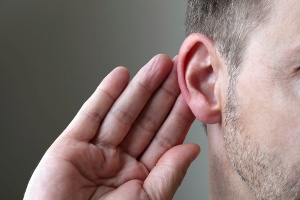
hearing lossProfessional French horn players may need to seriously consider adopting effective strategies to prevent noise induced hearing loss (NIHL). A new study published online in the Journal of Occupational and Environmental Hygiene (JOEH) found further evidence that French horn players are one of the most at-risk groups of developing NIHL among professional orchestral musicians.

Between 11 and 22 percent of French horn players showed some form of hearing loss typical of NIHL,” according to study investigator Ian O’Brien, MPhil, MAudSA, CCP, a doctoral degree candidate at the University of Sydney and a professional French horn player. “Looking at those aged 40 years or younger and also correcting for age, the number of horn players with an apparent hearing loss rose to between 17 percent and 33 percent.”

The study, conducted by researchers from the University of Queensland and the University of Sydney at the 2010 annual gathering of the International Horn Society in Brisbane, Australia, examined the hearing of 144 French horn players. The investigators performed audiometric assessments and measured sound levels and hearing thresholds to determine if the horn players were at risk of harmful sound exposure.

O’Brien and his colleagues also administered a questionnaire to investigate the horn players’ safety practices and attitudes about hearing conservation.

Most don't use hearing protection

“We were surprised to find that only 18 percent of participants reported using any form of hearing protection,” said lead investigator Wayne Wilson, PhD, MAudSA, CCP, a senior lecturer in audiology at the University of Queensland. “Even within that 18 percent, the use of hearing protection appears to be inadequate with 81 percent of these participants reporting their frequency of use as ‘sometimes’ and 50 percent reporting they use generic, foam or other inferior forms of protection.”

According to the National Institute on Deafness and Other Communication Disorders (NIDCD), when individuals are exposed to loud noise over a long period of time, symptoms of NIHL will increase gradually. The NIDCD recommends preventing NIHL by regularly using hearing protectors such as earplugs or earmuffs. Designed specifically for musicians such as French horn players, these devices are commercially available.

“Our findings also reinforce the need to educate horn players, their mentors and audiologists about the need to protect hearing and how best to achieve this while still enabling musicians to play to the highest level,” said O’Brien. “Even mild hearing loss can result in difficulties discriminating pitch, abnormal loudness growth and tinnitus, all of which can affect a musician’s ability to perform, subsequently jeopardizing his or her livelihood.”

Effects of hearing loss

The Bureau of Labor Statistics reports that there have been nearly 125,000 cases of permanent hearing loss in workers since 2004. In addition to hearing loss, exposure to high levels of noise can result in physical and psychological stress, reduced productivity, poor communication, and accidents and injuries caused by a worker’s inability to hear warning signals.

According to Torey Nalbone, PhD, CIH, associate professor at the University of Tyler, Texas, Vice Chair of ACGIH® and an AIHA noise exposure expert, “Traditionally, we have examined rock and roll artists and their hearing loss, but few think of the hearing loss experienced by symphonic orchestra players. The presence of loss of hearing acuity in the ranges documented in this study demonstrates that orchestral musicians should take a more active role in conserving their hearing.”

He adds, “The appropriate use of hearing protection devices can and will reduce the incidence of NIHL. This could be an important attitude and habit to change for these horn players and others in an orchestral setting, especially when they depend on their hearing for a major portion of their success during performances.”

KEYWORDS: hearing conservation hearing loss

Share This Story

Looking for a reprint of this article?
From high-res PDFs to custom plaques, order your copy today!

Recommended Content

JOIN TODAY
to unlock your recommendations.

Already have an account? Sign In

  • forklift safety

    Exploring the latest technologies in forklift safety

    With more staff and more stock in warehousing now more...
    Facility Safety
    By: Josh Cramer
  • welding

    All about welder’s flash or arc eye

    A flash burn is a painful inflammation of the cornea,...
    Environmental Health and Safety
  • dangerous jobs

    The 10 most dangerous jobs in the U.S.

    On-the-job deaths have been rising — hitting the highest...
    Transportation Safety
    By: Benita Mehta
Manage My Account
  • eMagazine Subscriptions
  • ISHN Newsletter & Other Newsletter Alerts
  • Online Registration
  • Manage My Preferences
  • Subscription Customer Service

More Videos

Sponsored Content

Sponsored Content is a special paid section where industry companies provide high quality, objective, non-commercial content around topics of interest to the ISHN audience. All Sponsored Content is supplied by the advertising company and any opinions expressed in this article are those of the author and not necessarily reflect the views of ISHN or its parent company, BNP Media. Interested in participating in our Sponsored Content section? Contact your local rep!

close
  • man wearing the the Sundström SR200 Full Face Mask Respirator
    Sponsored byOHD

    5 Fit Testing Mistakes That Could Cost You

  • This image shows Magid AcuSpex polarized blue mirrored safety glasses.
    Sponsored byMagid Glove and Safety

    Construction PPE Guide: What Crews Need for Each Task

  • lone worker in confined space
    Sponsored byAlphasense Ltd.

    GET THE LEAD OUT of your Safety Oxygen Sensors!

Popular Stories

SpaceX 7 launch

OSHA Investigating Fatal Fall at SpaceX Starbase

Worker Impairment

How to Tell When a Co-Worker is Impaired? A Safety Pro’s Challenge

Automated loading dock equipment

After March 2026 Rivian Death, Safety Managers Reassess Loading Dock Systems Under OSHA's Warehouse Emphasis Program

top 10 most dangerous jobs

Poll

Seasonal Readiness

With the federal heat stress prevention rule on the horizon, which area of your safety program needs the most attention?
View Results Poll Archive

Products

Surviving an OSHA Audit A Management Guide, 2nd Edition

Surviving an OSHA Audit A Management Guide, 2nd Edition

See More Products

ISHN Podcasts

Related Articles

  • Educate your “tweeners” to prevent noise-induced hearing loss

    See More
  • Honeywell experts host free hearing conservation seminars in Fairbanks & Anchorage to help prevent noise-induced hearing loss

    See More
  • Honeywell experts host free hearing conservation seminars in British Columbia to help prevent noise-induced hearing loss

    See More

Related Products

See More Products
  • 1119906652.webp

    Alive and Well at the End of the Day: The Supervisor's Guide to Managing Safety in Operations, 2E

  • 1118911040.jpg

    Risk Assessment: A Practical Guide to Assessing Operational Risks

See More Products

Events

View AllSubmit An Event
  • September 22, 2016

    Bang! Damage from impulse noise and the effectiveness of hearing protection

    Some of the most hazardous sounds we hear are brief sounds – noises from impacts and impulses. These arise from sources like household tools, construction, industrial noise, firecrackers, guns, and even automotive airbags.
View AllSubmit An Event
×

Become a Leader in Safety Culture

Build your knowledge with ISHN, covering key safety, health and industrial hygiene news, products, and trends.

JOIN TODAY
  • RESOURCES
    • Advertise
    • Contact Us
    • Directories
    • Manufacturing Division
    • Store
    • Want More
  • SIGN UP TODAY
    • Create Account
    • eMagazine
    • Newsletters
    • Customer Service
    • Manage Preferences
  • SERVICES
    • Marketing Services
    • Reprints
    • Market Research
    • List Rental
    • Survey/Respondent Access
  • STAY CONNECTED
    • LinkedIn
    • Facebook
    • YouTube
    • X (Twitter)
  • PRIVACY
    • PRIVACY POLICY
    • TERMS & CONDITIONS
    • DO NOT SELL MY PERSONAL INFORMATION
    • PRIVACY REQUEST
    • ACCESSIBILITY

Copyright ©2026. All Rights Reserved BNP Media, Inc. and BNP Media II, LLC.

Design, CMS, Hosting & Web Development :: ePublishing