ISHN logo
search
cart
facebook twitter linkedin youtube
  • Sign In
  • Create Account
  • Sign Out
  • My Account
ISHN logo
  • NEWS
    • Today's News
    • Global Safety News
    • Government Regulations
  • PRODUCTS
    • Product Innovations
    • Featured Products
  • TOPICS
    • Environmental Health and Safety
    • Facility Safety
    • Workplace Health
    • Occupational Safety
    • PPE
    • More Topics
  • CONSTRUCTION
  • TECHNOLOGY
  • COLUMNS
    • Best Practices
    • Dave Johnson: What’s going on
    • Editorial Comments
    • Leading Safety
  • MULTIMEDIA
    • ISHN Podcast
    • Videos
    • Cold Stress Education Quiz
    • Webinars
    • White Papers
  • MORE
    • Buyer's Guide
    • Newsletters
    • Convention Companion
    • Polls
    • Events
    • ISHN Store
    • Sponsor Insights
  • EMAGAZINE
    • eMagazine
    • Archived Issues
    • Contact
    • Advertise
  • JOIN TODAY!
Today's Safety NewsWorkplace Training Strategies Psychology in the Workplace

Motives and barriers for learning

March 3, 2014

peopleWhy do we participate in learning?

You can probably come up with a long list of reasons on your own, but as a lowly student, your opinion doesn't count! Here's what some of the BIG GUYS have come up with:

Houle: Houle divides adult learners into three separate learning orientations.

  • Goal Oriented learners use education as a means of achieving some other goal
  • Activity Oriented learners participate for the sake of the activity itself and the social interaction it provides.
  • Learning Oriented learners seek knowledge for its own sake.

Houle admits that these are not "pure" types; the orientations can overlap.

Boshier, Morstain and Smart: These three came up with six factors for participation:

  • Social Relationships: make friends and meet others.               
  • External Expectations: complying with the wishes of someone else with authority.
  • Social Welfare: desire to serve others and/or community.
  • Professional Advancement: desire for job enhancement or professional advancement.
  • Escape/Stimulation: to alleviate boredom and/or to escape home or work routine.
  • Cognitive Interest: learning for the sake of learning itself.

Why don't we participate in learning?

Many have done studies on non-participation. The following researchers have worked out ways of grouping specific barriers into categories:

Johnstone and Rivera: Found two categories; External or situation barriers and Internal or dispositional barriers.

Cross: Three categories; Situational barriers (depending person's situation at a given time), Institutional barriers (all practices and procedures that discourage adults from participation--like filling out those application forms for graduate school), Dispositional barriers (person's attitude about self and learning).

Darkenwald and Merriam:Add another category to Cross' list; Informational barriers (person is not aware of educational activities available). Above taken from: Merriam, S. & Caffarella, R. (1991). Learning in Adulthood. San Francisco: Jossey-Bass, 86-90.

Most of us can come up with many reasons for not participating in educational activities, but as educators, we may be so used to participating in learning ourselves that it becomes difficult to "think outside the box" sometimes.

Merriam and Brockett (1997) devote a whole chapter (the info below is from pp.187-200) to the issue of access to adult education and list four major conditions that limit access:

Geographic Conditions: There is a great divide between urban, suburban, and rural settings. Rural areas tend to have fewer resources for education. In many industrialized countries, however, inner cities may be worse off than some rural areas. Migrant and homeless people are also at a great disadvantage for receiving access to education.

Demographic Factors: Age and sex influence who participates and who doesn't. Young and middle-aged adults participate more than older adults--of course, younger adults often continue learning for their jobs. But older adults tend to have less education in general than younger people, and level of education is a good predictor of who will continue to participate in educational activities. The role of age could change significantly in the future, however, in countries such as the U.S., where life expectancy continues to rise.

In wealthier nations, men are still more likely to hold higher and better paid positions than women, and are thus more likely to receive further (and better) training.

Socioeconomic Conditions and Education: Those who have relatively affluent backgrounds, tend to remain that way and also tend to participate more in education. Those from less wealthy families participate less partly because they have less money to do so, but also because they don't fit into the system of education (i.e. they don't speak the same language, share the same norms, etc.) which is built and maintained by wealthier people. Formal education is also the kind of education that "counts the most," but it also costs the most and has the most prerequisites--less well-off people may be engaging in a variety of learning activities, but these activities don't count since they don't earn the learners an "official" piece of paper.

Cultural Determinants: Minority groups all over the world tend to participate less than majority groups. This can be due to majority groups explicitly prohibiting the participation of minority people. It can also be that belonging to certain non-majority groups can impact one's attitudes towards education. As a member of a particular social group, you may not feel that you can trust certain forms of education and may feel uncomfortable participating in them. Additionally, immigrant populations tend not to participate in educational activities as much as native-born populations.

KEYWORDS: Learning & Development

Share This Story

Looking for a reprint of this article?
From high-res PDFs to custom plaques, order your copy today!

Recommended Content

JOIN TODAY
to unlock your recommendations.

Already have an account? Sign In

  • forklift safety

    Exploring the latest technologies in forklift safety

    With more staff and more stock in warehousing now more...
    Facility Safety
    By: Josh Cramer
  • welding

    All about welder’s flash or arc eye

    A flash burn is a painful inflammation of the cornea,...
    Environmental Health and Safety
  • dangerous jobs

    The 10 most dangerous jobs in the U.S.

    On-the-job deaths have been rising — hitting the highest...
    Construction Industry Safety and Health
    By: Benita Mehta
Manage My Account
  • eMagazine Subscriptions
  • ISHN Newsletter & Other Newsletter Alerts
  • Online Registration
  • Manage My Preferences
  • Subscription Customer Service

More Videos

Sponsored Content

Sponsored Content is a special paid section where industry companies provide high quality, objective, non-commercial content around topics of interest to the ISHN audience. All Sponsored Content is supplied by the advertising company and any opinions expressed in this article are those of the author and not necessarily reflect the views of ISHN or its parent company, BNP Media. Interested in participating in our Sponsored Content section? Contact your local rep!

close
  • man wearing the the Sundström SR200 Full Face Mask Respirator
    Sponsored byOHD

    5 Fit Testing Mistakes That Could Cost You

  • This image shows Magid AcuSpex polarized blue mirrored safety glasses.
    Sponsored byMagid Glove and Safety

    Construction PPE Guide: What Crews Need for Each Task

  • lone worker in confined space
    Sponsored byAlphasense Ltd.

    GET THE LEAD OUT of your Safety Oxygen Sensors!

Popular Stories

SpaceX 7 launch

OSHA Investigating Fatal Fall at SpaceX Starbase

Automated loading dock equipment

After March 2026 Rivian Death, Safety Managers Reassess Loading Dock Systems Under OSHA's Warehouse Emphasis Program

psychology in the workplace

Most Workplaces Measure Psychological Safety, Ignoring Psychosocial Risks

top 10 most dangerous jobs

Poll

Seasonal Readiness

With the federal heat stress prevention rule on the horizon, which area of your safety program needs the most attention?
View Results Poll Archive

Products

Surviving an OSHA Audit A Management Guide, 2nd Edition

Surviving an OSHA Audit A Management Guide, 2nd Edition

See More Products

ISHN Podcasts

Related Articles

  • Make the case for learning online

    See More
  • WorkplaceAware eliminates barriers for near miss reporting

    See More
  • Combine streaming video with hands-on demos for blended learning

    See More

Related Products

See More Products
  • 1118959450.jpg

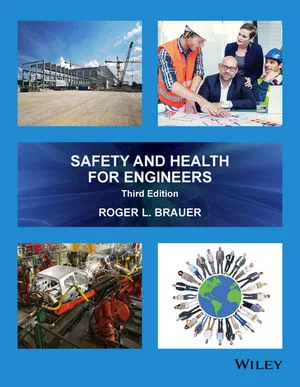
    Safety and Health for Engineers, 3rd Edition

See More Products

Events

View AllSubmit An Event
  • October 18, 2017

    ACGIH® TLV® For Audible Sound – Understanding the Proposed Notice of Intended Change to The Acgih® Tlv® for Noise

    Occupational noise exposures represent an important but under-recognized cause of disease and disability in the United States. Now titled as Audible Sound, the ACGIH® Threshold Limit Values for Physical Agents (TLV®-PA) Committee has proposed a revision to the TLV® for Noise.
View AllSubmit An Event
×

Become a Leader in Safety Culture

Build your knowledge with ISHN, covering key safety, health and industrial hygiene news, products, and trends.

JOIN TODAY
  • RESOURCES
    • Advertise
    • Contact Us
    • Directories
    • Manufacturing Division
    • Store
    • Want More
  • SIGN UP TODAY
    • Create Account
    • eMagazine
    • Newsletters
    • Customer Service
    • Manage Preferences
  • SERVICES
    • Marketing Services
    • Reprints
    • Market Research
    • List Rental
    • Survey/Respondent Access
  • STAY CONNECTED
    • LinkedIn
    • Facebook
    • YouTube
    • X (Twitter)
  • PRIVACY
    • PRIVACY POLICY
    • TERMS & CONDITIONS
    • DO NOT SELL MY PERSONAL INFORMATION
    • PRIVACY REQUEST
    • ACCESSIBILITY

Copyright ©2026. All Rights Reserved BNP Media, Inc. and BNP Media II, LLC.

Design, CMS, Hosting & Web Development :: ePublishing