Why your insurance company should pay for your blood pressure monitor
Hint: It’ll save them money
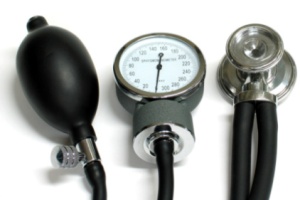 Home blood pressure-monitoring kits can save insurance companies money by improving healthcare quality and reducing healthcare costs, according to new research in the American Heart Association’s journal Hypertension.
Why testing is important
In the United States, more than 76 million adults have diagnosed high blood pressure, and many more are undiagnosed. Since high blood pressure typically has no symptoms, periodic testing is critical especially for people with the factors that put them at risk for the condition.
Home monitoring kits effectively test blood pressure at regular intervals over several days or weeks in a familiar environment.
In the first analysis of its kind, researchers found that for each dollar invested in home monitoring kits, insurance companies could expect a return of $0.85 to $3.75 in the first year. Over 10 years, the return per dollar invested could increase to $7.50 to $19.34.
"Reimbursement makes business sense"
“Home blood pressure monitors should be reimbursed, widely adopted across America and integrated into current clinical practice for diagnosis and treatment of hypertension,” said Alejandro Arrieta, Ph.D., the study’s lead author and assistant professor in the Department of Health Policy and Management at Florida International University in Miami. “Our study provides evidence that reimbursement makes business sense for an insurance company.”
Researchers analyzed 2008-11 data from two health insurance plans operated by a Midwestern health maintenance organization. One was a private employee plan with 25,478 members, and the other was a Medicare Advantage plan with 8,253 members. In both plans, most of the members were female.
High blood pressure affected 6 percent of the employee plan’s members ages 20-44 and 34 percent of those 45-64. In the Medicare plan, in which members were 65 and older, 60 percent had high blood pressure.
Depending on the insurance plan and age-group, net savings associated with home blood pressure monitoring ranged from $33 to $166 per member in the first year, and $415 to $1,364 over 10 years.
Age differences
Researchers found reasons for the savings differed by age groups and whether the monitors were used for treatment or diagnosis. In people 65 and older, home monitoring saved more when used to track high blood pressure treatment, by helping them avoid future adverse cardiovascular events. In people younger than 65, savings were higher in diagnostic use of the monitors with fewer false positive diagnoses and fewer people starting unnecessary treatment.
“By improving the accuracy of their blood pressure assessment and by monitoring their blood pressures outside the clinic setting, patients help themselves, help their physicians and save money for insurance companies,” Arrieta said.
The American Heart Association recommends that people with high blood pressure monitor their levels at home, in addition to receiving regular monitoring by their health care provider. The association also recommends that patients be reimbursed for buying a home monitoring kit, and that healthcare providers receive reimbursement for associated costs.
Co-authors are John Woods, Ph.D.; Nan Qiao; and Stephen Jay, M.D. Author disclosures are on the manuscript.
The Center of Excellence in Cardiovascular Research, part of the Strategic Research Initiative sponsored by Indiana University Health and the Indiana University School of Medicine, supported the study.
Additional Resources:
- Learn more about home blood pressure monitoring, including the best types to use.
- Watch this video to learn how to monitor your blood pressure at home and how to work with your doctor on the results.
- View an animation of high blood pressure.
- Learn more about our Heart360 tool and the importance of tracking your blood pressure readings.
- Find out about blood pressure monitoring programs near you.
- Researcher photo, heart illustration and blood pressure photos are available on the right column of this news release link http://newsroom.heart.org/news/home-blood-pressure-monitoring-kits-save-insurance-companies-money?preview=6a584a22c641ef39fbc50c74f0d68acf
- Follow AHA/ASA news on Twitter @HeartNews.
- For the updates and new science from the Hypertension journal follow @HyperAHA.
Looking for a reprint of this article?
From high-res PDFs to custom plaques, order your copy today!


