ISHN logo
search
cart
facebook twitter linkedin youtube
  • Sign In
  • Create Account
  • Sign Out
  • My Account
ISHN logo
  • NEWS
    • Today's News
    • Global Safety News
    • Government Regulations
  • PRODUCTS
    • Product Innovations
    • Featured Products
  • TOPICS
    • Environmental Health and Safety
    • Facility Safety
    • Workplace Health
    • Occupational Safety
    • PPE
    • More Topics
  • CONSTRUCTION
  • TECHNOLOGY
  • COLUMNS
    • Best Practices
    • Dave Johnson: What’s going on
    • Editorial Comments
    • Leading Safety
  • MULTIMEDIA
    • ISHN Podcast
    • Videos
    • Cold Stress Education Quiz
    • Webinars
    • White Papers
  • MORE
    • Buyer's Guide
    • Newsletters
    • Convention Companion
    • Polls
    • Events
    • ISHN Store
    • Sponsor Insights
  • EMAGAZINE
    • eMagazine
    • Archived Issues
    • Contact
    • Advertise
  • JOIN TODAY!

A look back at AIHce 2014

Yant lecture examines effects of working postures on male and female workers
By Nicole Racadag
September 8, 2014

workerThis article is re-posted with permission from AIHA and The Synergist magazine.

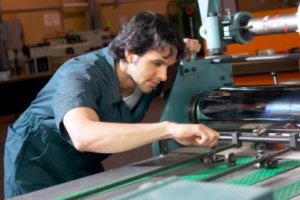
In an address at AIHce 2014 + Stewardship on June 3, Karen Messing, PhD, recipient of AIHA’s 2014 William P. Yant Award, described the effects of sitting versus standing on men and women who perform various types of work. Messing, who earned her doctorate in biology at McGill University in Montreal, Canada, and is professor emerita in the department of biological sciences at the University of Quebec at Montreal, challenged the audience to consider whether too much standing could be problematic to worker health.

Still standing

In 1989, Messing and her fellow researchers were asked by a female supermarket checkout clerk to determine whether her job could be performed seated, as opposed to standing. Messing and her colleagues studied the job, found out it could be done seated and the clerk won her case. However, 25 years later, supermarket checkout clerks and several other types of retail workers are still standing.

“In North America, 45 percent of employees work standing for more than three quarters of their work day and 40 percent of these workers cannot sit at will,” said Messing, the author of over 130 peer-reviewed articles. “Research shows that too much sitting is detrimental to worker health since it is associated with heart disease, obesity and diabetes. So scientists think that standing while working is better, but too much of it has been linked to problems as well.”

Prolonged standing can lead to...

According to Messing, research indicates that prolonged standing can lead to varicose veins, cardiovascular problems such as carotid atherosclerosis, and musculoskeletal disorders (MSDs) such as orthostatic intolerance and pain in the back and lower limbs.

What prevents North American supermarket cashiers, bank tellers and sales staff from being given access to seats? And why aren’t they insisting on seats in their workplaces? According to Messing and her colleagues’ field research findings, there are several obstacles to a better working posture for people.

“A lot of it has to do with employer and employee attitudes and perceptions. When we interviewed 30 workers and asked them why they couldn’t sit at work, they’d tell us that their employers or clients would think they were lazy. Or they’d tell us it would be hard to keep alert at work if they weren’t standing or there wasn’t enough room for a seat.”

Messing, who co-founded the university-union partnership L’invisible qui fait mal (The Invisible that Hurts) to address female workers' needs in researching occupational health and safety risks, also explained that during field studies, ergonomists learn a lot about gender (social roles) and sex (biological differences) that can be important when generating and testing hypotheses about the mechanisms linking workplace exposures to health outcomes.

“The Quebec Health and Social Survey from 2000 showed us that there is a difference in how women and men stand at work. Women who stand in a fixed position have 3.6 times more pain in the lower extremities than women who sit but are free to stand at work. For men, it’s 3.5 times more pain.”

According to Messing, there are several mechanisms underlying sex differences in work-related MSDs such as joint flexibility, power (normalized to perceived work intensity), muscle activity, fatigue resistance, and movement variability.

“Sometimes what appear to be gender differences can also be attributed to differences in exposures. Basically, there are no fixed regulations on sitting versus standing that will fit both men and women. Researchers and ergonomists have to think about the different biological properties that each sex has,” said Messing.

Messing concluded by emphasizing that scientists and ergonomists have much work to do when it comes to solving the sitting-versus-standing at work debate.

“Standing can be walking, leaning, crouching, stretching, carrying or bending. Researchers performing ergonomic studies need to come up with a clear definition of the word ‘standing’ that can they use in population-based studies and questionnaires to truly understand its effects. We need to find a right mixture of sitting, standing and walking for workers to remain truly healthy.”

KEYWORDS: ergonomics posture standing at work

Share This Story

Looking for a reprint of this article?
From high-res PDFs to custom plaques, order your copy today!

Racadag is AIHA’s public relations specialist and a contributing writer for The Synergist.

Recommended Content

JOIN TODAY
to unlock your recommendations.

Already have an account? Sign In

  • forklift safety

    Exploring the latest technologies in forklift safety

    With more staff and more stock in warehousing now more...
    Facility Safety
    By: Josh Cramer
  • welding

    All about welder’s flash or arc eye

    A flash burn is a painful inflammation of the cornea,...
    Environmental Health and Safety
  • dangerous jobs

    The 10 most dangerous jobs in the U.S.

    On-the-job deaths have been rising — hitting the highest...
    Construction Industry Safety and Health
    By: Benita Mehta
Manage My Account
  • eMagazine Subscriptions
  • ISHN Newsletter & Other Newsletter Alerts
  • Online Registration
  • Manage My Preferences
  • Subscription Customer Service

More Videos

Sponsored Content

Sponsored Content is a special paid section where industry companies provide high quality, objective, non-commercial content around topics of interest to the ISHN audience. All Sponsored Content is supplied by the advertising company and any opinions expressed in this article are those of the author and not necessarily reflect the views of ISHN or its parent company, BNP Media. Interested in participating in our Sponsored Content section? Contact your local rep!

close
  • man wearing the the Sundström SR200 Full Face Mask Respirator
    Sponsored byOHD

    5 Fit Testing Mistakes That Could Cost You

  • This image shows Magid AcuSpex polarized blue mirrored safety glasses.
    Sponsored byMagid Glove and Safety

    Construction PPE Guide: What Crews Need for Each Task

  • lone worker in confined space
    Sponsored byAlphasense Ltd.

    GET THE LEAD OUT of your Safety Oxygen Sensors!

Popular Stories

SpaceX 7 launch

OSHA Investigating Fatal Fall at SpaceX Starbase

Worker Impairment

How to Tell When a Co-Worker is Impaired? A Safety Pro’s Challenge

Automated loading dock equipment

After March 2026 Rivian Death, Safety Managers Reassess Loading Dock Systems Under OSHA's Warehouse Emphasis Program

top 10 most dangerous jobs

Poll

Seasonal Readiness

With the federal heat stress prevention rule on the horizon, which area of your safety program needs the most attention?
View Results Poll Archive

Products

Surviving an OSHA Audit A Management Guide, 2nd Edition

Surviving an OSHA Audit A Management Guide, 2nd Edition

See More Products

ISHN Podcasts

Related Articles

  • Study examines effects of Haiti disaster on American workers (1/29)

    See More
  • Report examines health effects of cold weather (1/7)

    See More
  • ASSE offers tips to minimize negative effects of flu on workers, businesses (11/10)

    See More

Related Products

See More Products
  • 111885960X.jpg

    Professional Rope Access: A Guide To Working Safely at Height

See More Products

Events

View AllSubmit An Event
  • December 16, 2016

    ASSE to host virtual symposium on new OSHA Walking-Working Standard

    The American Society of Safety Engineers is offering a virtual symposium to help occupational safety and health professionals better understand the sweeping changes OSHA recently made to its final rule on Walking-Working Surfaces and Personal Fall Protection standards in relation to slip, trip and fall hazards.
View AllSubmit An Event

Related Directories

  • SafetyLine Lone Worker

    SafetyLine Lone Worker helps companies monitor the status of workers who are remote, alone, or working in hazardous situations. We are an automated check-in monitoring and emergency notification service. SafetyLine uses its communications infrastructure to ensure that workers have comprehensive monitoring, 24/7, without the need for costly monitoring centers.
×

Become a Leader in Safety Culture

Build your knowledge with ISHN, covering key safety, health and industrial hygiene news, products, and trends.

JOIN TODAY
  • RESOURCES
    • Advertise
    • Contact Us
    • Directories
    • Manufacturing Division
    • Store
    • Want More
  • SIGN UP TODAY
    • Create Account
    • eMagazine
    • Newsletters
    • Customer Service
    • Manage Preferences
  • SERVICES
    • Marketing Services
    • Reprints
    • Market Research
    • List Rental
    • Survey/Respondent Access
  • STAY CONNECTED
    • LinkedIn
    • Facebook
    • YouTube
    • X (Twitter)
  • PRIVACY
    • PRIVACY POLICY
    • TERMS & CONDITIONS
    • DO NOT SELL MY PERSONAL INFORMATION
    • PRIVACY REQUEST
    • ACCESSIBILITY

Copyright ©2026. All Rights Reserved BNP Media, Inc. and BNP Media II, LLC.

Design, CMS, Hosting & Web Development :: ePublishing