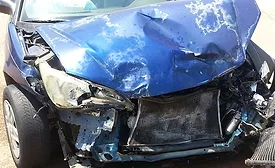
Most fear that distracted driving is getting worse. Drivers who report using a cellphone behind the wheel has jumped 46 percent since 2013, and almost half (49 percent) of all drivers report recently talking on a hand-held phone while driving, and nearly 35 percent have sent a text or email.
Early on Feb. 2, 2016, a van carrying members of the California Conservation Corps paused at a stop sign on a country road near the Central Valley town of Reedley. Then the van rolled into the intersection, where it was broadsided by a 40-ton gravel truck and trailer, killing three corps members and leaving another with catastrophic brain and spinal injuries.
In the United States, alcohol is involved in more than 15,000 traffic deaths every year.
Alcohol goes directly from the stomach into the blood¬stream. The amount of alcohol in your body is commonly measured by the blood alcohol concentration (BAC). BAC is determined by the amount you drink, how fast you drink, your weight and your physical and mental health.
Driving a vehicle for long hours is tiring and even the most careful driver can become less alert. Drivers can do several things to help stay alert and safe. Here are few sug¬gestions:
Be Ready to Drive-
Leaving on a long trip when you are tired is dangerous. Make sure you get enough sleep before departing on your journey.
One of the trucking industry’s strategies for trying to make sure long-distance truck drivers get sufficient sleep may be enhanced by new research on sleeping arrangements in truck cabs. Companies often assign drivers in pairs, so that one can sleep while the other drives. However, sleeping in a noisy, moving vehicle, does not provide the same restful sleep as a stationary bed in a quiet room.
NSC preliminary figures show fatalities topped 40,000 for the second straight year
February 15, 2018
Preliminary estimates from the National Safety Council indicate motor vehicle deaths dipped slightly – 1% – in 2017, claiming 40,100 lives versus the 2016 total of 40,327. The small decline is not necessarily an indication of progress as much as a leveling off of the steepest two-year increase in over 50 years.
The victims include a Bible college student in Iowa who was bicycling home from work, a 13-year-old Michigan boy riding in his older sister’s car and a Minnesota school bus driver picking up the morning newspaper in front of his home.
All were killed in recent years by distracted drivers who had been texting or looking at their GPS. Yet none of the drivers responsible for those deaths spent more than a few days behind bars.
The national opioid epidemic and the growing number of states legalizing marijuana is prompting the U.S. Department of Transportation’s National Highway Traffic Safety Administration (NHTSA) to launch a new initiative aimed at drugged driving.
The agency says combating drugged driving has become “a top priority” in its bid to improve safety and reduce motor vehicle crashes on the nation’s roadways.
Amid a resurgence in U.S. traffic fatalities now taking roughly 100 lives a day, an advocacy group today issued a report card identifying states that do the most, and least, to improve highway safety.
The ratings by Advocates for Highway and Auto Safety credited six states — California, Oregon, Washington, Louisiana, Delaware and Rhode Island—with having the most protective road safety laws.