Driving while fatigued can be a common occurrence for long-haul truck drivers, and studies have shown it can be as problematic as driving while under the influence of alcohol or drugs. Yet almost a third of people in a AAA survey said at least once in the prior month they had driven while so tired that they could barely keep their eyes open.
On April 3, I represented the National Transportation Safety Board (NTSB) at an event kicking off Distracted Driving Awareness Month and California Teen Driver Safety Week, in Sacramento. I challenged California to lead the nation in acting on NTSB’s 2011 recommendation to ban the non-emergency driver use of portable electronic devices that do not support the driving task.
The effect of plastic on workers in the plastic industry, Apple’s efforts to resist curbs on distracted driving and amateur video helps a state OSH agency crack down on asbestos violators. These were among the top safety stories featured this week on ISHN.com.
Robotics pose safety challenges in the workplace, Tennessee ash coal cleanup workers win a legal victory and an air traffic controller starts slurring her words while on duty. These were among the top occupational safety and health stories featured on ISHN.com this week.
The cause of a devastating 2017 collision near Concan, Texas between a pick-up truck and a bus came down to items found in the truck’s cab after the crash: marijuana cigarettes and prescription drugs.
The National Transportation Safety Board (NTSB) has determined that the March 29 accident was caused by the 20-year-old pickup truck driver’s failure to control his vehicle due to his use of marijuana in combination with his misuse of clonazepam, a sedative used to treat seizure and panic disorders.
After two years of increases, highway fatalities were down last year - and the trend appears to be continuing in 2018. Data from the U.S. Department of Transportation’s National Highway Traffic Safety Administration (NHTSA) showed that 37,133 people died in motor vehicle crashes on U.S. highways in 2017. That’s a decrease of almost 2 percent from 2016.
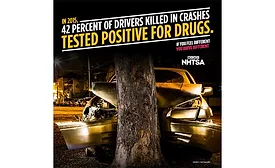
The emerging trend of drug-impaired driving will be paired with the National Highway Traffic Safety Administration’s (NHTSA) usual effort to combat drunk driving in a new series of public service announcements that will run through one of the deadliest times on U.S. roads - the Labor Day holiday weekend (Aug. 15-Sept. 3).
Alcohol-related accidents can affect a workplace more than you might think. Not only are you at risk of being involved in an accident with an impaired driver if you drive for a living, but if you choose to drink and drive in your time away from work, you could put your career or future employment opportunities at risk.
Automakers have packed many of their new models with distracting infotainment features that allow drivers not only to play music and get directions, but to talk, text and use social media while tooling down the road.
Now new research has found that two popular smartphone-based systems –Apple’s CarPlay and Google’s Android Auto – are somewhat simpler and safer to use than the built-in electronics.
The Governors Highway Safety Association (GHSA) released a study last week that finds that the percentage of fatally-injured drivers with known drug test results* who tested positive for drugs has risen over 50% in the last ten years.