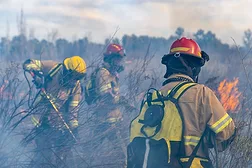
Numerous studies show that firefighters’ exposure on the fireground, where smoke and hazardous chemicals are released from burning materials, may increase the risk of certain types of cancer.
Within the coming decades, lifetime cancer risk i.e., cancer incidence in the U.S. will increase 50%-70% mainly because of population growth and an aging population.
Criminal charges for a crane operator in a co-worker’s jobsite death, legislation to prevent workplace violence in the health care industry and the costs of obesity among the workforce were among the top stories featured on ISHN.com this week.
Several landlocked states among those with highest rates
February 19, 2020
A new study finds a wide state-by-state variation in rates of melanoma caused by ultraviolet (UV) exposure with highest rates in several states on the East and West Coast including Hawaii, but also a few landlocked states, including Utah, Vermont, and Minnesota. The report finds state-level incidence rates for UV-attributable melanoma ranged from 15 cases per 100,000 in Alaska to 65 cases per 100,000 in Hawaii.
Luxembourg has become the first European Union (EU) country to completely ban products containing glyphosate, the controversial herbicide at the center of high-profile lawsuits, and conflicting scientific studies and health claims. Glyphosate has already been banned in Vietnam and Thailand. Mexico has announced plans to do the same.
More physical activity linked to lower risk for several cancer types
January 2, 2020
A pooled analysis of nine prospective studies involving more than 750,000 adults finds that recommended amounts of leisure-time physical activity were linked to a lower risk for seven cancers, with several cancer types having a ‘dose/response’ relationship. The study was led by investigators at the National Cancer Institute, the American Cancer Society (ACS), and the Harvard T.H. Chan School of Public Health.
A worker dies during a safety drill; safety certification for highway construction workers and California fast tracks a regulation to protect workers from wildfire smoke. These were among the top stories featured on ISHN.com this week.
Anger may be more harmful to an older person’s physical health than sadness, potentially increasing inflammation, which is associated with such chronic illnesses as heart disease, arthritis and cancer, according to new research published by the American Psychological Association (APA).
A new analysis, published in the Lancet Public Health, raises the alarm that the rates of obesity-related cancers are rising in younger and younger adults. In the new study, six of twelve types of obesity-related cancers have significantly increased between 1995-2014 and the risk of these cancers is increasing in each successive younger age group. These cancers include colorectal, pancreatic, gallbladder, kidney cancer and multiple myeloma (a type of blood cancer).