Pollution at London Underground tube stations is up to 30 times higher than in busy roads in the capital, research has found, potentially putting the health of staff and thousands of London commuters at risk.
The Committee on the Medical Effects of Air Pollutants (COMEAP) said there is “likely” to be some health risks associated with the high concentrations of particulate matter (PM) on the London Underground network.
Cleaning and disinfecting products are complex mixtures of chemicals that can irritate the skin. Evidence also shows that exposure to these products may increase the risk of work-related asthma among healthcare workers. But the effects of specific chemicals remain unclear. Now, a NIOSH study published in the journal Annals of Work Exposures and Health has added to our understanding by linking products and tasks to specific exposures.
Want to be healthier and help save the planet at the same time? A “planetary health diet” unveiled yesterday in the medical journal Lancet will do both, according to the international team of scientists who developed it.
The authors of the report say changes to the way we eat - across the globe - are urgently needed amid increasing obesity and climate change made worse by population growth, which is expected to reach 10 billion people by 2050.
With the recent resurgence of the most severe form of black lung disease among coal miners, especially in central Appalachia, understanding and preventing exposure to the respirable, or inhalable, dust generated during the extraction of coal is paramount. Black lung is a form of pneumoconiosis, or scarring lung disease, caused by breathing in dust that can occur with exposure to respirable coal mine dust.
Government is failing at both the federal and state levels to protect the nation’s children from tobacco-caused death and disease, according to the American Lung Association’s (ALA) 17th annual “State of Tobacco Control” report.
A steady, 25-year decline has resulted in a 27% drop in the overall cancer death rate in the United States, translating to approximately 2.6 million fewer cancer deaths between 1991 and 2016. The data come from Cancer Statistics, 2019, the American Cancer Society’s widely-quoted annual report on cancer rates and trends. The article appears early online in CA: A Cancer Journal for Clinicians, and is accompanied by a consumer version, Cancer Facts & Figures 2019.
An unpredictable, anything-but-steady income – a common feature in today’s gig economy and one that is often experienced by younger workers – may be hard on your heart as well as your bank account.
New research published in the American Heart Association’s journal Circulation shows that sudden, unpredictable drops in personal income during young adulthood are associated with an increased risk of developing heart disease and/or dying from any cause.
Foodborne illness prevention, what’s ahead for NORA and the value of wearable technology in preventing workplace injuries were among the top health and safety stories featured on ISHN.com this week.
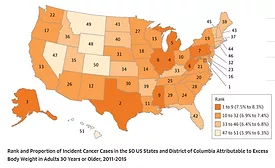
A new study looking at the share of cancers related to obesity finds an at least 1.5-fold difference between states with the highest and lowest proportions. The proportion of cancer cases that could be attributable to excess body weight ranged from a high of 8.3% in the District of Columbia to a low of 5.9% in Hawaii, reflecting variations in obesity rates in the states.
As the recent nationwide ban on Romaine lettuce by the CDC shows, harmful pathogens have become an ever-increasing threat in our food supply, causing serious illness and even death among people with weaker immune systems such as young children and older adults.