Despite being shut down during the partial federal government shutdown, the White House Office of Information and Regulatory Affairs (OIRA) last week approved OSHA’s final Tracking of Workplace Injuries and Illnesses rule. What are the details? The public doesn’t know and will not know until the rule can be published in the Federal Register, which is closed for business during the shutdown.
Process safety management (PSM) is a term that is most frequently used in highly hazardous industries like oil refining, gas processing and chemical manufacturing. However, PSM could apply to any industry where people are working in and around any hazardous equipment or environment.
Most employees, whatever place they occupy on the org chart, can’t make everyone else do what they want just because they said so. Even if they could, influence works much better than force.
On February 15, Labor-Secretary nominee Andrew Puzder withdrew his name from consideration after it became clear he lacked the necessary Senate Republican support to be confirmed. Puzder had drawn criticism for opposing the minimum wage and expanding overtime eligibility.
Businesses of all sizes have always found the process of OSHA inspections and compliance daunting, and 2015 is no exception. The agency bolstered its injury and death notification requirements and increased the list of employer types now required to maintain injury and illness records – all while introducing a number of ever-shifting regulations and compliance standards.
To minimize the potential for workplace injuries and illnesses, OSHA requires personal protective equipment (PPE) for all employees exposed to hazards. In today’s complex work environments, various types of PPE are needed to satisfy the regulations, which apply to physical, electrical, mechanical, chemical, radiological and other hazards.
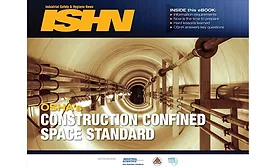
Major new OSHA standards that cover millions of workers come few and far between. But in May, 2015, the agency published its long-awaited final rule on safety requirements for confined spaces in the construction industry.
If you’re not familiar with electrical safety, it may be difficult to understand the significance of NFPA 70E, which is understandable because it does require a bit of explanation.