OSHA has cited ammunition manufacturer AMTEC Less Lethal Systems Inc. for exposing employees to explosive hazards after an explosion fatally injured two workers at the company’s Perry, Florida, facility. The company faces $188,290 in penalties for multiple serious violations, and a willful violation that carries the maximum penalty allowed.
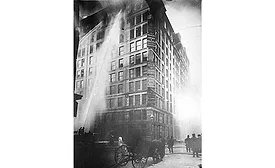
One of the deadliest industrial disasters in the history of the country – the Triangle Shirtwaist Factory fire - occurred in New York City on this day in 1911. The fire claimed the lives off 146 garment workers – many of whom jumped to their deaths from the 7th, 8th and 9th floors of the building in order to avoid the smoke and flames sweeping through their workplace.
Thirty-four Congressional Democrats are calling for the reinstatement of the original Improve Tracking of Workplace Injuries and Illnesses rule published on May 12, 2016, which required companies with 250 or more employees to electronically submit OSHA forms 300 (Log of Work-Related Injuries and Illnesses) and 301 (Injury and Illness Incident Report) each year. The Trump administration’s final rule, which was published during the government shutdown, only requires employers to submit a 300A – a summary of work-related injuries and illnesses.
Early in 2019, OSHA cited a pet food company in Florida for failing to provide protective gear for workers handling corrosive chemicals, a Pennsylvania hair salon for exposing workers to hazardous materials, an Ohio musical instrument factory for exposing workers to toxic copper dust, and a Texas indoor gun range for exposing workers to unsafe levels of lead.
In a landmark case, the Occupational Safety and Health Review Commission (OSHRC) has ruled that Integra Health Management, a social service employer, is accountable for failing to protect workers from workplace violence.
Integra was cited for safety violations following the tragic death of an employee who was stabbed nine times, then left bleeding on a front lawn after a December 2012 home visit to an agency client with a history of mental illness and violent criminal behavior.
A 54-year-old South Lyon man died after he fell into a tank of sulfuric acid. The incident occurred around noon at the Michigan Seamless Tube and Pipe facility. The cause of the man's fall remains unknown.
After being pulled from the tank by a co-worker, the man was put into a shower and then rushed to The University of Michigan Hospital in Ann Arbor where he died Saturday night. The 160-degree acid is used to strengthen the piping manufactured at the plant.
Dennis Mason's body was found, face down, between his truck and a crude oil tank at a well site near Kingfisher, Okla. Investigators immediately suspected he was killed by toxic vapors from the oil.
But they weren't able to prove it, because state medical examiners didn't test Mason's blood for petroleum chemicals before declaring his death natural, the result of heart failure.
OSHA inspectors had quickly sent word to the medical examiners that they suspected his death was related to his job hauling oil for Sunoco Logistics Partners.
The employers of a worker killed on a light rail tunnel project in San Francisco failed to identify potential hazards and to train workers on safety procedures, according to Cal/OSHA, which has issued $65,300 in penalties in the fatality.
The incident occurred last August, while employees were using heavy equipment and tools to work in and around the tunnel.
Flooding in a tank that held clams caused a fishing vessel to capsize and sink off the coast of Massachusetts, according to an investigation by the National Transportation Safety Board (NTSB).
Two crew members were trapped on board and died when the uninspected fishing vessel Misty Blue sank on December 4, 2017.
A long-term silicosis study yields valuable results; an OSHA trainer makes thousands selling fake training cards and a risk from wearable tech you may not have thought of. These were among the top occupational safety and health stories featured on ISHN.com this week.