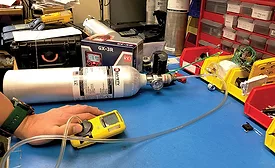
When monitoring your work environment for toxic gases, you need to make sure your monitor is properly calibrated for your target gas, such as chlorine, carbon monoxide, or your readings may be inaccurate.
For all the COVID-19 safety guidelines circulating, some hundreds of pages long, basic best practices are straightforward and known by most Americans. Dr. Anthony Fauci, director of the National Institute of Allergy and Infectious Diseases since 1984, recently recounted them in an interview with the Journal of the American Medical Association.
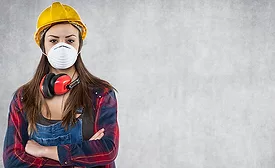
OSHA requires that in any workplace where respirators are necessary to protect the health of the employee or whenever respirators are required by the employer, a written respiratory protection program must be established and implemented.
Industrial organizations have seen major changes throughout their workplace in just a few short months. They’ve gone from optimizing their relationship with customers to transforming their relationship with employees.
This is no ordinary back-to-school season. After all, millions of students won’t actually be going back to school this fall, but learning from home instead. And they’re not the only ones. Right now, organizations throughout the United States have no choice but to train their workforces remotely.
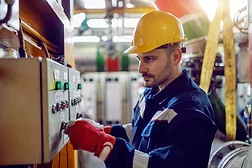
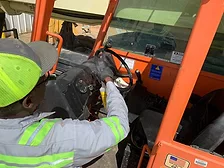
Industrial worksites — like factories, power plants and warehouses — are often dangerous environments for workers. Large equipment and heavy objects, among other threats, pose severe safety risks.
Cleanliness is a foundational element to any successful safety culture. In today’s environment, it’s also a topic of many discussions and the emphasis of new protocols across industries – and the world.
As technology improves and changes, it is crucial to make sure procedures and practices are up-to-date, modern and match up with required safety standards.
Who takes the blame when construction projects get behind schedule or over budget? Is it the project manager? The front line worker? The subcontractor? The answer would be no to all three. The likely scapegoat when things goes wrong is usually Environmental, Health and Safety (EHS). And why is this true? It’s because too often the safety of the worker is sacrificed for the sake of speed and production.
 RSS
RSS