The American Industrial Hygiene Association® (AIHA) has launched Think and Act Fire Smart, a one-stop information center for wildfire preparedness and recovery. The resource center aims to raise awareness about the hidden dangers in the cleanup process that follows a devastating wildfire, especially in urban areas.
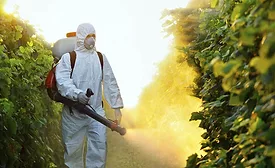
The EPA has approved the use of a powerful pesticide that the agency’s own research determined was lethal to honeybees.
The agency’s approval of the insecticide sulfoxaflor, manufactured by DowDupont, comes just days after the USDA acknowledged that it has stopped tracking the honeybee population. The agency’s National Agricultural Statistics Service (NASS) collected statistics on the number of honey bee colonies and U.S. honey production for decades, to help track honey bee mortality. Lack of data going forward will make it difficult to gauge the effect of sulfoxaflor use on the been population.
The people who take care of you while you’re in the hospital aren’t getting enough sleep - which could have serious implications for patient safety, according to a study published in Sleep.
Sleep deprivation and disorders are believed to contribute significantly to the nearly 100,000 deaths attributable to medical errors that occur in U.S. hospitals each year.
Two major health organizations are suing the EPA over the agency’s repeal of the Clean Power Plan – the first-ever federal policy aimed at reducing harmful carbon pollution from power plants – and the move to replace it with the “Affordable Clean Energy” rule.
The American Lung Association and the American Public Health Association, represented by attorneys from the Clean Air Task Force, claim that the EPA has abdicated its legal duties and obligations to protect public health.
The Secretary of Labor resigns, NIOSH introduces a new chemical management banding strategy and U.S. states get ranked by happiness. These were among the stories featured on ISHN.com this week.
A new report by American Cancer Society (ACS) researchers translates the toll cancer takes on Americans into cold hard figures. In 2015 alone, the disease took more than 8.7 million years of life and $94.4 billion in lost earnings among people ages 16 to 84 in the U.S.
Why crunch the numbers? Why assess the pain caused by the nation’s top killer in terms of dollars and cents?
Provides process for chemical management occupational exposure
July 11, 2019
The National Institute for Occupational Safety and Health (NIOSH) has come up with a new chemical management strategy that can quickly and accurately assign chemicals into categories, or “bands,” in order to protect workers from potentially harmful substances in the workplace.
A vast number of chemical substances do not have occupational exposure limits (OELs) for the workplace.
HexArmor is pleased to announce the release of their latest innovative product, HexShade UV by Snap Brim. HexShade UV will complement the launch of their new safety helmet line being released in July.
HexShade UV is a revolutionary safety helmet accessory that offers wearers a firm, weather-resistant panel to extend shade up to three inches from the helmet’s brim.
U.S. Secretary of Labor Alexander Acosta has recorded five new public service announcements (PSAs) discussing how to keep workers safe while performing cleanup and recovery operations following hurricanes, floods, and tornadoes.
The 30-second audio messages, recorded in English and Spanish, cover potential hazards posed by chainsaws, downed power lines, unstable surfaces, contaminated floodwaters, and mold exposure.
If you want to reduce your risk of having a heart attack, skip the supplements and cut down on salt instead. That’s the conclusion of a study published in Annals of Internal Medicine, which also found that one supplement might actually increase your risk for having a stroke. The goal of the study was to explore the potential for nutritional supplements and dietary interventions to prevent “cardiovascular outcomes,” such as death, myocardial infarction, stroke, and coronary heart disease.
 RSS
RSS