Motorcycle crash prevention technology, a legislative move to shield autonomous vehicles from federal regulations and sobering new U.S. obesity statistics were among the top stories featured on ISHN.com this week.
Good news!
Supreme Court nominee Brett Kavanaugh does not think it is unreasonable for workers to expect to come home safely at the end of the day, even if they work in the entertainment industry.
So he claims in his response to a written question from the Senate Judiciary Committee.
Unfortunately, “expecting” isn’t doing. And Kavanaugh, in his dissent from the SeaWorld case, in his testimony before Congress, and now in his written responses, seeks to take away the ability of workers to make that expectation a reality.
OSHA has cited pallet manufacturer Buckeye Diamond Logistics Inc. - which operates as BDL Supply - for lockout/tagout hazards after an employee suffered an amputation at the Columbus-based company. OSHA proposed penalties of $191,794 for two repeated and four serious violations.
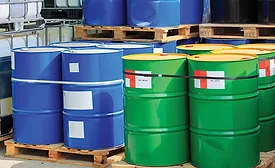
Back in 2012, OSHA aligned its Hazard Communication Standard (HazCom or HCS) with Revision 3 of the United Nation’s Globally Harmonized System of Classification and Labeling (GHS), which resulted in the current HazCom 2012 Standard.
Consumer advocates are attacking a bill heading for a vote soon in the U.S. Senate that would clear legal obstacles for the deployment of driverless cars — a proposal that, critics say, lacks safeguards needed to protect the public and largely would let vehicle manufacturers regulate themselves.
The measure, which is being pushed by auto and tech industry lobbyists, is called the AV START Act, standing for “American Vision for Safer Transportation through Advancement of Revolutionary Technologies.”
Employees of a woodworking company in Greenville, Alabama performed their work without protective eyewear and respirators.
Those were among the violations that got Harrison Industries LLC - operating as Structural Wood Systems Inc. – multiple OSHA citations. The company faces $85,362 in proposed penalties.
A new proposal released by the EPA yesterday would reduce the frequency of methane leak inspections required of oil and gas companies, and give those companies more time to fix leaks when they find them – changes the agency admits could harm public health.
The move is the Trump administration’s latest effort to relax Obama-era regulations intended to combat climate change.
J. J. Keller & Associates, Inc. marks 10 years of offering free and timely safety and compliance education
September 11, 2018
If there is one constant in regulatory compliance, it’s change. This is a challenging reality for professionals whose success depends on keeping up with the regulations governing their respective industries.
OSHA has several ways in which it interacts with companies in programs that address industry-specific hazards or that help enhance worker safety on specific projects.
The OSHA Strategic Partnership Program (OSPP) focuses on focus on improving safety and health in major corporations, government agencies, at large construction projects and private sector industries where OSHA has jurisdiction.