Built to last: Certifying Behavior-Based Safety?
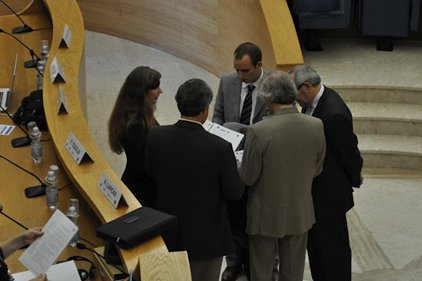 On a recent trip to Rome for a conference my sightseeing partner noted: “These people know how to build things that last.”
My colleague Mark Alavosius and I were there for an exciting reason, but one that has me perplexed. This will take some explaining.
Background: In most of Europe, companies get “certified” in a number of ways. The best known is the ISO9000 criteria where independent auditors evaluate process and policy documents and provide their “stamp” of Certification. Companies enjoy preferred status as suppliers and service providers because of their assumed quality assurance from the Certification. Many companies in the United States pursue these Certifications as well.
When it comes to safety, Certifications are not voluntary in many European countries. In Italy, there are laws requiring Certification in a number of safety areas. These Certifications, in contrast to ISO9000, are not optional. When a safety incident occurs and the company contacts their insurance providers to cover medical and workers comp, the insurance provider can ask for their Certifications. If the Certifications are not in order then the insurance provider can deny payment. Hence there is a big incentive for companies to comply with safety Certifications.
The government writes the laws, its ministries convert them to policy, Certification entities convert them into strict criteria, and Certification auditor consultants offer Certifications. Companies put their safety programs in place and seek Certification from these auditors to complete the bureaucratic process.
Opportunity: Behavior-Based Safety (BBS) in Italy has enjoyed a number of successes and has been gaining the attention of people involved in the Certification process. Because of this, a number of scientists have been assembled to help develop a Certification program in BBS. This involved Behavior Analytic (the scientists behind BBS) non-profits in Italy (Association for the Advancement of Radical Behavior Analysis: AARBA; www.aarba.eu) and in the US (Cambridge Center for Behavioral Studies: CCBS; www.behavior.org). Mark and I are commissioners for CCBS and have experience with a voluntary Behavioral Safety Accreditation program that CCBS offers.
So, how to create a National Certification Program in BBS? Quite a challenge! We started with defining what BBS is; that took a year. You can check out our definition of BBS on our website (www.behavior.org) after August 15th. We’d love to hear your comments.
The current challenge, however, is to set the criteria for Certification. What will the auditors look for? As Behavior Analysts who research BBS we look for RESULTS. Therefore, we were not satisfied with the normal European Certification only looking for documentation that a process is in place. For a company to claim Certification in BBS, after an initial start-up phase, we would want to see a reduction of injuries. After all, that’s the point right?
So we crafted three levels of Certification based on the common maturity of successful BBS programs:
Stage 1: A company designs its BBS process and stage 1 Certification is granted if these documents meet the BBS definition.
Stage 2: The Company has implemented BBS and must show evidence of successful implementation to be granted Stage 2 Certification (up to one year later).
Stage 3: The Company has a mature BBS process and can receive Stage 3 Certification after demonstrating reductions in injury rates (up to 3-5 years).
The QUESTIONS:
Setting criteria for Stage 1 and Stage 3 are relatively straightforward. Stage 1 involves a checklist of BBS process parts that must be in the design of a company’s BBS program. Stage 3 looks at outcome (injury) data seeking improvement. Obviously there are some statistical issues to work out in Stage 3 but this is doable.
Stage 2 criteria begs a fascinating question that I’ve encountered many times by company leaders and safety managers after implementing a new BBS: How do you show a successful implementation of BBS… before the lagging indicators of injury reduction catch up?
There are a ton of issues here: How many observers are needed? How many observations should be done? What is useful feedback? Could you track actionable trends from the resulting data?
I would appreciate if you sent me YOUR potential solution to this question (TimLudwig@Safety-Doc.com). I’ll post them on my website and forward them to the certification task force.
THE PERPLEXITY
It is Stage 2 that also has me perplexed because we will be establishing rules for the Italian Certification auditors. This, of course will lead to compliance of these rules in companies seeking to be Certified. We are talking about government laws… carried out by these auditors…that can impact companies substantially.
Consider a typical leading indicator of BBS success. Within a BBS process, observations are conducted. Therefore, the number of observations conducted is a good indicator that the process is being done, that people are participating, and that the data can be analyzed for trends.
Indeed, research shows that increases in observations are highly correlated with reductions in injuries over time. Observations Lead – Injury reduction Lags. Stage 2 leading to Stage 3.
Case closed: The Certification should simply require a certain number of observations to be done…over a certain period of time, based on the number of workers, hours worked, etc.
CASE CLOSED?
Consider these vexing questions about mandated observations: Will the observations be done according to the BBS design? Will they identify areas of risk with high quality? Will the observations be associated with conversations with the employee about the risks? Will the observations be done at all???
Think about it…if a specified observation count were required to pass Certification…what will happen? My guess is that that observation count will be attained by some method, any method. Mandating observations lead to LOW QUALITY observations…in the worst cases mandates lead to false observations.
Every time I’ve been asked to help “fix” a “broken” BBS program I’ve seen mandated observation quotas. Employee incentives for doing observation can lead to the same problem. In these cases, sites typically boast large numbers of observations but these “observations” have had little impact on injury rates.
I see the need for clear based criteria in Certification showing that BBS is in place and is working correctly. I think I’m leaning toward the observations count. However, I’d pair it with two other criteria to ensure that data are being used to guide decisions and actions that lead to safety results.
a) An increase (yes increase) in at-risk behaviors identified along with increases in near-miss and minor injury reports;
b) Action plans that successfully addressed the risks and increased the percentage of safe behaviors in that area.
So what would you list as criteria to demonstrate that your BBS process has been implemented correctly? I’d love to hear your take on this challenge (Tim.Ludwig@Safety-Doc.com).
I’m generally skeptical of certification– It tends to lead to bureaucracies that self-sustain and grow with limited value. However, this BBS Certification can positively impact the lives of millions of Italians…. if we do it right.
And build something that lasts.