ISHN logo
search
cart
facebook twitter linkedin youtube
  • Sign In
  • Create Account
  • Sign Out
  • My Account
ISHN logo
  • NEWS
    • Today's News
    • Global Safety News
    • Government Regulations
  • PRODUCTS
    • Product Innovations
    • Featured Products
  • TOPICS
    • Environmental Health and Safety
    • Facility Safety
    • Workplace Health
    • Occupational Safety
    • PPE
    • More Topics
  • CONSTRUCTION
  • TECHNOLOGY
  • COLUMNS
    • Best Practices
    • Dave Johnson: What’s going on
    • Editorial Comments
    • Leading Safety
  • MULTIMEDIA
    • ISHN Podcast
    • Videos
    • Cold Stress Education Quiz
    • Webinars
    • White Papers
  • MORE
    • Buyer's Guide
    • Newsletters
    • Convention Companion
    • Polls
    • Events
    • ISHN Store
    • Sponsor Insights
  • EMAGAZINE
    • eMagazine
    • Archived Issues
    • Contact
    • Advertise
  • JOIN TODAY!
PPE

Qualified head protection in an arc flash situation
By Hugh Hoagland
July 2, 2014

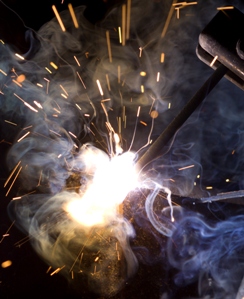
weldingQ. With the new head protection requirement according to the changes in OSHA standard 1910.269 and 1926.960, I am curious to know what qualifies as adequate protection in an arc hazard situation. Would a balaclava/goggle be considered adequate protection as an arc flash hood?

A. The new OSHA standard allows balaclava/goggles, balaclava faceshield and stand alone faceshields up to a limit and common bee-keeper style arc flash hoods but the new OSHA standard doesn't really define them. Because it lists the ASTM F2178 standard, it is clear they are all allowed.

It is likely that a faceshield/balaclava (called a hood in the OSHA standard) would be OK up to about 20 cal if properly designed and rated (NFPA 70E cuts them off at 12 cal but this is based on data without use of safety glasses under the shield) but at some point you should move to a more thorough protection like a balaclava/goggle (if you have low risk of shrapnel) or a bee-keeper's style hood if there is more risk of shrapnel to the face.  Most of the shrapnel we have seen in arc flashes has been porcelain from insulators and switch gear. Often trainers refer to molten metal particles at 700 MPH as "shrapnel", these materials will not go through a cloth and enter the body so a faceshield is not the issue. We have no deaths related to arc flash "shrapnel" on record so focus on protection and comfort.

By the NFPA 70E definition, a balaclava is part of an arc flash suit or flash suit hood because it helps provide 360 degree protection. If you use the tables, you must use a bee-keeper's style hood with a face piece but if you have done calculations, you may use a balaclava/goggle or balaclava/faceshield to higher levels than allowed by the tables (see Annex H.3).

Two pros of using a balaclava/goggle as an arc flash hood:

1.  Allows overhead protection from shock since there is no fabric on hardhat (overhead lines would require this).

2. Allows better face protection since energy cannot get under the hood.

Two cons of using a balaclava/goggle as an arc flash hood:

1. Only eye, no face protection from potential flying parts (other than molten metal). This is up to the assessor to determine.  

2. Fogging with the goggle right on the face.

KEYWORDS: balaclava Head protection

Share This Story

Hugh Hoagland is among the world’s foremost experts on arc testing and electrical safety. He is a senior partner and co-founder of e-Hazard, a leading electrical safety training and consulting firm, and the founder of ArcWear, which does 90% of the world’s arc flash testing of protective apparel.

His career change began with safety testing at LG&E Energy; later, he worked as R & D Director for NASCO, a manufacturer of protective outerwear solutions. He has helped develop most of the arc-resistant rainwear used in the world today, as well as creating the first face shield to protect against electric arcs.

Hugh worked for Cintas developing their strategy for meeting the needs of OSHA 1910.269 and NFPA 70E standards. He has helped development of legislation and standards in both the US and Europe. He sits on several industry committees and is a featured speaker at safety conferences and events.

e-Hazard was established in 2004. Its services include electrical safety training, arc flash hazard assessment, written electrical safety program development and review, and auditing.

Recent Comments

In addition to the personal hardship and loss...

No one will know the answer to this...

Bad drivers don't have to ruin your day...

Healthcare workers face a number of serious safety...

In my experience, truck drivers are treated with...

Manage My Account
  • eMagazine Subscriptions
  • ISHN Newsletter & Other Newsletter Alerts
  • Online Registration
  • Manage My Preferences
  • Subscription Customer Service

More Videos

Sponsored Content

Sponsored Content is a special paid section where industry companies provide high quality, objective, non-commercial content around topics of interest to the ISHN audience. All Sponsored Content is supplied by the advertising company and any opinions expressed in this article are those of the author and not necessarily reflect the views of ISHN or its parent company, BNP Media. Interested in participating in our Sponsored Content section? Contact your local rep!

close
  • man wearing the the Sundström SR200 Full Face Mask Respirator
    Sponsored byOHD

    5 Fit Testing Mistakes That Could Cost You

  • This image shows Magid AcuSpex polarized blue mirrored safety glasses.
    Sponsored byMagid Glove and Safety

    Construction PPE Guide: What Crews Need for Each Task

  • lone worker in confined space
    Sponsored byAlphasense Ltd.

    GET THE LEAD OUT of your Safety Oxygen Sensors!

Popular Stories

SpaceX 7 launch

OSHA Investigating Fatal Fall at SpaceX Starbase

Worker Impairment

How to Tell When a Co-Worker is Impaired? A Safety Pro’s Challenge

psychology in the workplace

Most Workplaces Measure Psychological Safety, Ignoring Psychosocial Risks

top 10 most dangerous jobs

Poll

Seasonal Readiness

With the federal heat stress prevention rule on the horizon, which area of your safety program needs the most attention?
View Results Poll Archive

Products

Surviving an OSHA Audit A Management Guide, 2nd Edition

Surviving an OSHA Audit A Management Guide, 2nd Edition

See More Products

ISHN Podcasts

×

Become a Leader in Safety Culture

Build your knowledge with ISHN, covering key safety, health and industrial hygiene news, products, and trends.

JOIN TODAY
  • RESOURCES
    • Advertise
    • Contact Us
    • Directories
    • Manufacturing Division
    • Store
    • Want More
  • SIGN UP TODAY
    • Create Account
    • eMagazine
    • Newsletters
    • Customer Service
    • Manage Preferences
  • SERVICES
    • Marketing Services
    • Reprints
    • Market Research
    • List Rental
    • Survey/Respondent Access
  • STAY CONNECTED
    • LinkedIn
    • Facebook
    • YouTube
    • X (Twitter)
  • PRIVACY
    • PRIVACY POLICY
    • TERMS & CONDITIONS
    • DO NOT SELL MY PERSONAL INFORMATION
    • PRIVACY REQUEST
    • ACCESSIBILITY

Copyright ©2026. All Rights Reserved BNP Media, Inc. and BNP Media II, LLC.

Design, CMS, Hosting & Web Development :: ePublishing