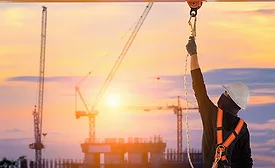
When employees are performing construction work six feet or more above a lower level, you need to provide them with some type of fall protection. There is an exception for working on scaffolding — the threshold height for fall protection is ten feet. OSHA regulates falls at 1926 Subpart M.
Scissor lifts and aerial lifts have replaced ladders and scaffolding in many general industry workplaces due to their mobility and flexibility in allowing workers to perform certain job tasks.
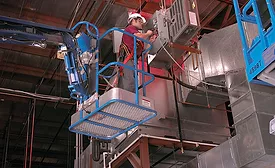
Despite advances in safety for construction workers across a variety of settings, those who must use elevating work platforms (MEWPs) and aerial work platforms (AWPs) to perform their job duties remain at risk.
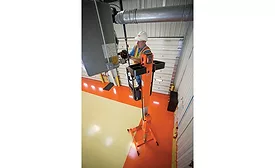
Operators of any aerial work platform should be trained and familiar with the equipment before using it.
During operation, it is essential for operators to remain aware of site work hazards and changing conditions that may affect safe operation of the aerial work platform.
Aerial lifts are powered and mobile platforms that are used for elevating workers to various heights.
Last month, NIOSH and its partners asked construction workers and employers to take part in the second National Stand-Down to Prevent Falls in Construction. This event calls for work to pause so workers can focus on activities to prevent falls.