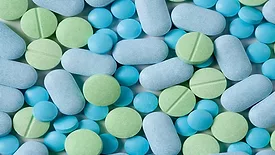
The list of hazardous drugs is designed to assist employers in identifying drugs that are hazardous to the health and safety of workers who handle these drugs.
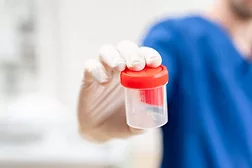
Drug testing in the workplace, especially in the manufacturing industry, has become a common part of pre-employment screening and health/safety measures in the workplace, which may include random, post-accident, and reasonable-suspicion testing.
NSC – along with more than 50 organizations – urges candidates to adopt the plan in full or use it to close gaps in existing strategies
February 28, 2020
The National Safety Council (NSC), in partnership with more than 50 organizations and companies nationwide, released a comprehensive, inclusive strategy to address opioid misuse that all presidential candidates – regardless of party – should either adopt in full or use to close gaps in existing plans and policies.
The U.S. Department of Labor (DOL) has announced an opioid-crisis National Health Emergency Dislocated Worker Grant for up to $6,281,891 – with $2,093,964 released initially – awarded to the Maine Department of Labor. The grant will support disaster-relief jobs and provide employment services to eligible individuals in Maine communities affected by the health and economic impact of widespread opioid use, addiction and overdose.
People who live in U.S. counties where automobile assembly plants close are much more likely to die of opioid overdoses than the general public, according to a study published on the JAMA network. Researchers compared data between counties with automotive plants that were closed between 1999 and 2016 with those that remained open. Automotive assembly plant closures were associated with a statistically significant increase in county-level opioid overdose mortality rates among adults aged 18 to 65 years.
The hard hat celebrates a landmark birthday, drug use among construction workers – and how to test for it – and safety technology comes to the construction industry. These were among the top construction industry safety stories of 2019.
More than 399,000 people died from overdoses involving prescription and illicit opioids from 1999-2017.[i] There are many efforts to educate physicians and dentists about their roles and responsibilities in addressing this national crisis. But what about veterinarians? Animals, like humans, may receive opioids for pain.
Wearable safety tech for construction workers, Uber automated vehicles are unsafe at any speed and the toll of antibiotic resistant infections in the U.S. were among the top occupational safety and health stories featured on ISHN.com this week.
Construction trade and extraction workers (CTEW) are at high-risk for drug use, according to a study published in Drug and Alcohol Dependence, that found marijuana, cocaine, and non-prescription opioid (NPO) use in particular was higher among that group. Construction trade and extraction workers: A population at high risk for drug use in the United States, 2005–2014 also revealed that: Precarious employment was associated with increased odds of marijuana and NPO use.