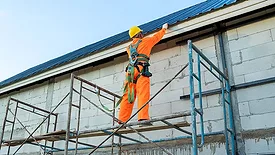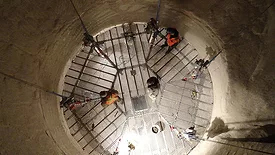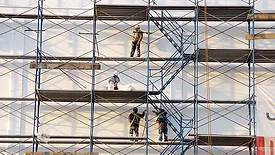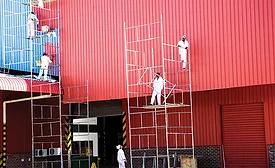
Fall injuries may be the most obvious scaffold-related hazard, but they’re not the only one. Debris and objects falling from scaffolds can hit passersby underneath.
Erecting a scaffolding system is its biggest deterrent and the greatest drain on maintenance productivity. Suspended platforms can increase efficiency.
When employees are performing construction work six feet or more above a lower level, you need to provide them with some type of fall protection. There is an exception for working on scaffolding — the threshold height for fall protection is ten feet. OSHA regulates falls at 1926 Subpart M.
Scaffolding (1926.451) OSHA’s scaffolding standard for construction was the third most-frequently cited agency standard in FY 2018.
January 7, 2019
The Bureau of Labor Statistics’ Census of Fatal Occupational Injuries reported 54 fatalities in 2009 from scaffold staging. In a BLS study, 72 percent of workers injured in scaffold accidents said either the planking or support gave way, slipping, or being struck by a falling object. All can be controlled by compliance with OSHA standards.
The following checklists from OSHA might help you take steps to avoid hazards that cause injuries, illnesses and fatalities. Note: conducting audits based on these checklists is not mandatory, though some of the bullet points are drawn from mandatory standards. OSHA states, “As always, be cautious and seek help if you are concerned about a potential hazard.”