ISHN logo
search
cart
facebook twitter linkedin youtube
  • Sign In
  • Create Account
  • Sign Out
  • My Account
ISHN logo
  • NEWS
    • Today's News
    • Global Safety News
    • Government Regulations
  • PRODUCTS
    • Product Innovations
    • Featured Products
  • TOPICS
    • Environmental Health and Safety
    • Facility Safety
    • Workplace Health
    • Occupational Safety
    • PPE
    • More Topics
  • CONSTRUCTION
  • TECHNOLOGY
  • COLUMNS
    • Best Practices
    • Dave Johnson: What’s going on
    • Editorial Comments
    • Leading Safety
  • MULTIMEDIA
    • ISHN Podcast
    • Videos
    • Cold Stress Education Quiz
    • Webinars
    • White Papers
  • MORE
    • Buyer's Guide
    • Newsletters
    • Convention Companion
    • Polls
    • Events
    • ISHN Store
    • Sponsor Insights
  • EMAGAZINE
    • eMagazine
    • Archived Issues
    • Contact
    • Advertise
  • JOIN TODAY!

Stopping the domino effect in confined spaces

February 28, 2003
When an oil-well service company employee went to check the fluid level in an oil storage tank, he climbed in without a confined space permit, a monitor or any protective equipment. At the time, liquid nitrogen was being inserted under pressure into the well to force the oil into the tank. Unknown to the worker, the liquid nitrogen had turned into a deadly vapor in the tank.

He became dizzy and passed out, falling off the ladder to the bottom of the tank, where he drowned. His supervisor, noticing the employee was missing, climbed into the tank to look for him, succumbed to the same poisonous vapors and also died.

This is a recurring problem with confined spaces - the lives of not only the original entrants but also the rescuers are lost. Employees, and sometimes supervisors, fail to recognize that using hazardous chemicals in a confined space, where they can become lethal, is far different than working with them in an open room.

Here are seven rules to follow to help ensure that the "domino effect" in confined space tragedies is avoided:

1) A strong crew

A highly trained response crew is the essential element in a safe entry of a confined space. They should all know the confined spaces that have been identified in the workplace.

2) Post a permit

If the confined space contains potential hazards, such as toxic vapors, OSHA regs require that a permit be issued and posted outside of the space before anyone enters. The permit lists the hazards found in the space, the measures used to eliminate or control them, and the rescue services and communication systems to be used.

3) Test the air

Before entering a confined space, conduct atmospheric testing. Be sure that there is enough oxygen to breathe (at least 19.5 percent of the air), and be wary of a combustible atmosphere. Vapors from flammable chemicals such as solvents can build up and become explosive. Toxic chemicals may be present and are deadly at certain levels.

Employees should know how to use, maintain and calibrate test monitors. If there is a problem in the air, ventilate the area.

4) List of precautions

Workers must take these other precautions:

  • Alert the rescue team and set up rescue equipment.
  • Make sure a co-worker is immediately outside the space and in direct communication with the employee. The co-worker cannot leave this post and should have a lifeline or harness to pull the employee out in case of trouble.
  • Lockout or tagout any equipment that may affect the space.
  • Ventilate the area continuously and constantly test the atmosphere.
  • Use only grounded, explosion-proof tools and equipment in the space.
  • Tell workers to leave the space immediately if they feel weak or nauseous.


5) Dress for success

Everyone should wear appropriate personal protective equipment (PPE), depending on the type of confined space and the hazards anticipated. When toxic gases are present or there is a lack of oxygen, entrants should use an appropriate respirator.

6) Emergency plan

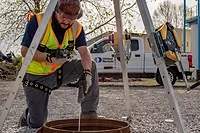
Have an emergency plan in place so that rescuers know their roles. Have equipment on hand, such as tripods and winches, that can pull an employee out of danger without putting a rescuer in jeopardy.

7) Paper trail

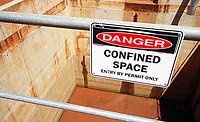
In addition to posting your entry permit outside the space, also post danger signs warning others to stay out. OSHA requires that once the job is over, the cancelled permit be kept on file for at least one year. You will also need to keep a written certification that your employees have been trained in confined space safety procedures.

Originally written for Business & Legal Reports by freelance editor Marcia Wagshol, who contributes regularly to BLR's OSHA Required Training for Supervisors and BLR's Monthly Reminder. Marcia has also written for Ransom & Benjamin Publishers and Business Research Publications.

Share This Story

Looking for a reprint of this article?
From high-res PDFs to custom plaques, order your copy today!

Recommended Content

JOIN TODAY
to unlock your recommendations.

Already have an account? Sign In

  • forklift safety

    Exploring the latest technologies in forklift safety

    With more staff and more stock in warehousing now more...
    Facility Safety
    By: Josh Cramer
  • welding

    All about welder’s flash or arc eye

    A flash burn is a painful inflammation of the cornea,...
    Environmental Health and Safety
  • dangerous jobs

    The 10 most dangerous jobs in the U.S.

    On-the-job deaths have been rising — hitting the highest...
    Transportation Safety
    By: Benita Mehta
Manage My Account
  • eMagazine Subscriptions
  • ISHN Newsletter & Other Newsletter Alerts
  • Online Registration
  • Manage My Preferences
  • Subscription Customer Service

More Videos

Sponsored Content

Sponsored Content is a special paid section where industry companies provide high quality, objective, non-commercial content around topics of interest to the ISHN audience. All Sponsored Content is supplied by the advertising company and any opinions expressed in this article are those of the author and not necessarily reflect the views of ISHN or its parent company, BNP Media. Interested in participating in our Sponsored Content section? Contact your local rep!

close
  • man wearing the the Sundström SR200 Full Face Mask Respirator
    Sponsored byOHD

    5 Fit Testing Mistakes That Could Cost You

  • This image shows Magid AcuSpex polarized blue mirrored safety glasses.
    Sponsored byMagid Glove and Safety

    Construction PPE Guide: What Crews Need for Each Task

  • lone worker in confined space
    Sponsored byAlphasense Ltd.

    GET THE LEAD OUT of your Safety Oxygen Sensors!

Popular Stories

SpaceX 7 launch

OSHA Investigating Fatal Fall at SpaceX Starbase

Automated loading dock equipment

After March 2026 Rivian Death, Safety Managers Reassess Loading Dock Systems Under OSHA's Warehouse Emphasis Program

psychology in the workplace

Most Workplaces Measure Psychological Safety, Ignoring Psychosocial Risks

top 10 most dangerous jobs

Poll

Seasonal Readiness

With the federal heat stress prevention rule on the horizon, which area of your safety program needs the most attention?
View Results Poll Archive

Products

Surviving an OSHA Audit A Management Guide, 2nd Edition

Surviving an OSHA Audit A Management Guide, 2nd Edition

See More Products

ISHN Podcasts

Related Articles

  • Note the differences in confined spaces to follow the right standard

    See More
  • OSHA Permit-required confined space 1910.146

    Understand standards to manage safety in confined spaces

    See More
  • Confined Space United Rentals

    When working in confined spaces, take a team approach to create a safe environment

    See More
×

Become a Leader in Safety Culture

Build your knowledge with ISHN, covering key safety, health and industrial hygiene news, products, and trends.

JOIN TODAY
  • RESOURCES
    • Advertise
    • Contact Us
    • Directories
    • Manufacturing Division
    • Store
    • Want More
  • SIGN UP TODAY
    • Create Account
    • eMagazine
    • Newsletters
    • Customer Service
    • Manage Preferences
  • SERVICES
    • Marketing Services
    • Reprints
    • Market Research
    • List Rental
    • Survey/Respondent Access
  • STAY CONNECTED
    • LinkedIn
    • Facebook
    • YouTube
    • X (Twitter)
  • PRIVACY
    • PRIVACY POLICY
    • TERMS & CONDITIONS
    • DO NOT SELL MY PERSONAL INFORMATION
    • PRIVACY REQUEST
    • ACCESSIBILITY

Copyright ©2026. All Rights Reserved BNP Media, Inc. and BNP Media II, LLC.

Design, CMS, Hosting & Web Development :: ePublishing