ISHN logo
search
cart
facebook twitter linkedin youtube
  • Sign In
  • Create Account
  • Sign Out
  • My Account
ISHN logo
  • NEWS
    • Today's News
    • Global Safety News
    • Government Regulations
  • PRODUCTS
    • Product Innovations
    • Featured Products
  • TOPICS
    • Environmental Health and Safety
    • Facility Safety
    • Workplace Health
    • Occupational Safety
    • PPE
    • More Topics
  • CONSTRUCTION
  • TECHNOLOGY
  • COLUMNS
    • Best Practices
    • Dave Johnson: What’s going on
    • Editorial Comments
    • Leading Safety
  • MULTIMEDIA
    • ISHN Podcast
    • Videos
    • Cold Stress Education Quiz
    • Webinars
    • White Papers
  • MORE
    • Buyer's Guide
    • Newsletters
    • Convention Companion
    • Polls
    • Events
    • ISHN Store
    • Sponsor Insights
  • EMAGAZINE
    • eMagazine
    • Archived Issues
    • Contact
    • Advertise
  • JOIN TODAY!
Workplace Training Strategies

Understand standards to manage safety in confined spaces
By Bruce Magee
OSHA Permit-required confined space 1910.146
April 15, 2020

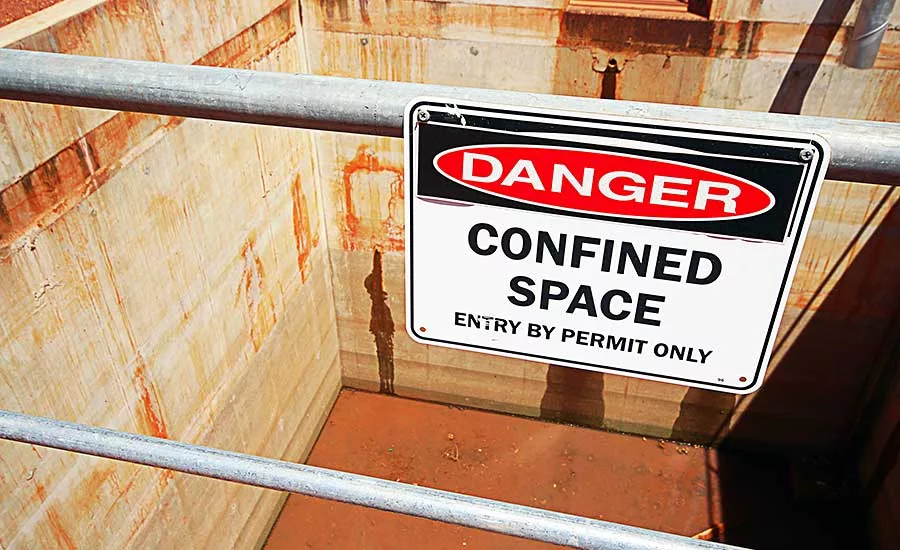
In construction and industry, some potential hazards visibly manifest, such as the risk of falls from heights. Others are more hidden. A confined space may not look dangerous, but workers perish each year because someone assumed the air inside was safe to breathe when testing would have revealed that is wasn’t.

In 2017, 166 workers died in incidents involving confined spaces, an increase of 15 percent from the previous year, according to the Bureau of Labor Statistics.

The real tragedy is that such fatalities are potentially preventable by understanding and following OSHA requirements for entering confined spaces. Safety directors need to help inform workers which of the two confined space standards to follow and educate workers on the steps to take to help maintain compliance.

A look at two standards: General Industry and Construction

OSHA introduced the confined space standard for general industry (1910.146) first. It was intended for static environments, not agriculture, construction or shipyard work. In 2015, OSHA introduced the Confined Spaces in Construction standard (1926.1203) to guard against the unique hazards of confined space operations in dynamic environments.

The new standard caused some confusion, and enforcement was deferred to 2016. Part of the confusion stemmed from the many references to home construction in a related FAQ, which led some people in industry to think the standard did not apply to construction activities in plants. It does. It also applies to companies that are repairing an existing facility or replacing structures and their components, or performing a large, complex maintenance project. Maintenance work that does not involve new equipment or structures is usually covered under the General Industry standard.

The Confined Spaces in Construction standard doesn’t apply to excavations, which are regulated by §1926 subpart P—Excavations, except when workers have to enter a confined space (such as a pipe) within the excavation. In that case, instead of following the Excavation standard when measuring the atmosphere for levels of oxygen and flammable gasses, the contractor must meet the more stringent atmospheric thresholds, along with the other requirements of the Confined Spaces in Construction Standard.

This article should not be a substitute for advice, instruction or supervision with regard to your specific job.  Consulting with shoring and excavation experts regarding your specific circumstances to ensure compliance with OSHA, and any other applicable rules or regulations is always recommended. 

Additional areas of confusion

Companies often fail to follow two other provisions of the new standard. One is the competent person requirement.

The standard requires the presence of a competent person on site if a confined space will be entered. Many employers make the mistake of thinking they can tap any veteran employee for the role, but specialized knowledge is necessary, which requires formal training. The competent person must be able to identify existing and predictable hazards in a confined space and the area around it, be knowledgeable about appropriate testing, and be able to conduct initial testing as necessary. They need to know the maximum levels for each type of gas. In addition, they must have the authority to take prompt corrective action to eliminate any hazards that are found.

The other often-overlooked provision is the top-down reporting requirement in Permit Required Confined Spaces. The employer that owns or manages the property where the construction work is taking place is required to share any information it has about the hazards in the confined space with the general contractor, and the general contractor must pass this information down to any subcontractors doing work in the space. This requirement ensures that those who enter the space know the hazards they may face and can prepare for them. When the entrants have exited the space, the findings must be reported back up to the owner so that any new issues about the space may be documented for the next entry.

The cost of noncompliance

Companies that fail to comply with the appropriate standard could be subject to citations and fines, which can impact their reputations, their insurance premiums, and their bottom line. Of course, the real price to pay is the potential loss of life.

Safety directors should understand both standards and what they require. These safety professionals should also familiarize company executives with both confined space standards and when each applies so executives are better able to be active partners in worksite safety. Additionally, safety directors should ensure that all field personnel assigned the role of competent person receive the training they need in order to live up to the title.     

Contractors doing things like opening a manhole on a worksite and using their noses to evaluate the air, is not effective. In fact, simply opening the entrance cover to a confined space may be dangerous if there’s a chance a hazard gas could escape (in which case, workers may need to insert a measuring device before opening the cover).

Fatalities don’t happen when you expect them, they happen when you don’t. The bottom line: Rather than assume an atmosphere is harmless, assume it isn’t. Testing is the only way to know for sure.

KEYWORDS: compliance confined space construction standards

Share This Story

Looking for a reprint of this article?
From high-res PDFs to custom plaques, order your copy today!

Bruce Magee is Region Product Development Manager for United Rentals. With 39 years in the rental industry and the last 25 years in Trench Safety, Bruce has delivered more than 380 Competent Person classes. He has presented on trench safety/confined space safety requirements at more than 100 engineering conferences and trained construction safety professionals and OSHA compliance officers across North America.

Recommended Content

JOIN TODAY
to unlock your recommendations.

Already have an account? Sign In

  • forklift safety

    Exploring the latest technologies in forklift safety

    With more staff and more stock in warehousing now more...
    Facility Safety
    By: Josh Cramer
  • welding

    All about welder’s flash or arc eye

    A flash burn is a painful inflammation of the cornea,...
    Environmental Health and Safety
  • dangerous jobs

    The 10 most dangerous jobs in the U.S.

    On-the-job deaths have been rising — hitting the highest...
    Transportation Safety
    By: Benita Mehta
Manage My Account
  • eMagazine Subscriptions
  • ISHN Newsletter & Other Newsletter Alerts
  • Online Registration
  • Manage My Preferences
  • Subscription Customer Service

More Videos

Sponsored Content

Sponsored Content is a special paid section where industry companies provide high quality, objective, non-commercial content around topics of interest to the ISHN audience. All Sponsored Content is supplied by the advertising company and any opinions expressed in this article are those of the author and not necessarily reflect the views of ISHN or its parent company, BNP Media. Interested in participating in our Sponsored Content section? Contact your local rep!

close
  • man wearing the the Sundström SR200 Full Face Mask Respirator
    Sponsored byOHD

    5 Fit Testing Mistakes That Could Cost You

  • This image shows Magid AcuSpex polarized blue mirrored safety glasses.
    Sponsored byMagid Glove and Safety

    Construction PPE Guide: What Crews Need for Each Task

  • lone worker in confined space
    Sponsored byAlphasense Ltd.

    GET THE LEAD OUT of your Safety Oxygen Sensors!

Popular Stories

SpaceX 7 launch

OSHA Investigating Fatal Fall at SpaceX Starbase

Automated loading dock equipment

After March 2026 Rivian Death, Safety Managers Reassess Loading Dock Systems Under OSHA's Warehouse Emphasis Program

psychology in the workplace

Most Workplaces Measure Psychological Safety, Ignoring Psychosocial Risks

top 10 most dangerous jobs

Poll

Seasonal Readiness

With the federal heat stress prevention rule on the horizon, which area of your safety program needs the most attention?
View Results Poll Archive

Products

Surviving an OSHA Audit A Management Guide, 2nd Edition

Surviving an OSHA Audit A Management Guide, 2nd Edition

See More Products

ISHN Podcasts

Related Articles

  • Confined Space United Rentals

    When working in confined spaces, take a team approach to create a safe environment

    See More
  • worker in confined space

    How to manage gas hazard risks in confined spaces

    See More
  • worker entering a confined space

    A Guide to OSHA Compliance and Worker Safety in Confined Spaces

    See More

Related Directories

  • PK Safety

    After 75+ years in the safety business, we understand the importance of staying safe in your work and home environments. We’ve vetted thousands of safety equipment and products including gas detectors, confined space gear, fall protection and respirators. We are also a Factory Authorized Service Center for gas monitors with factory trained certified technicians in house.
×

Become a Leader in Safety Culture

Build your knowledge with ISHN, covering key safety, health and industrial hygiene news, products, and trends.

JOIN TODAY
  • RESOURCES
    • Advertise
    • Contact Us
    • Directories
    • Manufacturing Division
    • Store
    • Want More
  • SIGN UP TODAY
    • Create Account
    • eMagazine
    • Newsletters
    • Customer Service
    • Manage Preferences
  • SERVICES
    • Marketing Services
    • Reprints
    • Market Research
    • List Rental
    • Survey/Respondent Access
  • STAY CONNECTED
    • LinkedIn
    • Facebook
    • YouTube
    • X (Twitter)
  • PRIVACY
    • PRIVACY POLICY
    • TERMS & CONDITIONS
    • DO NOT SELL MY PERSONAL INFORMATION
    • PRIVACY REQUEST
    • ACCESSIBILITY

Copyright ©2026. All Rights Reserved BNP Media, Inc. and BNP Media II, LLC.

Design, CMS, Hosting & Web Development :: ePublishing