ISHN logo
search
cart
facebook twitter linkedin youtube
  • Sign In
  • Create Account
  • Sign Out
  • My Account
ISHN logo
  • NEWS
    • Today's News
    • Global Safety News
    • Government Regulations
  • PRODUCTS
    • Product Innovations
    • Featured Products
  • TOPICS
    • Environmental Health and Safety
    • Facility Safety
    • Workplace Health
    • Occupational Safety
    • PPE
    • More Topics
  • CONSTRUCTION
  • TECHNOLOGY
  • COLUMNS
    • Best Practices
    • Dave Johnson: What’s going on
    • Editorial Comments
    • Leading Safety
  • MULTIMEDIA
    • ISHN Podcast
    • Videos
    • Cold Stress Education Quiz
    • Webinars
    • White Papers
  • MORE
    • Buyer's Guide
    • Newsletters
    • Convention Companion
    • Polls
    • Events
    • ISHN Store
    • Sponsor Insights
  • EMAGAZINE
    • eMagazine
    • Archived Issues
    • Contact
    • Advertise
  • JOIN TODAY!

Testing confined spaces

March 1, 2004


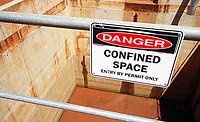
What is a confined space?

The confined space entry standard was established by OSHA 29CFR 1910.146 in April 1993. The standard was developed to provide a defined work plan for confined space entry. Confined space entries are part of a daily routine throughout the industrial workplace.

A confined space is defined as a space that:

  • Is large enough for an employee to enter and perform work.
  • Has limited or restricted means for entry or exit.
  • Is not designed for continuous human occupancy.

A permit-required confined space is defined as a confined space, plus one of the following:

  • Contains, or has a known potential to contain, a hazardous atmosphere.
  • Contains material with the potential for engulfment.
  • Has an internal design that could entrap or asphyxiate the entrant.
  • Contains any recognized safety or health hazard.


Atmospheric hazards

Atmospheric hazards found in a confined space are those that expose entrants to a risk such as death, entrapment, injury or acute illness from one or more of the following causes:

  • Oxygen — An atmospheric oxygen concentration below 19.5% (oxygen deficiency), or above 23.5% (oxygen enrichment).

  • Combustible gases — A flammable gas or vapor in excess of 10% of its lower explosive limit (LEL) yet still remaining below the upper explosive limit (UEL).

    • The lowest concentration (air-fuel mixture) at which a gas can ignite is called Lower Explosive Limit (LEL). Concentrations below this limit are too lean to burn.
    • The highest concentration that can be ignited is its Upper Explosive Limit (UEL). Above that concentration, the mixture is too rich to burn.


    Monitoring confined spaces

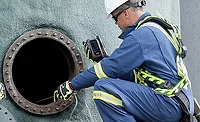
    Monitoring the air inside a confined space is required prior to entering. Testing a confined space for atmospheric hazards should be done remotely before entering, and should be done in this order:

    1) Ensure that proper oxygen levels are present.

    2) Ensure that combustible gases are not present.

    3) Ensure that toxic gases are below the OSHA permissible exposure limit. Common toxic gases in a confined space could be hydrogen sulfide (H2S) and carbon monoxide (CO), but other toxic compounds could be present.

    Monitors can be used to evaluate all these gases either individually or simultaneously.

    In a confined space it is important to take samples at the top, middle and bottom to locate varying concentrations of gases and vapors. There are some gases lighter than air (e.g., methane and other combustible gases) that can be found at the top of a confined space. There are other gases that are heavier than air (e.g., hydrogen sulfide) that can settle near the bottom of a confined space, and still other gases that are the same weight as air (e.g., carbon monoxide) that can be found throughout a confined space.

    Take air samples at several levels within the confined space and continuously monitor the space due to the fact that conditions can change.

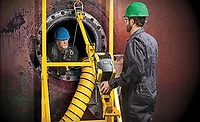
    As the remote air monitoring is completed and the area is safe for entry, confined space entry permits should be completed and followed. After the initial entry, monitoring the air in the confined space should be continuous. A confined space entry attendant or hole watch should carry out the continuous monitoring. Conditions in a confined space can change without warning, due to leakage, toxic vapor release or disturbing the contents of the space.

    Article adapted from RAE Systems’ Application Note AP-206, “Guide to Atmospheric Testing in a Confined Space.” This application note contains only a general description of atmospheric testing in a confined space and equipment used to monitor a confined space. Under no circumstances should a confined space be entered or monitoring equipment used except by qualified and trained personnel, and after all instructions have been carefully read and understood and all precautions followed.

    RAE Systems Inc., 1339 Moffett Park Drive, Sunnyvale, CA 94089, (408) 752-0723, www.raesystems.com; raesales@raesystems.com

    SIDEBAR: Examples of a confined space:

    • Storage tanks and vessels
    • Sewers and manholes
    • Underground utility vaults
    • Agriculture silos
    • Railcar tanks
    • Marine vessel tanks
    • Tunnels
    • Grain elevators
  • Share This Story

    Looking for a reprint of this article?
    From high-res PDFs to custom plaques, order your copy today!

    Recommended Content

    JOIN TODAY
    to unlock your recommendations.

    Already have an account? Sign In

    • forklift safety

      Exploring the latest technologies in forklift safety

      With more staff and more stock in warehousing now more...
      Workplace Training Strategies
      By: Josh Cramer
    • welding

      All about welder’s flash or arc eye

      A flash burn is a painful inflammation of the cornea,...
      Environmental Health and Safety
    • dangerous jobs

      The 10 most dangerous jobs in the U.S.

      On-the-job deaths have been rising — hitting the highest...
      Construction Industry Safety and Health
      By: Benita Mehta
    Manage My Account
    • eMagazine Subscriptions
    • ISHN Newsletter & Other Newsletter Alerts
    • Online Registration
    • Manage My Preferences
    • Subscription Customer Service

    More Videos

    Sponsored Content

    Sponsored Content is a special paid section where industry companies provide high quality, objective, non-commercial content around topics of interest to the ISHN audience. All Sponsored Content is supplied by the advertising company and any opinions expressed in this article are those of the author and not necessarily reflect the views of ISHN or its parent company, BNP Media. Interested in participating in our Sponsored Content section? Contact your local rep!

    close
    • man wearing the the Sundström SR200 Full Face Mask Respirator
      Sponsored byOHD

      5 Fit Testing Mistakes That Could Cost You

    • This image shows Magid AcuSpex polarized blue mirrored safety glasses.
      Sponsored byMagid Glove and Safety

      Construction PPE Guide: What Crews Need for Each Task

    • lone worker in confined space
      Sponsored byAlphasense Ltd.

      GET THE LEAD OUT of your Safety Oxygen Sensors!

    Popular Stories

    SpaceX 7 launch

    OSHA Investigating Fatal Fall at SpaceX Starbase

    Automated loading dock equipment

    After March 2026 Rivian Death, Safety Managers Reassess Loading Dock Systems Under OSHA's Warehouse Emphasis Program

    psychology in the workplace

    Most Workplaces Measure Psychological Safety, Ignoring Psychosocial Risks

    top 10 most dangerous jobs

    Poll

    Seasonal Readiness

    With the federal heat stress prevention rule on the horizon, which area of your safety program needs the most attention?
    View Results Poll Archive

    Products

    Surviving an OSHA Audit A Management Guide, 2nd Edition

    Surviving an OSHA Audit A Management Guide, 2nd Edition

    See More Products

    ISHN Podcasts

    Related Articles

    • OSHA Permit-required confined space 1910.146

      Understand standards to manage safety in confined spaces

      See More
    • PKsafety-mainPic-forweb.jpg

      Regular air quality tests of confined spaces identify new hazards

      See More
    • unexpected confined spaces in the workplace

      Assess job sites for unexpected confined spaces

      See More

    Related Directories

    • A F C International Inc.

      Single and Multi gas detectors, fixed position gas monitors, respiratory protection, SCBAS, fit testing, calibration gases, confined space entry detectors.
    ×

    Become a Leader in Safety Culture

    Build your knowledge with ISHN, covering key safety, health and industrial hygiene news, products, and trends.

    JOIN TODAY
    • RESOURCES
      • Advertise
      • Contact Us
      • Directories
      • Manufacturing Division
      • Store
      • Want More
    • SIGN UP TODAY
      • Create Account
      • eMagazine
      • Newsletters
      • Customer Service
      • Manage Preferences
    • SERVICES
      • Marketing Services
      • Reprints
      • Market Research
      • List Rental
      • Survey/Respondent Access
    • STAY CONNECTED
      • LinkedIn
      • Facebook
      • YouTube
      • X (Twitter)
    • PRIVACY
      • PRIVACY POLICY
      • TERMS & CONDITIONS
      • DO NOT SELL MY PERSONAL INFORMATION
      • PRIVACY REQUEST
      • ACCESSIBILITY

    Copyright ©2026. All Rights Reserved BNP Media, Inc. and BNP Media II, LLC.

    Design, CMS, Hosting & Web Development :: ePublishing